Showing posts with label wizard features that never were. Show all posts

Wednesday, February 24, 2010

Wizard Features That Never Were: Run Phil Jimenez's Career!

I feel like I say often "so and so is a really cool person" when referring to comic creators, but the lovely truth is I've had the good fortune to work with and befriend more excellent folks in this business than jerks.

That said, I hope it still has appropriate impact when I say Phil Jimenez is a really cool person. Seriously: really cool.

I have great relationships with a lot of creators, but Phil is a guy I can truly say is my friend. I've actually hung out at his apartment and grabbed dinner in the city with him, so that's the litmus test right there. Heck, my wife complains his Facebook feed takes over her page, so that's friendship.

It's always neat when I get to meet and in some cases get to know artists and writers whose work I remember from my childhood, and such is the case with Phil (and I don't feel bad saying that because the handsome devil doesn't age). I totally remember him as the guy who used to do the awesome fill-ins on Robin for Tom Grummett and who crammed a zillion people into that issue of Guy Gardner: Warrior where Guy opened the bar. Before I had any idea who George Perez or even Jack Kirby was, I thought Phil Jimenez had invented the crowd scene, and if he didn't, well, he packed so much detail into his that he may as well have.

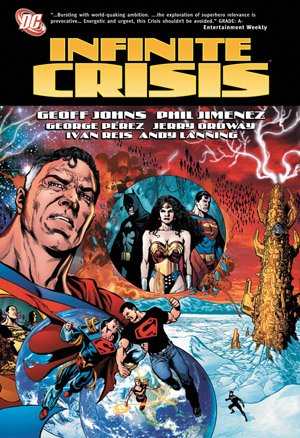
While I can't quite remember how I first met Phil voice-to-voice and then face-to-face, I'm sure it was around Infinite Crisis time, as that was one of the first big deals I was intimately involved with covering for Wizard; most likely Geoff Johns made the introduction.

What I do remember was how taken aback I was by not only how nice Phil was, but how inquisitive he was and how he genuinely seemed to want your opinion on everything. He's for real a guy who just loves soaking up what everybody thinks about everything and applying it to what he does; nobody's take doesn't matter to him.

Phil is also ridiculously smart and knowledgable on just about everything, from comics to literature to architecture to theater to medical oddities (those last two comes from Wizard World Philadelphia 2006, during which Phil took me, Megan, Sam and TJ out to an amazing Italian lunch and was the life of the party, seamlessly switching from talking Wonder Woman and zombies with TJ to musicals with Megan; at the end of the meal, he recommended the girls check out an exhibit on medical oddities at the Mutter Museum because they were bored). He can regale you on pretty much any topic for as long as you've got to listen. I've had awesome conversations for hours with Phil on comics, but I'm pretty sure if I called him to talk European history he'd still manage to hold both our sides of the exchange.

It was around early 2007 or so that Phil called me very excited about an idea he had for a Wizard feature. Since Infinite Crisis had wrapped, he had been laying low a bit, recuperating from that epic, doing a gorgeous issue of 52 now and again and looking for his next project. Since he had not settled on said project quite yet, he told me he wanted his fans to do it for him.

As reality shows were (and are) all the rage, Phil wanted to run via Wizard one of his own after a fashion in which the readers helped him select what comic he should draw next over the course of several months. He had thought a lot about it, saying he could come up with a list of characters he was interested in, do up sketches, we publish them, then fans respond with which they liked best. Each month, we eliminate a project or two, and he does more sketched of the remaining characters; wash, rinse, repeat. There would also be an opportunity for folks to suggest their own ideas (though I think that would just be a courtesy; Phil wasn't going to completely surrender his professional destiny and end up drawing Amethyst or something...though as I type that I realize Phil would probably love to draw Amethyst).

I don't remember any of the characters from his initial list other than Green Arrow, who I believe was his example, so maybe he really was pulling for that one.

I loved the idea and also mentioned that we were trying to get some more heat on our web site at the time, so perhaps we could post more frequent updates there, including each sketch, selected reader feedback, polls, and maybe even some video with Phil. He was game for playing around with the format and finding what worked best.

My editors were also keen on the idea, we just had to cross some T's and dot some I's from a legal perspective to make sure it was all kosher. Unfortunately, when you're talking about something as ambitious as what we were, that kind of due diligence takes time, and of course Phil needed to work. Still, I thought we could make it work.

We couldn't.

Why not? Because somebody gave Phil a job first.

It's a shame there was so much manuevering necessary to get the pieces in place for this, because I think it not only would have been real fun not to mention awesome to see Phil drawing all these characters, but also because you'd have virtually a stone cold lock for a hit book off the "fan-selected" angle, I figured.

It didn't work out, but Phil is still awesome; he owes me a Nova sketch though.

Sunday, November 8, 2009

Wizard Features That Never Were: Red Arrow: Behind the Mask

This is going to take a bit to get to the actual "Wizard Feature That Never Was" part, so bear with me.

I'm a big fan of Brad Meltzer. And when I say that, I don't just mean I dig his comics or novels (though I do, most recently The Book of Lies), but Brad, the dude. He's a quality human being and a good friend.

I may or may not have told at least part of this story here before (does getting married make you instantly age in terms of long-term memory?), but in the summer of 2004 after I graduated college, my friend Tim Stevens and I made a pilgrimage to San Diego for our first ever Comic-Con, both because why not and also because I was looking to make contacts and hopefully get a job. One of my most distinct memories of our trip was attending a panel hosted by Brad, Geoff Johns and Judd Winick called "Fans Turned Pros" or something similar; the name wasn't important as all three guys admitted they had no real theme and just booked a panel because they were buddies and wanted an excuse to talk comics amongst each other and with fans for an hour.

Well, if I hadn't wanted to work in comics professionally before that panel, I certainly did afterwards. Hearing these three successful comic book writers talk about their profession with as much joy and passion as they did was definitely the moment I cemented in my mind this was where I needed to be.

I already knew Geoff going into the show and got to meet Judd as well later on and thanked them both for the panel, telling them how much it meant to me. Near the end of that day, I happened upon a Brad Meltzer signing at the DC booth and ended up talking to Brad for awhile, telling him a bit about my background, and letting him know what an impact his panel had on me, which seemed to genuinely move him; he autographed an Identity Crisis promotional poster for me in silver ink with "Ben, I feel like we're family! -Brad Meltzer" and it has had a place of honor on my bedroom wall through one house and two apartments now.

Brad actually held on to a business card I gave him at that show (many people did not) and ended up putting me on a mailing list so I got an advance copy of the pilot of Jack & Bobby, a rad show he co-created for The WB that never really got a chance to take off. We would exchange e-mails a few times over the next few months, and after I started working at Wizard, Brad became one of my biggest supporters, always willing to do an interview or give a quote at the drop of a hat. He also sent a signed copy of another of his novels (which one is escaping me) one year for Christmas to give to my dad, I bought him the DVD of Rent after he mentioned to me at the first New York Comic-Con that he'd been meaning to see it, he put in a good word for me at Marvel, and so on and so forth.

So with all that as background, you can guess how jubilant I was when Brad got announced as the new writer of Justice League of America some four or so years ago just after I had been promoted to staff writer as well as DC contact at Wizard. I called him immediately to congratulate him and also to express my excitement that we'd get to work together more, which he gave right back in kind.

Little did I know that covering Brad's run on JLoA would prove one of the more challenging assignment of my Wizard career.

Don't get me wrong, I had a lot of fun with it; I got to call Brad monthly (if not weekly) and we'd geek out about DC trivia and Justice League line-ups and the like. He was easy to reach, generous with his time, and everything else I'd expect of my buddy.

The problems came from Brad being very much an old school comics fan when it came to the matter of promoting the book, in that he was very hesitant to tease much about the plot, roster, villains, etc. that he'd be featuring, because he wanted fans to be surprised when they got to those moments in the book, just as he used to be in his formative days of fandom before the Internet, Previews, etc.

I had no problem with this; heck, despite having far less spoiler-free years as a young fanboy than Brad, I agreed with him in most regards that keeping stuff secret would make the reading experience much better. Unfortunately, when you're working for a magazine that is trying to hype a product several months in advance, the folks you're working for expect you to generate features filled with teases, reveals and other stuff they can slap across the cover of that issue.

So Brad wanted to focus more on the rich past of the Justice League while most of the folks I worked for wanted to be able to solicit our mag as having "the exclusive first look at Brad Meltzer's Justice League!" And honestly, neither side was wrong, they were just on opposite ends of the promotional spectrum, and yours truly was the guy in the middle. It led to many months of me playing telephone between Brad and the Wizard powers that be, trying to bring each around to the other side's way of thinking even as I myself was being swayed daily (hey, they both had good arguments), and ultimately getting them to meet somewhere in the middle. We ended up with some pretty cool features that serviced both Brad and Wizard's needs, but getting there was not always easy.

It was thus of no small relief for me when the book started actually shipping and the cast was revealed, as we could then start focusing on those characters in our coverage. In particular, it was great that Brad populated half the team with lesser-known DC stalwarts outside of the typical JLA pantheon because it gave me a chance to use both my imagination and sense of history in telling the stories of these characters. I was quite proud of one article I did about the somewhat controversial history of Black Lightning, speaking to the character's co-creator Tony Isabella as well as guys like Brad and Judd who had used him in more recent times, getting all parties to comment on the others' feelings about the use and perceived misuse of Jefferson Pierce in some cases for the first time in a public forum.

The follow-up to the Black Lightning feature (after another writer other than me did a background piece on Red Tornado) was to be another masterwork from the minds of myself and Andy Serwin called "Red Arrow: Behind the Mask."

As you might have guessed from the title, Andy and I came up with the idea of riffing off the VH1 Behind the Music series, where they used to do biographies of some of the music industry's more compelling personalities in large part using interviews with the subject and also people who knew them. The best episodes of BtM were always about performers or bands who fell from grace at some point--generally due to drug use--but were able to overcome their hard times and re-emerge better than ever or at least alive (for the record, Motley Crue was the uncontested best episode ever, if only because of all the crazy shit they somehow survived, being approached only by the Leif Garrett one where he is reunited on camera with a guy he paralyzed when driving drunk decades earlier).

As newly minted Justice Leaguer Red Arrow--aka Roy Harper, aka Speedy, aka Arsenal--was best known to many fans as comics' most famous recovering drug addict, having been the focus of a famous 1971 issue of Green Lantern by Denny O'Neil and Neal Adams wherein it had been revealed he was taking heroin, we thought if we could somehow make the BtM format work in print, it would be a perfect way to spotlight him.

In addition to the drug thing, Roy had also been in a rock band, helped found the Teen Titans, worked for the government, had a daughter with a super villain, and slept with half of the DC Universe's hottest women; when I rifled off that list to anybody in the office who felt like listening, they all agreed the feature sounded like gold.

However, when it came time to sit down and iron out the specific details of how the article would work, I ran into trouble.

For one, neither me or my editor (it may have been Andy, I'm not sure) could decide if it made more sense to approach the feature as if it were actually a Behind the Music-like show set in the DCU and treating Roy like a real person or if we were better off somehow swiping the format but still making it clear in the write-up that this was a comic book character. Similarly, we couldn't figure out if we were better served having fictional commentary from DC characters (always a tricky proposition since we weren't actual comic book writers and we didn't want to give them bad dialogue), creators acting as "experts" (again, Brad and Judd had both written the character and were both game to play along), or some mix of the two.

Beyond that, it was a tricky feature to design as we wanted to retain some elements of Behind the Music, but everything we mocked up came back looking wrong for some reason. Also, the laundry list of crazy stuff I rattled off about Roy became less a boon and more of an albatross as we were adamant about keeping all of it in, but were concerned about not having the space to do each chapter of his history justice and get all the quotes in and end with something forward-looking focusing on the next issue of Justice League of America (I think we were hoping for at least four pages and could only barter for two).

The deadline crunch kicked in and we threw our hands up as we had nothing ready and felt going with the aforementioned Wizard Insider on Red Tornado (basically a primer article) would be easier. We figured Roy wasn't going anywhere any time soon, so we could still get to the article next month.

But the next month something came up. Ditto the month after that. And the month after that. I'm not sure what order these obstacles came in, but they were things like special themed issues of Wizard (like the Best Of or Year Preview) which didn't jibe with the feature or late-breaking news about something bigger happening in the Justice League book (like the Lightning Saga crossover with Justice Society of America) taking precadence.

And then, before we knew it, Brad's 12-issue stint on JLA was over. Roy was still remaining on the team, but we agreed it would be weird to run a feature heavily relying on Brad's quotes when we really had more of an obligation to focus on incoming writer Dwayne McDuffie. Also, almost right after Brad left JLA, I moved from being DC contact to Marvel contact, so those titles and characters were no longer my primary concern.

I maintain my stance that Behind the Mask could have been not only a really fun focus on the life and time of Roy Harper, but also a decent recurring feature we could have pulled out from time to time for use with other characters. Unfortunately, as seems to often be the case, a perfect storm of problems prevented the story from ever coming together, which was particularly frustrating in this case given how excited everybody involved was to make it happen.

Well, I think I just devoted far more space to what a great guy Brad Meltzer is than to why my article on Red Arrow didn't pan out, but truth be told, that's the more important sentiment to take away from this post anyhow (Awwwwww...).

Monday, July 20, 2009

Wizard Features That Never Were: Checkmate/Outsiders chessboard

A quickie today, but one that's been on my mind lately for no particular reason.

Back when DC kicked off their One Year Later event in 2006, myself and Andy Serwin of that Legion feature that never happened fame (man, Andy and I did not have a good track record together) agreed that without question the re-imagining of Outsiders by Judd Winick and Matthew Clark was one of the very best of the OYL titles (honestly, it was my favorite DC book by far for quite a few months). We loved Judd's raw approach to traditional characters like Nightwing and the clever but ethically murky decisions being made, and Clark just rocked it on art.

(My love of this era of Outsiders was both a bit of a surprise to me as well as pretty high praise in my opinion as the "pro-active team" book is one my most despised cliches in comics, but I digress)

Anyhow, Andy and I really wanted to get Outsiders some coverage in Wizard, but it was tricky since the first few arcs following the re-boot were high quality, but mostly world-building, which doesn't make for the best feature pitches.

Fortunately for us (or so we thought), about a year in, a big crossover was planned between Outsiders and Greg Rucka's Checkmate, a rad super hero/spy hybrid we also had great affection for. On their own, a full-blown feature on either Outsiders or Checkmate was a tough sell, but with the two coming together in the cleverly titled "CheckOut," we were pretty certain we could pitch at least a two-pager for one of the seemingly endless preview issues that were constantly being thrown our way (Year Preview! Spring Preview! Summer Preview! Fall Preview! Year Ender!).

But what to fill the two pages with?

Doing a back and forth Q&A with Winick and Rucka talking up their respective teams would seem the obvious approach, but it also seemed too conventional. This was during a era in Wizard where we were experimenting a lot with different formats and types of ways to cram as much information as possible into smaller spaces (we would swing between this and "longer features with more meat" every few months it seemed, but again, I digress), so particularly with titles we wanted to get more attention for, we looked for cool visual ways to make their coverage stand out.

Suddenly, like a bolt of lightning from on high, inspiration struck: we would do a Checkmate/Outsiders chessboard!

The Wizard family of magazines had a proud tradition of faux board games centered around comic events, more often than not drawn by the incomparable Ryan Dunlavey. However, Andy and I both felt the tone of the two books in question begged a more serious layout, even for a goofy board game knockoff. We pitched a fairly elaborate visual presentation (I'm pretty sure I drew it up) with Checkmate members like Amanda Waller and Mr. Terrific as well as Outsiders like Nightwing and Grace done up as chess pieces. We struggled a bit with what the text component would be, but figured we could just have Judd and Greg discuss team strategies, or do little bios on their "pieces."

We presented our idea several times and it was not met with overwhelming support. Most of the Wizard staff at that time either shared our high esteem for the two books or just didn't read them, but they were also realists, and reminded us that neither title was a huge seller, and thus it was tough to justify spending the money to get an original art spread (which are quite pricey) done, particularly if we were insisting on a more "real" style.

Undaunted, we pitched the idea several months in a row, but were consistently met with interest...just not enough. More than once the feature was penciled in but then cut at the last minute due to space issues.

I swear that somewhere along the way I got so caught up in wanting to get this feature done that I convinced myself we would somehow get Outsiders and Checkmate pewter chess figures out of this.

That did not happen.

Ultimately, the feature didn't make it out in time for the crossover, though ironically I think we did do just a straight Winick/Rucka interview in the News section. Nonetheless, we made Outsiders a Book of the Month and pimped it as best we could (though Judd ended up leaving the book the month after CheckOut concluded...so there ya go).

Andy and I never learned our less about pitching ideas together though...but that's another post.

Monday, May 18, 2009

Wizard Features That Never Were: Ultimate Legion

I've been a big fan of the Legion of Super-Heroes since I started following the post-Zero Hour incarnation initially helmed by Mark Waid, Tom Peyer and company back when I was a kid. When I was in my college "buy as many trades as I can" phase, I picked up The Great Darkness Saga and was floored by the writing and the art, both of which seemed ahead of their time. I gobbled up the rest of the Paul Levitz run with an insatiable hunger to see what happened next greater than just about any other I've had in my tenure as a comic book fan.

Legion is a pretty slam dunk concept: teenagers who get to live in a big clubhouse together using their awesome powers to fight crime in a rare non-dystopian future world full of exotic goodness. And oh yeah--no adults. But besides being the ultimate wish fulfillment strip for kids and kids at heart, Legion also distinguishes itself by being about a group of good guys who are good at their job and work well together, but don't all get along. Yeah, the Fantastic Four, Avengers etc. would go on to mine the whole tension between teammates rap, but guys like Levitz, Jim Shooter and others trailblazed a different take on that trope where it wasn't a group of adults bickering, but kids who would be in high school acting like, well, high school students. They had cliques, they had romances and they had rivalries you could relate to.

It's a bit of a cliche for a franchise set in the future, but again, Legion has always been ahead of its time.

At Wizard, I got to learn at the feet of two far bigger Legion fans than I in former Editor-in-Chief Brian Cunningham (today an editor at DC Comics) and managing editor Andy Serwin (who is still rocking that job). Their knowledge of all things Legion, the hallmark Levitz/Keith Giffen run in particular, put mine to shame. Needless to say, the three of us were always looking for ways to sneak Legion coverage into the magazine, which wasn't always so easy.

I believe the first Book of the Month column I ever did was on Mark Waid and Barry Kitson's "Threeboot" Legion, which launched around the same time I started at Wizard in 2004. Early on, that book was solid gold in my eyes, and for a good year or so was unquestionably my favorite ongoing monthly comic.

Nearly three years later, it was announced that some form of the Legion would be appearing in the Lightning Saga crossover between Brad Meltzer's Justice League of America and Geoff Johns' Justice Society of America. Around the same time, the Waid/Kitson Legion was experiencing a bit of a renaissance after falling off a bit due to scheduling problems and fill-ins. Andy and I came to Brian with an idea to do an in-depth history of the Legion talking to various creators who had worked on the book and focus in large part on the challenges of managing its dense continuity and how to overcome fan stigmas that it was too complicated. Despite Brian sharing our enthusiasm for the Legion, it was a hard sell.

Firstly, while the stories were getting good again in the Legion ongoing, sales weren't great, so devoting page space to them was a risk. Second, JLA and JSA were both hot, so we weren't sure a story on their big crossover not focusing on them was the way we wanted to go. Thirdly, there was obviously some concern over how DC would receive an article keying in on perceived weaknesses in a team they were trying to reinvigorate. All of these were and remain fair concerns, but, to his credit, BC gave the article a cautious green light.

I started conducting interviews with Giffen, Waid, Meltzer and Johns, all of which were fascinating to varying degrees (Giffen in particular is always a good interview and had some really insightful stuff to say about the Legion--I'll try and dig that up at some point to post here). I had a little trouble putting together a framework for the article because I only had, I believe, two pages, and there was a lot of ground to cover.

While the main feature was proving a bit difficult to pull together, Andy and I came up with a killer sidebar we were having a lot of fun with: we'd pick the best members from all the various Legion incarnations and put together our own Ultimate Legion. We had a blast talking that out and would schedule meetings "officially" to talk about the news section or whatever and then have hour-long closed door sessions on who was the best Ultra Boy--awesome.

It didn't take Brian and I long to figure out that the main Legion feature was simply not going to work; it was too much to cram in two pages, but because of the concerns I outlined earlier, we couldn't give it more. Sometimes you need to accept that even though a concept for a feature is sound, realistic publishing constraints make it impossible to pull off, and you gotta kill your darling--this was one of those times.

However, Andy and I were not so willing to let Ultimate Legion go into that good night. We figured we could still use it either as a sidebar to a Lightning Saga feature or, worst case scenario, do it as a graphic in the news section.

Space again started becoming an issue as Andy and I realized we wanted to include so many characters that our team was going to be huge even by Legion standards. We did not have much trouble mixing it up as far as having a diverse selection of creative eras represented as, while I can't recall our full team, but I believe we had Element Lad and Saturn Girl from the early days, Dawnstar and Wildfire from the Levitz/Giffen run, Gates and Live Wire from the reboot/Legion Lost era, and the Brainiac 5 and Triplicate Girl of Waid and Kitson's team; heck, I think we even threw "Five Years Later" Cosmic Boy/Rokk Krinn and Inferno from Legionnaires in for good measure.

And of course we made sure our shared favorite Legionnaire and the most badass of them all, the pre-Crisis version of Val Armorr, aka Karate Kid, had a spot on the roster.

Interestingly, I remember us both feeling a big problem with our first draft was an absence of black characters. This wasn't because we felt affirmative action was necessary or anything, but more because Legion was such a forward-thinking book with a wealth of great characters of all races (I recall Andy saying "we have more green-skinned characters on the list than blacks") that we were frustrated none came to mind. We were going to plug in Tyroc or the Waid/Kitson Star Boy, but felt the former had no business being on a dream roster and the latter was not the strongest incarnation of the character. Ironically, by the time we came up with a second draft, we realized we had forgotten about pre-Crisis Invisible Kid II, XS and Legion Lost Kid Quantum, all of whom we ended up putting on the team not because they're black, but because they're awesome.

At this point you may be wondering why you never saw this feature in Wizard, and truth be told, I am too. I can't really remember what happened to it. I'm guessing we waited too long trying to get it in a feature and failed to do so, then didn't have a decent hook for using it as news because Lightning Saga was over and Waid and Kitson left the book not long after.

It's too bad, because Andy and I had a lot of fun putting the list together, but that was kind of a reward in and of itself. Besides, Geoff Johns and George Perez are essentially doing their own rad five-issue version of what we were trying in Legion of 3 Worlds and I'm loving every panel.

Saturday, April 18, 2009

Wizard Features That Never Were: James Marsters Up Close

First, a tangent: I have never been fond of doing phone interviews.

Ok, scratch that; I actually generally enjoy doing phone interviews once they get underway, but I get incredibly nervous for them. The primary reason for this is that I have (actual clinical diagnosed) anxiety disorder. I got diagnosed my freshman year of college after 18 or so years of not getting why I paced nervously before wrestling matches or freaked out on long car rides. I manage pretty well these days and most people I haven't told about my condition never suspect I have it (well there goes that). However, if you watch me carefully (and I don't encourage you to do so...weirdo...) or know me well, you can still catch little things.

My particular disorder is tied to my stomach and my digestive system. Put simply, my stomach gets upset a lot, and whenever I'm put in a position where I feel as though I may not have ready access to a bathroom, I start feeling like I have to go. Hence the fear of being cooped up in the car, the reason I need to sit near a bathroom on the train even when I don't need to go, and why I rarely enter an elevator on a full stomach.

Getting back to the point, it can also make phone interviews very nerve-wracking. The reason being, if I'm in the middle of an important call, I don't want to have to excuse myself to use the bathroom. If I'm speaking with a comic creator I barely know, I really don't want to. And if I'm speaking with a celebrity who only has a 15-minute window to talk, I really really don't want to.

However, despite all this, I have done--and enjoyed--many many interviews with comic types, actors and actresses, professional wrestlers, and other cool people. Some day I'll do a more navel-gazing entry about said cool people, but the inspirational message here is that hurdles can be overcome. Hey, I may not be working the red carpet at the Oscars or winning Nobel prizes, but I do pretty well for myself, and I do it despite sweating every time I need to take a taxi.

If you survived that pre-amble, let's get to the point.

One phone interview I did lobby hard for while at Wizard was an opportunity to speak with James Marsters back in 2005. I've been a huge Buffy the Vampire Slayer fan for years and without a doubt Marsters' Spike was a huge reason why. His ability to play a total badass yet turn on a dime to do self-deprecating humor or an impassioned love story was uncanny. I've seen very few actors truly mine all they can out of a character the weigh James Marsters did with Spike.

Anyhow, James was getting set to join the cast of Smallville as Brainiac, and being one of the few staffers who actually watched the show on a regular basis (Kiel was/is another), I had become more or less the default correspondent for when we did articles relating to it or conducted interviews with the folks involved (and say what you will about the show, which can often be pretty ridiculous, but it's good fun and the people involved worked their asses off and are good folks; during a legitimate nightmare phone interview where I was incredibly sick and even more paranoid than usual, Tom Welling was absurdly nice to me and pretty darn understanding considering I introduced myself with "If my voice trails off, it's because I had to puke").

As is generally the case with celeb interviews, James called me at a predetermined time as opposed to me calling him (another thing I hate about phoners: lack of control) and we got to chat for a good half hour, longer I believe than we were supposed to (it's always a good sign when you're interviewing an actor and their agent must intervene to remind them they have places to be). We ran through all my bullet point questions and he gave some good answers on what was coming up on the show, the standard Buffy stuff ("Five more years and I'm too old to play Spike, so if we're gonna do something with him, it better be before then"), etc. It was a nice moment of self-satisfaction for me when I got him to chuckle with "What surprises people most about you when they meet you: that you're not blond, not British, or not 25?"

(I believe the answer was "I haven't been 25 for a looooong time, dude," said in his full-on California surfer dude voice, then followed by "...but I always seemed to fool them" in the Spike accent, which I tried not to squeal like a 16-year old girl over).

He also talked about some stage work he was doing and I think even that he was gonna be in the last Star Wars movie but wasn't for some reason. I do remember my one embarassing moment (there's always at least one) was that I was telling him what a huge fan I was (first rule of interviewing celebrities: if you're a fan, you tell them after you're done with the bulk of the interview, that way they take you seriously on the front end and leave with a good impression) and mentioned that I even watched an episode of The Mountain he had appeared on and ended up getting kinda hooked on the show (I was living in a motel room with no friends at the time, having started working at Wizard only a few weeks earlier). At first, it seemed like he couldn't remember the gig I was referring to, so I tried to play it off as, "Oh yeah, it was a terrible show, you wouldn't remember," but then he did remember, and being a pro, seemed a bit offended that I was ridiculing a show where he now recalled he knew the people who worked on it. He also mentioned he had gotten to work with a "great young actor," and a bit humiliated at this point, I rolled my eyes on the other end of the line; that "great young actor" turned out to be Gossip Girl's Penn Badgley, whom I would definitely call myself a fan of these days.

Fortunately, the call didn't quite end on that note, and he was super cool and very grateful thanking me for taking the time and me promising to send him the interview once it saw print.

Which it never did.

I think we ended up pulling a few quotes and using them as a tiny sidebar in the Hollywood section, but the James Marsters Up Close kept sliding off the schedule, being among the lower priority features, from issue to issue to Mega Movie Special to issue until only like two things he said were still of any relevance.

So I ended up having a great chat with an actor I really dig who turned out to be as great a guy as I could have hoped for, and if I'm ever fortunate enough to speak with him again, I'll have to introduce myself as the douche who couldn't push his interview into an issue of Wizard.

I hate phone interviews.

Wednesday, April 1, 2009

I'll Buy That For a Dollar?: Biff Bam Pow! #1


Biff Bam Pow! #1 (Amaze Ink/SLG Publishing)
October, 2007
Evan Dorkin (w/Sarah Dyer) (W/A)


There was a brief period a few years back where I could get almost any comic covered in Wizard if I put enough thought into it. See, with issue #179, the mag upped it's size from the standard comic book dimensions to what they call "B-Size" or in layman's terms "normal magazine size." The switch called for a few cosmetic changes to Wizard – design tweaks, a staple binding as opposed to glue, less pages but more words on them. Some fans were upset that they couldn't store new issues in their comic boxes. Tim Leong made a video about it. It was kind of a thing.

ANYWAY, the big difference for those of us who worked on staff was that the change in size brought with it a semi-perceptible change in editorial focus. At the time, Wizard was also firing full guns on its web coverage, so all kinds of breaking news stories were handed off to the online staff. And in a further move to make the magazine competitive our E-i-C Pat McCallum put out the call that as far as content was concerned, the more we could squeeze in the better. Issues of Wizard in those days were jam-packed with massive list features that culled entries from across the pop culture spectrum rather than just comics, scads of short interviews with everyone from comic creators who didn't rank in the magazine's fabled "Top Ten" lists and to semi-famous Hollywood types and a wild mix of suddenly workable one-page features on somewhat trivial superhero ephemera. And that was in addition to the regular marquee comics new features most people associate the magazine with. It was a really fun time to be working at Wizard as the staff was still large enough (editorial was around 13 people with another 6 or so in-house contributors) to juggle the higher ratio of story ideas, and in general we all went kind of bonkers pushing our own particular comic passions into Wizard's pages wherever we could.

For me, that meant pitching as much indie comics coverage as I could get away with while still typing up my features on Civil War. Indie coverage in the magazine most often was relegated to the "Secret Stash" section slotted back between the review pages and the price guide. And while all the indie/alt comics-minded staffers loved to deliver some cool feature content in the Stash, I always wanted to cover the books I loved frequently and out front. With so many mid-level superhero pitches graduating to the higher word counts of the one-page feature, the formerly spandex heavy news section at the very front of the mag became my best bet for indie real estate. So long as I could come up with a broad enough hook (the idea being that "this comic is awesome" wouldn't always sell an indie article to X-Men fans), News Editor Andy Serwin would give me some column space out front to plug whatever black and white title I saw fit. And really, digging for those hooks taught me a lot and made for some fun stories. I remember running a news piece on Rick Spears and Chuck BB's favorite Norwegian metal records for the release of their Oni Press OGN Black Metal that turned out great as well as a "true life comic tales" item that placed Jason Lutes, Nick Bertozzi and R. Crumb mere pages away from Aquaman fart jokes (or, you know, something like that).

And at one point, I interviewed Evan Dorkin about Biff Bam Pow! #1 for the News section. (Yes, the above really was all preamble to a review) Interviewing the cartoonist is a lot like reading Dorkin's comics – a few minutes in and his obvious love of the comics medium and its greatest artists smashes right up against his deep-seeded disdain for all the crazy, borderline criminal fucking bullshit pulled off by the industry, and somewhere in between the two you laugh your ass off. Seeing as Biff Bam Pow! was billed in Previews as a compilation of fight comics, my Wizard pitch involved Dorkin picking out his all-time favorite comic book fight scenes, almost all of which came straight out of Jack Kirby's Marvel heyday. It was really a fucking blast, let me tell you. There are so many worse things to do at your job than talk to Evan Dorkin on the phone for an hour as he flips through his Marvel Essentials volumes and explains what really turns him on about Kirby's wild, muscle-bound grappling matches while simultaneously lamenting how most of the Marvel talent to follow him totally missed the boat on what made the original comics assault reader's eyes with awesomeness.

Unfortunately, two real bummers came upon me after I hung up the phone that day. First, the story never ran in Wizard. We were on a tight deadline by the time I'd gotten Dorkin on the phone, and as I scrambled to work up a draft the section had already been laid out, and we just never found the time to slot it in somewhere else. It happens. Second, I never found a copy of Biff Bam Pow! #1. Even though I lived in New York City at the time and was surrounded by countless indie-friendly comic shops, i never found a copy when it shipped (a fact that Dorkin predicted during our call). So it came as a surprise to me when I happened upon a copy of the one-shot in the Dollar Bin of Dreamland Comics the local, superhero-heavy shop I frequent since moving to the Chicago suburbs. And after finally sitting down and reading the book, I'm relating this whole ridiculous story to the three of you still reading because I felt a little let down by the comic, but I also think that feeling is far more my own fault than Dorkin's.

After that phone call two years ago, Dorkin's extolling the virtues of classic Kirby had me aching for some real action comics. One of the biggest gaps in modern superhero tales in the wake of the '90s "splash pages are our god now" Image artist boom and the subsequent new millennial "the writer and his noir dialogue ticks reign supreme" wave of decompression is that no one – and I mean, fucking NO ONE – seems to draw big bombastic fight choreography for its own sake any more. And never once in our conversation did Dorkin promise me that his fight comic would shake with a storm of jagged fists and whirlwind motion lines and collapsing buildings brought on by angsty fisticuffs...but I'll be damned if I didn't really want it to.

Still, stepping outside my own completely unfair expectations, it's clear that Biff Bam Pow! is one hell of a fun comic book. Containing four stories (some reprints from older magazine gigs but anchored by two feature strips set in the world of Dorkin and wife Sarah Dyer's Kid Blastoff) centering around physical conflicts of one stripe or another, the comic is ostensibly an all-ages humor book. But considering the fact that most youngsters will never, ever come across its contents, Biff Bam Pow! holds plenty to keep the attention of us comics-obsessed adult misanthropes. For starters, the stories are really funny, but they're not funny in the angry, depraved manner of Milk and Cheese. As a kids comic, the one-shot makes great use of visual gag work with Dorkin packing in layer upon layer of detail into each panel so that on a third reading, I'm still noticing things like the fact that the boxing referee in the opening story isn't just blind – he also has a 5-cent pencil cup. The humor gets a great boost from Dorkin's cartooning as every character not only looks distinctive but even alien weirdos composed of a dozen eyeballs are wildly expressive.

And while Dorkin's adherence to the storytelling style he perfected on his more adult humor books means that the fight scenes here don't exactly grab me by the throat, I did really enjoy the moments when giant space monsters would crash into the proceedings. There's a lot of comedy to be mined from those simple setups, and I doubt anyone can really do it better. Plus, the variety in line work across the stories matches each tale's fight spectacularly well with the a two page Nutsy Monkey riff relying on a looser, animated kind of style where the adventurous Kid Blastoff feature strings in a textured creature that wouldn't look out of place in a classic Basil Wolverton strip. And while after reading this comic (and JK Parkin's recent reminder of the creative death of fun action tale Aqua Leung) I still want to watch the world collapse in a hail of headbutts drawn in thick India ink, I'm more than happy to spend the meantime with some comics displaying such solid craft.

So Biff Bam Pow!...worth a dollar? Damn skippy it was, and I'd pay a lot more if it meant we'd get more regular output from Dorkin. Even though his stuff here wasn't what I was expecting, it was way more than I deserved.

Saturday, March 21, 2009

Wizard Features That Never Were: My very first pitch

The time: December, 2004.

The place: somewhere on one of the various highways between Highland Falls, New York and Boston, Massachusetts.

I had been working at Wizard for a scant month and a half or so and was headed home for Christmas. It was a three-hour-plus drive from my former apartment in Orange County, New York to my parents' house in Newton, Massachusetts. Megan was with me and it was pretty late, so she wanted to nap during the trip, meaning no radio or cell phone for me. It was also snowing out, so I needed to make sure I was alert.

So what do you do to keep your mind sharp during a lengthy, wintry car ride if you're a fledgling Wizard research assistant? You try and come up with your first feature pitch.

Wizard editor Brian Cunningham had been encouraging me and my fellow research assistant Dylan Brucie to come up with ideas for features we'd like to write as he wanted us to progress in that regard so he'd have more guys he could count on for assignments. We had thrown a couple rough ideas for Wizard's old back page humor gag, Bullpen, at him, but not much else. I decided to use this trip to change that.

I have no earthly idea why (I believe it had something to do with spending several years as an accredited archery instructor who was terrible at archery), but I decided that the perfect feature for me to make my first impression on Wizard and the world would be...The Ultimate Guide ot Green Arrow.

I dig Ollie Queen plenty, but he's certainly not even in my list of top five all-time faves. Snow and silence do strange things to a man.

Now I wasn't just talking about a quickie article on the Emerald Archer, I meant the *Ultimate* Guide to Green Arrow. Here's the stuff I can remember coming up with for my initial pitch:

-A lengthy Q&A with then-Green Arrow writer Judd Winick.

-An "Essential Green Arrow" list of the best and most influential Green Arrow stories of all time.

-The archery equivalent of the "Power Chart" features Wizard had done in the past, placing Green Arrow where he belonged in terms of skill on a list of comics archers like Hawkeye, Shaft, Merlyn, Trickshot and Golden Archer.

-A guide to Green Arrow's rogues gallery, from Shado to Rainbow Archer (I can't recall why, but I was really set on working Rainbow Archer into this article somehow...that should have been a sign).

-And finally, my coup de grace, a consultation with various "real world" experts who would teach us how to make Green Arrow's arsenal (boxing glove arrow, handcuff arrow, etc.), and then determine whether or not there was actually a way to make them work in a practical sense. Yes, I wanted to figure how to construct and fire a boxing glove arrow.

I was so amped about my ideas that I woke Megan up (always a risky proposition) and excitedly outlined them for her. Being half-awake and freezing, she told me she loved them and then went back to sleep. The minute we walked in the door of my parents' house, I said hello, gave my mom a hug, then ran to the computer to frantically jot down my ideas and shot them off to Brian.

Then I waited.

Then I had a nice Christmas.

Then I came back in to work.

In the days in between, I had realized a few things about my pitch:

-There wasn't much question that Green Arrow and Hawkeye would top any list where I had to strain for inclusions and came up with Golden Archer.

-Green Arrow had a terrible rogues gallery.

-I was never going to find somebody to help me make a boxing glove arrow.

All this aside, the initial enthusiasm of that drive was still fueling me, so when Brian told me E-i-C Pat McCallum wanted to see me, I was still optimistic.

Pat sat me down, asked how my holidays were, and then very politely explained to me why my pitch was insane.

To be fair, the main reason my pitch didn't work--aside from the ones I listed above--was that it was January 2005 and the biggest thing going on with Green Arrow was Speedy joining the Teen Titans. There was a lot of exciting stuff happening in comics that Wizard had to cover, and taking eight-plus pages to talk about Green Arrow and Rainbow Archer just was not a winning proposition.

However, Pat did not simply show me the door and ask Brian to hit delete every time I pitched an idea. He took the time to explain to me what worked about my pitch and what did not. He noted the boxing glove arrow thing could actually be cool for our recurring "Superhero Science" column. And he encouraged me to keep on pitching ideas, because even though this one wasn't going to work, he appreciated my initiative.

And then he let me mess around with his Marvel Legends figures for 20 minutes.

"Meetings" like that were one of the reasons I loved working with Pat. Another was that he took the time to cut out and glue a Flash insignia to a Marvel Legends Dracula figure and leave it on my desk as a "rare variant figure."

Good times.

Wednesday, March 11, 2009

Wizard Features That Never Were: Infinite Crisis Director's Commentary


Started re-reading Infinite Crisis for the first time in awhile earlier this week, and I was reminded of a question I haven't been asked in quite some time, but got all the time from message boards and elsewhere back around 2006-2007: When is that Infinite Crisis Director's Commentary coming?

It was a fair question.

For one thing, an Infinite Crisis Director's Commentary was actually advertised in the next issue box for an issue of Wizard during the summer of 2006 as well as in Previews and elsewhere. For another, as the guy who had done the previous two Director's Commentaries for big DC events--those being Green Lantern: Rebirth and the original Crisis On Infinite Earths, two of my very favorite features I did for Wizard for entirely different reasons--it made sense that I would be the guy to ask.

It wasn't a question I could really answer back then, other than to say, "Stay tuned," but I figure enough time has passed now that the story can be told.

See, an Infinite Crisis Director's Commentary does exist--and I'm not talking about the one DC did for the trade, I'm talking about a bonafide Wizard version that was conducted by yours truly with writer Geoff Johns and artist Phil Jimenez (I believe I may have even gotten a quote or two from George Perez, who ended up drawing portions of the book, but I'm not entirely certain). Unfortunately, it doesn't exist as a written document anywhere, just on a bunch of audio tapes that I'm pretty sure I don't even have in my possession anymore.

Here's the skinny...

A month or two after I had completed the Crisis On Infinite Earths Director's Commentary, then-Wizard editor supreme Brian Cunningham assigned me the Infinite Crisis gig. I was grateful to BC for putting a bit of time between the two articles, because those fuckers were exhausting (they generally involved at least five-six hours of phone interviews, then going through upwards of 80 pages of transcript highlighting the stuff you wanted to cut/keep, then massaging the "keep" text, then usually up to a dozen rounds of revisions and more cuts because there was never enough room, not to mention tagging art, writing an intro, working on sidebars, etc.). At the time, working on the Director's Commentaries was a bit of a badge of honor for me, as I believe only myself and my predecessor as a staff writer, Rich Ho, had ever actually done them. Eventually, the wealth got spread around a bit, particularly once I started doing the equally time-consuming Wizard Retrospective (which I invented, so toot toot)...but I'm digressing.

I was excited to work on the IC Director's Commentary in particular because Geoff and Phil were (and are) two of my closest friends in the comics industry, so I was looking forward to the three of us getting on the phone and goofing off. I also saw it as a kind of neat bookend to my career at Wizard up to that point, since my very first writing assignment the week I was hired as a research assistant was speaking with Dan DiDio, Judd Winick, Greg Rucka and Geoff about what would eventually become the Countdown to Infinite Crisis one-shot, and then I had done a large chunk of the IC coverage that followed, including the rad Secret History of Infinite Crisis, which was kind of a warm-up for the Director's Commentary. I was jazzed.

So of course Murphy's Law kicked in and everything that could go wrong, did go wrong.

To begin with, Geoff was entering one of the busiest phases of his career (it's still going), getting 52 up and running while also working on three ongoing books and doing that Hollywood stuff he does. Phil was in transition mode, picking out his next project and also teaching art classes as well as dong Hollywood stuff of his own. So suffice to say, getting either of them pinned down for a long enough period of time was difficult enough--getting both of them on the phone for more than a half hour was next to impossible.

We scheduled and rescheduled the call a number of times. It was nobody's fault really that we had so much trouble getting things going, that's just the nature of working in an industry like comics, where nobody works 9-5 days and priorities have to be in constant flux.

While we were playing phone tag, the feature was scheduled and advertisements were placed in Previews despite me not actually having anything on tape or paper.

The deadline for getting something done was fast approaching, so we ended up scheduling two separate two-three hour calls for a Saturday and Sunday (which was not typical protocol at Wizard, as we didn't like to bug creators on weekends--also, I liked to sleep--but this shit had to get done). However, to further complicate matters, Megan and I were still in a long distance relationship at the time and I was driving to Connecticut to stay with her in her dorm that weekend. Something that actually simplified things was that Geoff was visiting his parents in Michigan that weekend, so at the very least we didn't have to negotiate east coast/west coast time, but it also meant we would all bit the bullet and do the interview as early as possible.

So that's how I ended up spending a Saturday morning on the Connecticut College campus before any of the hung over students in the surrounding rooms were mobile sitting up in bed with an earpiece in using the Wizard company cellphone telling Phil Jimenez to stop laughing so loudly because he was going to wake up my girlfriend.

Against all odds, we got the first interview done, but something went wrong and we had to cancel the Sunday session. I got back to work and the issue we had been working on was already off to the printer with an Infinite Crisis Director's Commentary I only had half-done being touted in the next issue box. I was getting a bit nervous and so was Brian.

Later that week (I think), we finally finished up the interview and I sent it off to be transcribed. That took another week.

Then Brian told me we weren't doing the article anymore.

More accurately, he told me we couldn't do the article anymore in that issue. During the time I had been wrangling the interview, provisions had to be made in case it didn't come together (and for awhile there it wasn't looking good). At this stage in the game, those back-up plans were ready to go, and neither Brian nor I were confident enough in our ability to turn the IC story around quickly enough to shut those down. So we decided to take a mulligan on the advertisements and push the story back a month.

Except we forgot the next issue was the year ender.

And then the issue after that was the year preview.

We tried to justify fitting the feature into both of those issues ("The best of 2006!" "Before you get your first look at 2007, say goodbye to 2006 in style!"), but in both cases, we were already way over page count. Eventually we resigned ourselves to the fact that we had missed our window and the Infinite Crisis Director's Commentary was not going to see the light of day--at least not in Wizard proper.

See, we had just done a collected edition of all the other Director's Commentaries to that point (including the two I had worked on), and figured when we did a second volume, we'd include the Infinite Crisis one as a never-before-seen feature that would really sell the book.

Then we never did a second volume.

After the crunch of getting the back-to-back year ender/year preview died down, it hit me how much time not only I, but Geoff and Phil, had devoted to this feature that now seemed to be DOA. It was frustrating. Geoff and I actually got into a bit of a shouting match over the phone--something that had never happened before that and never has since--about the feature not getting printed, but it took all of about ten minutes for us to settle down and apologize to one another.

And that was that.

It sucks too, because that would have been a great Director's Commentary. There was some cool stuff about everything from the original fate of Nightwing to what real-life cathedrls Phil used as design templates for the scene where all the heroes go to church before the big fight.

C'iest la vie. Maybe someday I'll find those tapes and do something with them. Until then, I hope everybody who asked me this question now knows the answer.

Friday, February 20, 2009

Kiel's New Site: Four Color Forum


There's a good chance that everyone on here already knows this, but a few weeks back during the New York Comic Con, I launched a brand new interview blog called Four Color Forum. Aside from links to all my work for CBR, Marvel.com, Wizard and the like, I'm also posting original long form interviews and other reportage.

If you've got some time this weekend, pop on over and read my interview with indie cartoonist and Kramers Ergot editor Sammy Harkham, my report on the ICv2 Graphic Novel Conference and just today my very own "Wizard feature that never was" – an interview with Bill Sienkiewicz on Marvel's Black Widow.

I doubt I'll be cross posting everything I do at the Forum here at the CKT (hooray blogging pet names!), so I'd love it if you guys bookmark or RSS the new site like you do for here. ROCK!

Thursday, December 4, 2008

Wizard Features That Never Were: Bill Messner-Loebs Profile

I was heartened a couple weeks ago to be pointed to an article providing the latest update on Bill Messner-Loebs. Given all he has been through over the past decade, from health problems to monetary problems to losing his home more than once, it's nice to see Bill getting back on his feet and back into the comics game. He's a helluva guy, his wife Nadine is one amazing lady and they both deserve all the happiness they can get. So I'm very pleased to hear the Messner-Loebs are doing well.

But I also can't help but be reminded of the biggest "one that got away" of my tenure at Wizard and the feature I most regret not being able to complete.

In the fall of 2005, I had just been promoted from research assistant to staff writer at Wizard Magazine. Though my job title was new, I had already been writing part-time for several months and pitching various article ideas. Joe Yanarella, at the time Wizard's Senior Managing Editor, had been encouraging us all, younger staff members in particular, to search for people in interest in the comics industry who would make for compelling in-depth profile pieces. I had considered a few options, but after learning about the plight of Bill Messner-Loebs, I felt that his was a story that needed to be told.

I vaguely remembered the name Bill Messner-Loebs as belong to the guy who wrote significant chunks of The Flash and Thor when I was a kid, or more notably as the dude who replaced Wonder Woman with a redhead after Superman died and Batman got his back broken. I knew I hadn't seen his name on a comic in several years, but didn't think much of it, as there were plenty of writers and artists from my youth who I hadn't heard of in years.

However, scanning Comic Bloc one day around the summer of 2005, I learned what had happened to Bill Messner-Loebs. Here's the short version...

Bill Messner-Loebs was born with a cancerous tumor on his right arm which he had to have amputated while he was still a baby. Despite this setback, he went on to become a respected cartoonist and spent the late 80's and early 90's as a prolific writer for DC and Marvel as well as on several independent projects. But around the turn of the century, for whatever reason, work dried up and Bill found himself without any steady source of income. He was forced to spend what little he had left to care for his ailing mother, who passed away not long after, and on the medical expenses of his wife, Nadine, who suffered from various head trauma as a result of having had her skull fractured when she was mugged as a young woman. In 2001, Bill lost his car in an accident. On September 10, he lost his home when he could no longer afford mortgage payments (as he put it to me: "I was the unluckiest guy in the world--for exactly 24 hours). He bought a mobil home the following year, but it was infested with mold and then stolen. By 2003, the Messner-Loebs were splitting time betwen motels, shelters and the local senior centers.

The tremendous hardships that Bill and Nadine had suffered struck a chord with me, but more than that, what drew me to their story was the amazing upbeat attitude and determination Bill seemed to demonstrate in the article where I first learned all this. I wanted so badly to meet this man and bring his story to light. I pitched the feature to Joe and he was behind me 100%. It took some doing, but I was able to get in touch with Bill and arrange a trip to Howell, Michigan.

It was the first and only real trip I'd taken by myself "on assignment" and I was both excited and scared. I also felt the mounting pressure of presenting the Messner-Loebs' story to the masses, feeling that it would be far and away the most important thing I had ever done. I touched down in Detroit in early evening, picked up my first rental car ever, got a quick meal, checked into my hotel, and readied myself for what I knew would be a very important day.

The next morning, after enjoying the luxury of an onboard GPS for the first time, I pulled up to the modest hotel where the Messner-Loebs lived. Bill greeted me outside with a huge smile and a hearty handshake. His excitement to see me validated both my nervousness and commitment, but I also got the sense he'd be just as cordial if it was the mailman. Stepping into the single room Bill shared with his wife, I'll admit that my initial impression was of how small it was. These two people, both of whom had physical ailments I could only shudder at, were cramped into an incredibly compact living space with the accumulated possessions and knick knacks of two lives much longer than mine filling every corner. I saw the tiny bathroom out of the corner of my eye as Nadine proudly showed off to me their "home entertainment center," which consisted of homemade shelves stocked with a dozen or so DVDs and VHS tapes.

I'll confess I felt a bit bad that at age 23, my apartment was at least twice the size of the Messner-Loebs. However, whether they were aware or not, Bill and Nadine quickly dispelled any guilt or negative feelings I had with their outgoing sense of pride and general enthusiasm for the day ahead.

As we got in our cars and headed out for the Messner-Loebs' typical weekday, Nadine chose to ride with me, wanting to seize the opportunity for us to chat alone for a bit. On a personal note, a side effect of my irritable bowel syndrome and accompanying psychological hangups make it very difficult for me to ride in cars with people I don't know very well (let alone people I just met), but Nadine's leap into my passenger seat (impressive for a woman who has trouble walking unaided) didn't allow me much time for introspection, and off we went.

Where Bill was jovial and possessed of a seemingly carefree optimism when it came to the lot life had dealt him, Nadine wasn't bitter, but she was certainly driven. In the car ride from the Messner-Loebs residence to the homeless shelter they took me to as the first stop on our tour of their little world, she gave me not only her and Bill's personal story, but an impassioned crash course on the plight of the homeless and how people were falling into the cracks every day. For a kid who had grown up in a wealthy Jewish suburb in Massachusetts and seen but never really, truly experienced poverty, it was an eye-opener. Nadine's passion was contagious and by the end of the 15-minute drive, I felt like I wanted to try and change the world single-handedly.


We visited the church/homeless shelter where Bill and Nadine used to live. Again, it was eye-opening for somebody of my social background to imagine so many people--particularly the two people standing in front of me, each with physical ailments and neither exactly in their mid-20's--sharing the floor of a tiny room and managing to sleep. Bill told me about the various jobs he tried and failed to hold while they lived there, including a recollection of his time delivering pizzas and being laughed at by kids younger than me which I could tell was a struggle for him to even speak about.

From there, we headed over to the local senior center, where the bulk of my research was to take place. After a brief tour, Nadine left Bill and I alone and for the first time, we got a chance to talk one-on-one. I turned on my tape recorder and for the next three or four hours occasionally stepped in to steer the narrative, but for the most part just listened to a man tell me his life story. As a writer/reporter/whatever I was/am, it was an experience that I feel everybody working in journalism should have. Just sitting and absorbing another human being lay out their life to you from start to present is something you can't duplicate anywhere else. Fuck, even if you're not in journalism (some people would certainly say I never have been), you should find somebody much older than you and just ask them to tell you their life story.

Anyhow, I don't want to get into the specifics of what that fairly one-sided conversation consisted of, because there is part of me that hopes an enterprising young Wizard staffer like Kevin Mahadeo will read this and want to pick up where I left off (I've still got the notes somewhere, Kev). Needless to say it was epic, funny, heartbreaking, and everything else you'd expect from having read any snippets about Bill's story. His anecdotes about breaking into the comics business were eye-opening and his deflation over when he stopped receiving comps because there was nobody left at DC who knew who he was made me want to give him a hug. The affection with which he spoke about his wife and mother was as touching as the sense of regret he conveyed over receiving foreclosure notices on his house was heartbreaking.

For somebody in my position, it was great stuff. There was a part of me that felt bad that so many of the sad memories immediately struck me as incredible lead paragraphs, but this was balanced by the desire to share this man with the world, warts and all, and get him back to work. Because more than anything else--more than his health, his home or any of the other things he had lost over the years--it was clear after hearing him talk about comics for ten minutes, let alone off and on for several hours, that what he missed most was getting to write and draw for an audience.

When Bill finished (or got as far as he could before I could see that I needed to go or risk missing setting offf the series of dominos necessary to catch my return flight), I shut off my tape recorder and we headed to the center's computer lab to say goodbye to Nadine. At this point, I remembered that Joe had entrusted me with a very expensive camera to get some shots of Bill and endeavored to do so with limited success. Bill walked me out to the parking lot where before we parted I surprised him with a copy of the fresh off the presses Infinite Crisis #1. He had mentioned to me over the phone he hadn't gotten to read a new comic in ages, so I thought he'd enjoy this, but I was also curious to get his reaction to where characters he had once shepherded stood years later. He mostly laughed over how hard it was for him to follow a Universe he had once been so intimate with, but also remarked how different digital coloring had made the art (and how he didn't know if that were a good thing or a bad thing) as well as how much violence they got away with (referring to the Freedom Fighters massacre). He flipped to the end and bugged his eyes out for a moment upon seeing the Golden Age Superman and then related to me one final personal memory about how he and his colleagues never thought Marv Wolfman would be able to get away with killing off the original Superman back in 1986 and then bid me adieu. I got back in my rental and waved so long to my whimsical, fascinating new friend.

On my ride back to the airport, I feverishly called Joe on my cell phone, excited to tell him what an unequivocable success the trip had been. As was his general habit, Joe let me ramble for a bit, then calmed me down and sobered me up a bit, saying it was great that I was excited, but that we needed to keep the bigger picture in mind and continue pressing forward rather than me getting ahead of myself. Joe Yanarella is a great editor for many reasons, but one of the first and foremost is that he keeps a steady focus and makes sure to temper his writers' enthusiasm while not deflating them. He was 100% correct as me getting overly anxious about my first impressions and writing the story in my head over the course of a three hour plane trip would inevitably lead to a less than perfect product.

To keep my mind on the story but also not leapfrog the editing process, I info dumped every detail of my trip I could remember from my brain to my laptop while I was waiting in the airport. By the time I boarded the plane, I had a lengthy Microsoft Word document to e-mail off to Joe.

Unfortunately, by the time I walked into Joe's office to discuss my notes the following Monday afternoon, the high of my trip had given way to reality. Joe confirmed what I had already figured out over the weekend: we had a great start, but not enough to move to the next step. I had some great stories and lot of interesting comic book-related stuff, but it was the human interest angle that was going to make this story special, and I didn't have enough of it.

I had a couple follow-up phone calls with Bill and got additional material, but it wasn't the same as being there in person. At the same time, the same forces that usually conspired against features like this one were going full force. We hit the holiday crunch period where I had to contribute to the content-heavy Year End/Year Preview back-to-back. By the time it was 2006, Joe was taking on new responsibilities as Wizard continued to evolve and so was I as my job continued to grow. We both kept vowing to get back to the Messner-Loebs feature (or as Joe referred to it, "Detroit"), but after that initial period of high energy, it just wasn't happening.

Personality profiles and other timeless features were a tough beast at Wizard (as I'd imagine they are most places). They're huge and they require immense amounts of work, but at the same time, there's no due date, so there's always something more pressing that grabs your attention. With the Bill Messner-Loebs profile, that's what happened, more or less.

However, while the feature was very much a casualty of typical publishing problems that are tough to avoid, I have to take a great deal of the responsiblity here. If I had been more prepared going into my trip to Michigan, I would have gotten the stuff I really needed and we could have rode that early momentum into a quick turnaround on the piece. In part, I can blame my inexperience, but at the end of the day the fault still lies largely with me.

To the day I left Wizard, the Bill Messner-Loebs profile was the one feature I most wanted to get done. I kept in touch periodically with Bill (still do), but never really made much progress beyond the winter of 2006. Fortunately in the time since, many others have told at least parts of Bill's story, but I still kick myself for not being able to complete my personal passion project and for not somehow translating that incredible afternoon spent at a Michigan senior center into print.

I'm sorry I never got to tell your story, Bill; a large part of me still hopes I will, someday, but all of me is just happy to hear you're doing well, even if I'm not the one spreading the news.

Sunday, November 2, 2008

Wizard Features that Never Were: Best of the Best

Back in the halycon days of 2006, when Ryan Penagos and myself both still worked at Wizard Magazine, we had an idea for a fairly ambitious feature we gave the working title "Best of the Best," named for (in my mind at least) the Eric Roberts martial arts flick of the same name. The idea grew out of our meeting and getting to hang out with professional wrestler, giant comics nerd and cool guy extraordinaire "Fallen Angel" Christopher Daniels at the Wizard World Los Angeles show. We had been trying to get something going involving spotlighting Chris in Wizard and kicked around a few ideas. Intitially we had been cooking up something called "World's Toughest Geek," pitting Chris against fellow superfan and Ultimate Fighter Nate "Rock" Quarry in comic book trivia, but that didn't pan out (which could be another post for another time). Considering alternatives, Ryan and I talked a lot about badasses and comics and where the two intersected, which is where "Best of the Best" emanated.

At the time, I was Wizard's official contact for DC Comics while Ryan held the same position in regards to Marvel, meaning we got to sit in on planning and pitch meetings for the content of upcoming issues. Taking all the stuff we had been chatting about, we proposed the idea of taking the old "Last Man Standing" concept that was a Wizard mainstay for years to the next level and doing a big ol' tournament ala the NCAA's March Madness, taking the toughest characters in comics from Marvel, DC, etc. and matching them up in a 64-person bracket, ultimately determining who was the toughest dude (or lady) in comics.

"Best of the Best" had several levels to it and would have potentially involved a great deal of fan interaction. Wizard's web site had just received the first of several revamps and we wanted to utilize the feature to allow fans who were starting to frequent the message boards to interact with the print magazine. While we never got far enough to determine the exact details, either via polls or simply threads on the boards, we were gonna try and have the Wizard fans' votes make up at least some portion of the deciding factor in who won the tournament. Whether that meant they'd get to vote all the way through, only in the opening rounds or potentially decide an "alternate" brackets that we'd print the results of after the "real" tourney, we never got a chance to decide (all those options were on the table).

Other stuff we wanted to do involved getting creators involved to break down certain "highlight" matchups and, of course, somehow getting Chris Daniels involved as our "fight doctor," laying down the tale of the tape for our final match. How exactly we were going to determine the opening rounds, whether they would be decided by the Wizard staff, creator "experts," the aforementioned fans, or some combination of all or some of the above was a major stumbling block.

Another thing we had trouble figuring out was who would and wouldn't meet our criteria as far as participants. Initially Ryan and I pitched doing only unpowered fighters, as we figured having guys like Superman involved in the tourney would make it less interesting, but it was tough nailing down exactly what "unpowered" meant.

You know how you'll sit around with your buddies and talk comics and spend hours debating stuff like whether Wolverine's claws could slice through Captain America's shield? That's often what these Wizard pitch meetings would become for significant periods at a time, and it was times like that when you'd sit back and think, "It is so awesome that this is my job." Well, the meetings to discuss "Best of the Best" as you could imagine featured a lot of that type of stuff. I remember major sticking points as far as who could be part of the tournament included whether or not Captain America technically had powers due to the super soldier serum, if Deathstroke's abilities were "superhuman," and if the Punisher could only be in there is he went hand-to-hand and tossed his guns aside. I also remember lengthy discourse about us badly wanting Iron Fist in there but feeling like his who "I can make my fist a thing as unto iron" gig disqualified him. Honestly, it was all good fun and I was pretty psyched for months more of it.

One thing I unequivocably recall is that Ryan and I wanted the finals to come down to a DC vs Marvel showdown between Richard Dragon and Shang Chi, Master of Kung Fu. We envisioned it as a straight up old school "Last Man Standing" and were pretty insistent that it had to be drawn by Scott McDaniel. Seriously, how f'n cool would that have been?!

Anyways, obviously "Best of the Best" never came to fruition. I can't remember all the reasons why, but as with most Wizard features that didn't pan out, it was a combination of things as opposed to just one. Definitely a big factor was that then-Wizard Editor-In-Chief Pat McCallum ended up being let go in November of that year. I have nothing but nice things to say about Pat, who was not only a great professional mentor but a guy whose office I loved to go and hang out at after work and jaw about comics, toys, pro wrestling, etc. Pat was huge into just about everything that went into "Best of the Best" (he loved "Last Man Standing" and fantasy tournament type deals) and was a big supporter of pushing it through, so when he left, the feature definitely lost some momentum, both because we lost his enthusiasm and because it felt a bit wrong to go forward without him. Ryan also left for Marvel around the same time, so take wat I just said about Pat and multiply it since he was the guy who co-conceived the whole thing with me. Beyond that, though, it was obviously a major period of transition for Wizard and a big ass feature like "Best of the Best" understandably had to take a backseat to other priorities.

At the end of the day, I can't help but think maybe if I had pushed a little harder, I still could have made "Best of the Best" happen, but ultimately, you need to pick your battles, and while I think it would have been a really cool feature, it wasn't something particularly pressing or topical and thus it slipped through the cracks.

Ryan did end up doing a Q&A with Chris for Marvel.com that served as the launch for the Fightin' Fanboys column we have since continued. Still, I can't help but think fondly on what could have been...maybe someday...