Showing posts with label green lantern. Show all posts

Monday, March 5, 2012

Should Have Beens: Guy Gardner

This is an interesting (and debatable) one as this “should have been” is really a has been and even an is (and that’s how you do an opening sentence).

Guy Gardner is headlining (or co-headlining) his own well-selling series, Green Lantern Corps, and for the past few years before that was doing the same either in its predecessor or Emerald Warriors. He was perhaps the most popular member of the late 80’s/early 90’s Keith Giffen/J.M. DeMatteis Justice League and is always at least a cult favorite when that group shuffles its line-up (he’s technically on Justice League International right now, I guess, but he hasn’t been on the main team since just after Doomsday though a vocal segment always wants to see him there; his last dalliance in being recruited by the big guns was as a bit of a running joke during Grant Morrison’s run over a decade ago).

He had a respectably long-running—and underrated—solo series in the 90’s, he crossed over to animation with Batman: Brave and the Bold, and is generally a character held in high regard. Save for a period right after his introduction—he was in a coma—and the first few years of this century—he was in a weird limbo after sort of dying during Our Worlds at War before coming back via Joe Kelly’s Action Comics and getting rebooted as a Green Lantern by Geoff Johns—Guy Gardner has always more or less been a high B-lister verging on the A-list of DC Comics heroes.

And yet it feels like he had the potential to be more.

Guy Gardner is the most interesting of the human Green Lanterns. Kyle Rayner is more relatable, but Guy has more to him. He’s got more range than golden boy Hal Jordan and more depth than the shifting tabula rasa that is John Stewart. Don’t get me wrong, all of those characters are great (except for Hal Jordan), but while Kyle is likable, John has potential and Hal is a douche bag, Guy’s got layers.

He’s a genuinely heroic man trapped in the façade of a jerk by circumstance. Guy overcame a difficult childhood to become a social worker and later a teacher, working to better the community and world around him even as he kept his own aggression in check. He was judged equally worthy to be Earth’s Green Lantern by Abin Sur, with Hal Jordan only getting the nod because he was geographically closer. Guy eventually became Jordan’s back-up and friend, but suffered one tragic setback after another, getting hit by a bus saving one of his students, getting trapped in the Phantom Zone, and eventually lapsing into a coma (also, Hal Jordan romanced his girlfriend when he was out of commission one time; yes they both thought Guy was dead, but come on!).

All this piled up to create the Guy Gardner the DC Universe—and readers—are most familiar with: an arrogant, brash, hot-tempered loose cannon who also happens to be a noble and dedicated champion for justice (even if it’s not always evident). Part of this persona is written off in-universe as the result of his brain damage and whatnot, but the more interesting story to me is that of a man who had the potential to be a hero or a jerk, did his best to be the former, got knocked on his ass at every junction, naturally fell toward his darker nature, and now struggles to balance the two; that’s a character whose life and adventures I want to follow.

Unfortunately, as has long been the problem with a lot of characters who came to prominence in the Giffen/DeMatteis JLI, more often than not the deeper complexities of Guy Gardner have been ignored in favor of just writing a loudmouth who is obnoxious because he’s an obnoxious loudmouth. Giffen and DeMatteis were (and are) geniuses when it comes to working in subtleties, so that their parody is strong but when they’re being serious and giving their characters deep moments, it has extra added value; a lot writers who followed them only got the surface level stuff.

One writer who understood how to make Guy Gardner more than a cliché was Beau Smith, who penned Guy Gardner: Warrior during the mid-90’s. Smith explored the character’s past, the roots of his insecurities and why he had such a desperate need to fly in the face of authority. But Warrior wasn’t just funny book psychology; it could be as funny as JLI and Guy remained the bare-knuckled bad ass Smith loves to write, but with stakes that made you care about him. Your mileage may vary on Guy’s altered look and powers during his Warrior days, but that series was a revealing glimpse at the character beneath the gimmicks and how much potential he truly had.

As with so many of these Should Have Beens, unfortunate timing has been Guy Gardner’s enemy. His popularity and visibility peaked while he was on a team, so while Giffen and DeMatteis did wonders with him, they still had a half dozen other characters to juggle. His solo series was launched at the height of 90’s excess and didn’t quite find its way under Smith until the market was a more volatile place that couldn’t sustain unproven commodities. By the time Guy became viable again, much of his development had been forgotten and his chief function was gag cameos. Even now, since being reborn under Geoff Johns and shepherded along by the talented Peter Tomasi—who obviously cares about what makes the character tick beyond the obvious—Guy has to tie for third fiddle at best in the Green Lantern franchise behind the resurgent Hal Jordan and tenacious Kyle Rayner.

Guy Gardner has never had a chance to truly shine. He’s been a replacement, a team player, a joke and a co-headliner, but never gotten that top spot. Again, Tomasi does a great job with him in GLC, and I have every confidence he’ll continue to do so, but honestly, wouldn’t you love to see a movie about a wise ass who’s quick to throw the first punch because he’s fighting back against the bum circumstances life has dealt a good man who happens to have the most powerful weapon in the universe on his ring finger?

I sure as hell would.

Friday, April 22, 2011

Kyle Rayner for the Justice League

I’m not saying anything revolutionary or controversial when I say I think Kyle Rayner belongs on the Justice League. I’m well aware of this, but just for kicks, let me state the case anyhow.

In the recent past, I’ve stumped for Wally West to be a fixture on the Justice League not only because he’s my favorite DC character, but also because he has tenure there, has proven value as a member of an ensemble cast, and quite frankly, because nothing else is being done with him and he’s too good to go to waste. Kyle and Wally have been kindred spirits since the former was introduced, sharing the whole successor to Silver Age icons deal as well as a certain demeanor that appealed to my generation, so in a perfect world I can’t see why both shouldn’t be sitting pretty on the Watchtower, but let’s deal with the guy I haven’t talked as much about this time around.

There are four Earth-based Green Lanterns at the moment, and three books in their franchise, leaving one guy the natural odd man out.

My personal least favorite GL, Hal Jordan, has the good fortune of being written by Geoff Johns, who has the uncanny ability to craft gold around even the most unlikable of leads—though I’m well aware plenty of people like Hal—and he’s also got Ryan Reynolds playing him in a movie this summer, so he’s sitting pretty in the catbird seat as star of the lead Green Lantern title. While Hal was a Justice League stalwart for many years, most of his generation has cycled out at this point, and the last thing anybody needs is the current face of the franchise looking like an elder statesman, so him doing his own thing is for the best right now.

Guy Gardner was an awesome and essential part of Justice League International and I’ve always been curious to see how he’d function in a more traditional League line-up, but frankly his personality may be a bit too big for the average team setting. He deserves his own book and is nicely carrying Green Lantern: Emerald Warriors right now; if Justice League: Generation Lost gains a well-deserved ongoing birth of some sort, Guy would certainly be an in demand guest star or late addition there.

Ostensibly, Kyle Rayner and John Stewart share the lead of Green Lantern Corps, with Ganthet and others thrown in for good measure. Of late, however, there seems to have been a resurgence among writers as far as a desire to flesh out Stewart’s character—I’m all for this. There is a lot to explore when it comes to John Stewart. The military man who is socially enlightened, the lost loves, the guilt of letting a planet die, that time he was a Darkstar, that time he was crippled—all fertile ground perfect for a book like GLC where he can share the spotlight with a few lesser players but not get lost in the shuffle of an A-list team.

That leaves us with Kyle, who’s way too solid on his own to be John or Guy’s sidekick, but also unlikely to regain top billing from Hal anytime soon.

So put him in the Justice League.

Grant Morrison got a lot of good years out of Kyle being the rookie Leaguer trying to live up to the shadow left by Hal Jordan. With the nearly fully cycle rotation of the League now being filled with newbies and claimants to legacies like Supergirl, Starman, Dick Grayson as Batman and so on, the once neophyte Green Lantern would have a new role as the young veteran who has been where these guys are. As the more iconic figures return—because you know inevitably they will—Kyle becomes a bridge between generations much in the same way Wally was for him when he started out.

Kyle has always been a wish fulfillment character in my opinion more so than anybody else in the Green Lantern franchise. Getting handed a magic ring is basically a modern day take on the Aladdin fable and one that’s perhaps easier to buy into as a fan because you don’t have to be born with superhuman abilities or be on a mad vengeance quest because your loved ones died; as implausible as Green Lantern’s origin is, strangely enough it’s one we can picture happening to us because it doesn’t rely upon predetermined conditions or personal tragedy, you just have to be in the right place at the right time. Despite that, Hal Jordan and even Guy Gardner or John Stewart were still somewhat removed from the average dude since they were selected based on their unflappable resistance to fear; Kyle Rayner became a Lantern literally because there was nobody else and Ganthet happened upon him in an alley (I know there have been debates and retcons about this, but I choose to keep reading it as it was originally written based on my own preference). That Kyle turned out to be a good guy and a great hero without being inherently built for it like Hal made him infinitely more relatable—at least for me—because here was proof that given the right opportunity, anybody can prove to be a champion.

Taking all that into consideration makes Kyle Rayner even cooler as a member of the Justice League. With Hal in there, it’s just another square-jawed alpha male joining the herd; Guy is the malcontent; John is a bit of a cipher; Kyle is us blessed with a chance to be great and stand shoulder-to-shoulder with guys like Superman not because he was destined to, but because he earned it.

Kyle’s an insecure, sensitive artist and also a romantic, all stuff that plays great in a team environment; heck he’s already dating another in a line of hot alien chicks at the moment, but two of his former ladies are on the current League and he’s just the kind of character who seems to have instant chemistry with everybody around him. He’s great as the best buddy, as the workplace crush, as the “little brother” and so on.

For these and many other reasons, Kyle Rayner deserves to be and would be a great fit in the Justice League. Would I love him and Wally West to have their own solo books? I suppose I would, but for some reason, right now I’d like them both in the JLA more. I like the idea of the League being a showcase for those “lost” characters too old to be Teen Titans but who can’t be the alpha members of their fraternities because of the legacy nature of the DC Universe. I dig the League being a hipper group of characters who were once sidekicks or big in the 90’s all grown up like Dick Grayson, Wally West, Kyle Rayner, Donna Troy and maybe even Connor Hawke.

My buddy Sean T. Collins talks about the need for the Justice League to be filled with icons, and I agree with him, but I think if the characters are named Batman, Flash, Green Lantern, etc. anyways, it’s not so much important who’s under the masks. Let Hal Jordan and Barry Allen get the exposure they need from their own books and let the guys who carried the ball shine as cornerstones of the team they’re too busy for right now. A lot of people prefer the Big Seven League because it feels important, but there’s the pitfall of the characters not being able to develop outside of their own titles, but here’s a great opportunity to have your cake and eat it too.

So there’s my pitch: Put Kyle Rayner back in the Justice League. Oh, and while you’re at it, Wally West too, please.

Tuesday, September 14, 2010

Green Lantern's Glo Balls

Rickey found these at the store and put them on Twitter. I couldn't help but share:

Put them in your mouth!

But seriously, I guess someone was impressed by all the Green Lantern stuff at the licensing show this year, huh? By one way or another, DC's whole rebranding of their biggest heroes as the four guys is getting a chance to shine. Apparanty, they also have Flash Cakes:


But I didn't put them in the headline of this post because they didn't make me giggle because I'm 11. But hey, I guess there's some kind of "get yourself on a comic cover" promo from Hostess going with this once these things are out in full force for Halloween. I actually did love to enter contests like that when I was a kid (or, you know, ordering X-Men specials off the back of pizza boxes and what not) so that's nice I guess.

Still, the only contest I'm really interested in in all this is Todd Casey's challenge to Rickey to eat a box of Glo Balls on video.

Do it, Rickey. Do it.

Tuesday, July 6, 2010

Cruel Summer: Cyborg Superman

I totally thought it was Steel.

When Reign of the Supermen was going down I was 11 and very much caught up in the fervor of trying to guess which of the four newbies was the real Superman. Even though Superboy was my favorite, he came right out in his first appearance and said he was a clone, so he was off the list (and besides, I always figured he’d end up as Superboy some way or another). The Last Son of Krypton actually seemed the logical choice as a new more violent Superman would seem par for the course in the 90’s and fitting with what audiences at the time were into; but call it my youthful optimism or the spirit of heroism I admired about comics to begin with, I just didn’t think a shades-wearing, bone-breaking Superman would last (and again, I was 11, so I absolutely thought one of these guys was going to be around to stay).

So yeah, I thought it was Steel. I bought the argument put forth in one of his issues and then expounded upon in letters columns that John Henry Irons died during Doomsday’s rampage around the same time as Superman and somehow inherited his soul at least in part. I thought it seemed cool and warmed to the idea that an armored black man with a big ol’ hammer was going to be the new Superman.

I was of course wrong (though the real guy being a fifth latecomer was a total gyp), but there was one thing I was entirely correct about: I knew it couldn’t be the Cyborg, because that guy was bad news.

Even when they were trying to make all four guys seem like heroes and even though I was just a kid, I never had any doubt that the Cyborg Superman was a villain and would be exposed as such. Dan Jurgens did too good a job in his design making him terrifying as a bizarre perversion of such a familiar, iconic and reassuring figure like Superman for me not to distrust the character.

Yet despite the fact I was waiting from day one for the Cyborg to go bad, the issue where he beats the piss out of The Eradicator and then yells out “Earth be damned!” as Mongul nears before him and Warworld descends on Coast City is one of the coolest heel turns in comics history from where I recline.

And more credit to Dan Jurgens in that while the Cyborg was very creepy as an enigma wearing half of Superman’s face, he became even more sinister as he was—excuse the pun—fleshed out using the creator’s own prior stories to tell his origin. Hank Henshaw’s role as the Reed Richards of a tragically doomed Fantastic Four analogue was perfect as, quite frankly, Reed is only a step or two away from being a fantastic bad guy himself. Jurgens’ twist of the screw for Henshaw’s motivation, that Superman tossing The Eradicator into the sun may have caused the solar activity that doomed the flight and ultimately killed the future Cyborg’s friends and wife was also brilliant as it gave him a totally legitimate reason to hate our hero plus a tie to another important character in the whole saga.

That driving impetus, Jurgens’ design work and even the way Henshaw initially embraced technology over humanity as way to communicate with his wife following his demise but ended up driving her to kill herself, making his new powers another layer of tragedy, all worked for him, but let’s be honest: at the end of the day, those were just contributing factors to the Cyborg’s quality as a villain whereas the thing that pushed him over the top was that he was the big bad at the end of the entire Death and Return of Superman opus; anybody who got that spot was going to get major cred.

What I saw as the Cyborg Superman’s undoing early on in his villainous career, however, was a result of that same earned cred. He was such a hot commodity after his Reign of the Supermen role that he was rushed back into circulation way too quickly in my opinion. There are of course some classic super villain like Doctor Doom and Lex Luthor who can show up every other month and still be great because they’re that awesome, but those guys are few and far between; for the most part, if you’ve got a really special bad guy, you need to rest him between appearance so the next time he shows up the situation really has that “Oh shit, if this guy’s back it means trouble” feeling.

This is particularly true with villains who are the epicenters of big events. For two decades following Crisis On Infinite Earths, we didn’t see The Anti-Monitor again, and that only made his legend grow. Apocalypse only comes around ever few years if that in the X-Men books and when it happens, it feels special. Contrast that to something like Eclipso getting his own regular series following Darkness Within or The Beyonder going from disembodied voice to bopping around every Marvel title in his leisure suit and you get what I’m saying.

The Cyborg returned almost immediately after his big defeat in Superman/Doomsday: Hunter/Prey and I always felt that was a big mistake. To begin with, a story that already has Doomsday—another great villain who came back way too soon and too often—and Darkseid is not going to be one in which Hank Henshaw can really shine. For another, it at least felt like it took years for Superman to beat the Cyborg the first time around, so the fact that we knew it would only take a few issues the second just cheapened him.

After that story, I think the Cyborg quickly became damaged goods. What should have been a money confrontation with Hal Jordan after he destroyed his city and wrecked his sanity was relegated to a five-page side confrontation during Final Night. Then for years Henshaw would show up with annoying frequency either as the predictable mastermind or unwitting foot soldier in whatever big plot was menacing Superman that month; a real fall from grace.

However, in 2006, it was Geoff Johns to the rescue.

Noted villain rejuvenator Johns brought Cyborg Superman firmly over into the Green Lantern mythos to serve as a foil to the reinvigorated Hal Jordan which felt long overdue. He spun Henshaw into being the mysterious new Grandmaster of the Manhunters following months of buildup, restoring that sense of danger and grandeur from those early appearances nice and quick. Johns gave him weight by making him one of the first characters aware of the 52 alternate universes following Infinite Crisis and didn’t cheapen him as a threat since it took several Green Lanterns working together to bring him down.

But it was Johns’ follow-up in the classic Sinestro Corps War storyline that has really given Cyborg Superman the staying power I think is going to sustain him.

In that arc, Cyborg Superman joins with Sinestro and his new ally The Anti-Monitor for one reason: he wants to die and thinks they can make it happen. He’s sick of this tortured existence devoid of anybody he loves and wants to end it, but sadly, he seems to have made himself indestructible over the years. It’s a tragic and complex reason for doing bad that I think sets Henshaw apart these days.

And that scene at the end where he thinks he succeeds in courting death by trapping himself in an explosion but then his skull is recovered by the Manhunters and he sheds a single tear—classic.

I knew that Cyborg was trouble from the start and was certainly no Superman, but he sure does make a perfect bad guy. It’s crazy that a villain with so much going for him from origin to look to impetus almost ended up a footnote, but I guess we’re all lucky one of the millions of people who read his first misadventures had the power to make sure that didn’t happen.

Monday, February 1, 2010

Six for Smallville

Despite the fact that I regularly watch Melrose Place and Gossip Girl (one I even blog about regularly), I would still label Smallville as my guiltiest television pleasure. It’s corny, it’s generally over-acted and not about to be nominated for any Emmys any time soon, but I’ve still got a soft spot for the adventures of Superman when he was a boy (or late-20-something at this point).

I actually didn’t watch the first few seasons of Smallville on any regular basis, but became a regular viewer while working at Wizard as I became the magazine’s semi-regular correspondent on the show, available whenever interviews needed to be conducted or articles written. I was fortunate enough to speak with the show’s various producers and writers on numerous occasions and conduct interviews with Clark Kent himself, Tom Welling (one of the nicest Hollywood types I’ve ever chatted with) as well as the likes of James Marsters, Dean Cain, Kane and others when they appeared on the series.

Over the past few years, Smallville has inched away from its roots as a more realistic (or as realistic as you can get) chronicle of a young alien learning about his powers in a rural area and embraced its comics roots as almost a live-action tween-friendly version of Justice League Unlimited, with Green Arrow, The Flash, Aquaman, Cyborg, The Martian Manhunter, Black Canary, the Legion of Super-Heroes, Zatanna, the Wonder Twins and more showing up in color-coordinated casual wear. This week, the show hits a milestone, as my boy Geoff Johns pens an extra-length episode that brings the Justice Society of America to town.

To celebrate that and because I thought it would be fun, here are five more hero types I’d like to see done up Smallville style before the show wraps (and to make things a bit more interesting, I took the obvious Batman and Wonder Woman picks off the table since I believe it’s already been stated numerous times there are legal entanglements preventing either from happening besides).

STEEL
It’s not a stretch at all to imagine that a younger John Henry Irons is already hard at work in Smallville’s version of Metropolis, probably for either Oliver Queen or whoever is running Luthorcorp this week. I’d actually go with the classic Steel origin of John Henry getting his weapons poached by some nefarious corporation (be it Luthorcorp or Intergang), then have him whip up his Steel armor to try and police the matter. Given the cool effects Smallville has done on the relatively cheap, I’m thinking they could create a fairly dope-looking Steel that would wipe at least a bit of the Shaq stink of the character’s mainstream cred.

JOHN CONSTANTINE
How sweet would it be to see a smooth-talking, chain-smoking British conman sweep on into Smallville (or Metropolis), charm Lois Lane, piss Clark off, and then bring some hellish mystic nightmare in his wake that he needs Super-help to deal with? Smallville hasn’t had many occult-tinged episodes (at least not while I’ve been watching) so this would be a neat change of pace, and the contrast between Clark and Constantine is just too delicious for me. Besides, The CW already has the perfect teen Hellblazer in the form of Ed Westwick, Gossip Girl’s own Chuck Bass (and that may be the most inspired casting choice I’ve made in a blue moon).

BIG BARDA
While I think it would be nigh impossible to fully feature Jack Kirby’s Fourth World with Smallville’s budgets and other constraints, they’ve certainly proven me wrong on scores like that before. Nonetheless, the alternative is to just have a New God or two guest star and make allusions to Darkseid, etc. that you can either pay off later or leave as fun Easter eggs. The prospect of Orion on Earth just doesn’t grab me here, so I’d go with Mister Miracle’s arc of escaping Apokolips and seeking salvation in Smallville, but give it to Barda, not just because she and Superman have done porn together before, but because, again, this is The CW and if they can cast some pretty young thing as an Amazonian alien, they’re gonna.

DICK GRAYSON
If you can’t get Batman, let’s get the next best thing. Since there rumors that The CW was actually going to make a series about Dick Grayson and his carnival family their Smallville follow-up at some point, I say grab those prelim designs and go to town. The Haley Circus comes to town, some nefarious fellow runs an extortion scam or whatnot perhaps with a little extra muscle, and Clark needs the help of a 15-or-so acrobat with a fondness for red, green and yellow to save the day. I’d make this one light-hearted and upbeat, just like the Robin/Nightwing-Superman team-up dynamic in comics I’ve always enjoyed always is. And of course you can have some additional fun tossing in allusions to the Dark Knight and perhaps even why they can’t get him on the show.

GREEN LANTERN
This one seems like a no-brainer, as you can pretty easily bring in a GL similarly to how Flash, Aquaman or any of the other major DC players came and cover his origin in about five minutes (“A dying alien gave me a ring, now I’m a space cop”), then get to the slam-bang action with Clark and whomever teaming against Sinestro or perhaps a less-known interstellar Green Lantern opponent like Evil Star or somebody. Commercially, this would be a pretty guaranteed hit with the movie coming down the pike as well as the franchise’s current high standing in comics, while from a character standpoint Clark meeting an Earth native who patrols the stars is a neat bit of role reversal. As for who should be filling the role, I’d take Hal off the table since Ryan Reynolds has that sewn up, and probably John Stewart and even Kyle Rayner as well, since they could logically make the big screen jump as buddy and successor respectively; that leaves Guy Gardner, who if they stick with his traditional persona could be an even more interesting guest.

SUPERBOY
There’s no easier Smallville episode to write than some crazy scientist getting a hold of Clark’s DNA via a strand of hair or whatever he leaves behind at a crime scene then cloning him and then something going wrong with the process, leaving us with a high school-age Conner ready to kick ass and take names. Me being me, I’d of course play Superboy exactly how they did when he was first introduced, with cockiness and girl-craziness in full effect. This is actually a character who could have some real legs if they have him find Clark by the end of the first episode, and then the cast has to spend part of a season basically raising this kid and keeping him out of trouble; yeah, it’s kind of like the Supergirl story, but I think the idea that the character actually is Clark in some sense but nothing like him when it comes to personality would make for a lot more entertaining situations, plus the bulk of the supporting cast consists of attractive ladies who are already into soon-to-be-Superman anyways, so there you go. It would also be a neat bit of symmetry for the final season (which has to be coming up), as you’ve got Clark passing the torch to a kid who is the age he was when the show started while he “graduates” into true adulthood.

Wednesday, January 13, 2010

Hallmarks of the Silver Age part one

Obviously the Golden Age of comics is where it all started, so it’s always going to have that going for it. In the 80’s, revolutionary work by guys like Alan Moore, Frank Miller, John Byrne and more turned the industry on its ear and forced it to grow up while the underground underwent a revitalization as well. The 90’s was the era of access and the past decade has been nothing to scoff at with leaps and bounds both creatively and commercially.

But after all is said and done, no period in comic industry proved as pivotal and creatively fertile as the Silver Age.

From 1956 to 1969 (which is what we’ll be classifying as the Silver Age for our purposes), dozens (if not hundreds—maybe hundreds) of iconic comic book characters were created and a generation of incredibly talented creators picked up their pens and pencils to make their mark. These were the years that established comic books—and the super hero genre in particular—were here to stay as a fixture of pop culture that would spread like wildfire over the second half of the century in beyond into all facets of media.

The other day, Rickey and I were having a conversation about some of the more incredible concepts that sprang out of the Silver Age and how amazingly rich they’ve proven for a time often considered simplistic until you take a closer look. That chat prompted me to do a little digging, figure out what characters debuted when, and try to tag year-by-year what I thought were the most innovative, dynamic and influential creations to emerge over that 14-year stretch; here’s 1956 through 1962.

1956: The Flash
Though I’ve made no secret that the Flash has long been one of my favorite characters (though since we’re talking Barry Allen here, that’s more in the broad, abstract sense that I love the costume and powers in this case), he doesn’t need my personal endorsement to be the undisputed king of 1956, the year that kick-started the Silver Age. Make no mistake: had Julius Schwartz not rolled the dice and commissioned Robert Kanigher, John Broome and Carmine Infantino to give DC’s old Golden Age Flash concept a sci-fi-heavy sprucing up, and had Barry Allen not succeeded, there may not have ever been a Silver Age, and comic books might all still be about war and romance to this day. So yeah, in addition to being the character of 1956 by a long shot, the Barry Allen Flash is also in my mind one of the top five most important super hero characters of all-time.

1957: Challengers of the Unknown
Compared to 1957 with the Flash’s dynamic debut, 1958 was a pretty lean year for comic book creations, but Jack Kirby did produce one standout concept that would end up being even more notable for influencing his more high profile work down the line in the Challengers of the Unknown. With the Chals, Kirby became one of—if not the—first creators to delve into protagonists who weren’t just square-jawed good guys getting into fist fights with society’s undesirable elements, but rather a quirky group built around a family dynamic whose adventures emerged from their ongoing quest to chart the undiscovered regions of our world. And the whole “living on borrowed time” because they survived a plane crash together thing? Pretty cool.

1958: The Legion of Super-Heroes
Super hero teams were not an altogether new idea when Otto Binder and Al Plastino introduced the Legion of Super-Heroes into Superboy’s life in 1958, but whereas the Justice Society of America and Invaders had set a certain precedent, the Legion broke new ground. Unlike those aforementioned teams, the Legion did not come about from a company taking all its biggest name characters and using the surefire recipe for success of putting them all in the same book, but consisted instead wholly of new characters who appeared for the first time as part of a pre-existing team. Obviously this approach stemmed from the original intent of the Legion being to supply Superboy with fresh supporting cast members, but the group proved so rich and popular that they would eventually supplant their ostensible lead in terms of popularity and even longevity. Also making the Legion unique from the start was their membership consisting solely of young characters that represented the ultimate wish fulfillment fantasy for readers and their setting in the future putting them completely apart from the rest of the DC Universe.

Honorable mention for 1958 has to go to another character that came into existence via Superman: Bizarro, who has proven the most popular and enduring in a long line of “evil twin” villains.

1959: Green Lantern
The thing that got this whole ball rolling in terms of the conversation I mentioned between Rickey and I was Green Lantern, who was DC’s next big Silver Age pillar three years after the Flash, with John Broome and Gil Kane stepping even further into the realm of sci-fi for this twist on an old favorite. Honestly, I don’t think Hal Jordan on his own would necessarily have been a hugely impactful character, but the incredible mythology he helped his creators introduce into the DC Universe is virtually unparalleled in terms of grand scope. While Batman and the Flash both have superior rogues galleries, the idea of 3600 space cops from every alien race the folks writing and drawing could imagine has produced some truly amazing characters and stories over the years. Beyond that, the huge ideas behind the Guardians and their Green Lantern Corps have beget such monumental contributions to the DC Universe as Krona, Qward, the Manhunters and so on and so-forth; no franchise has done more to enrich the vast galaxy beyond Earth than Green Lantern, and as the success of the Sinestro Corps War and Blackest Night as well as the seemingly endless parade of new ideas Geoff Johns keeps churning out demonstrate, it continues to be incredible relevant and productive.

Believe it or not, I did think for a moment about giving Sgt. Rock the nod for 1959 as he was the character who first pulled war comics through into the Silver Age, but ultimately Nick Fury became a far more prominent character and Rock can’t hold up against Green Lantern besides. Supergirl was also introduced this year and has merit as the first female version of a male character to really last as well as on general popularity and visibility, but she falls just short as well.

1960: The Justice League of America
Really the decision by Julius Schwartz and Gardner Fox to unite their seven most marquee heroes as the Justice League in 1960 wasn’t particularly innovative since it was just the Justice Society done over, but it was undeniably smart from a business standpoint and has certainly provided immeasurable entertainment for fans over the last half century. Unlike the Flash or Green Lantern, the JLA didn’t deviate much from the JSA formula of simply bringing huge draws together, but there’s no denying the impact of the group or that the success of this launch would raise the stakes as far as team books and thrown down the gauntlet to DC’s competition.

While certainly dwarfed by the events that took place around him during his first appearance, Snapper Carr was one of the first truly non-powered characters to earn himself an active spot as the Justice League’s trusted mascot. Also, Elongated Man never quite achieved headliner status, but his publicly-known identity—a major problem for him way down the line—as well as his more lighthearted persona and well-adjusted romantic life made him a unique creation.

1961: The Fantastic Four
I’ve written at some length before about the huge importance of the Fantastic Four in terms of changing comics and super heroes forever—and for the better in my humble opinion—so I’ll direct you there rather than rehash too much, but to touch on the big stuff, Stan Lee and Jack Kirby changed the game by introducing a group of protagonists who actually had flaws and distinct personalities and who didn’t always get along; in other words, they were human. With Lee, Kirby took his basic formula from the Challengers of the Unknown and raised it several echelons with the FF in terms of building on the idea of a family of heroes as well as a group that was concerned with exploration first and incidental do-gooding a close second.

1962: Spider-Man
Speaking of game-changers, when I spoke about Barry Allen being one of the five most important super heroes ever, Spider-Man is ahead of him on that list. While the Flash may have begun the Silver Age and the Fantastic Four gave comics its first feet-of-clay heroes, I don’t think I’m overstating that when Stan Lee and Steve Ditko created Spider-Man, they spawned a character that ensured the survival of their industry. For the most part, comics have always been the realm of young men when it comes to who is making up the fan base, and while guys in their tweens, teens and slightly above thrilled to the adventures of Superman and company, they connected with Spider-Man in a way they never had any other character. First and foremost, this was a young character who was not playing sidekick to an older hero, he was out there on his own the way the kids reading him longed to be. Second, while the FF had their flaws, Spidey practically made them look like the Justice Society; yes, at his heart Peter Parker is a fundamentally good person who wants to do the right thing and that has driven the success of Spider-Man for over 40 years, but he was not born with this innate nobility, he had to learn it through a series of costly mistakes, the same way most of us do in the real world. Lastly, and perhaps most importantly, Peter Parker was an outcast in the same vein as many of his fans. Sure Clark Kent was a nerd, but only because he pretended to be, and besides, he was still a hugely successful reporter; Peter could not escape his put-upon persona unless he put on a mask—and even then his life was hardly bed of roses—and he was constantly bombarded by life’s mundane villains, from trouble with girls to bullies to making ends meet financially. I’ve not always been the biggest Spider-Man fan myself, but I could never doubt the nearly-unparalleled and universal appeal by virtue of being relatable the character has among a huge chunk of fandom and the amazing—pun intended—impact he has had on comics.

In any other year Thor or the Hulk would have a good shot due to bringing high fantasy to comics in a way not accomplished prior and the strength of a great Jekyll and Hyde dynamic respectively, but as far as this list goes, they had the misfortune to be “born” in 1962.

To be continued...

Saturday, August 22, 2009

Blackest Night: Send in the Ringers

From where I sit right now, DC's sci-fi horror action-adventure epic Blackest Night is a bonafide hit and a darn good yarn to boot, which illustrates precisely what I dig most about it: it's an event but at the same time a story with deeper meaning. I mean, you don't get much more popcorn flick/kids playing with action figures than "it's a bunch of armies with different colored uniforms fighting in space and some are zombies," but I know Geoff Johns has been crafting all this long enough that there's more to it than just the trapping, and each issue I've read so far has done a good job of balancing the loud explosions with the emotional nuances so to say.

However, I'm not here today to discuss the pathos of Hawkman and Hawkgirl's doomed love nor am I here to debate the placement of avarice versus hope on the emotional spectrum; no, I'm here to say what DC heroes and villains I want to see in which colored rings and Lantern jumpsuits...

Green Lantern: Dick Grayson
We got into it a bit in the comments section of my recent post on Nightwing: Year One, but I'm fairly sure that in some comic from the 80's (most likely an issue of Action Comics Weekly), it was established that Dick Grayson was a viable candidate to receive a Green Lantern ring and that had he been geographically closer to the site of Abin Sur's crash than Hal Jordan, he indeed would have. Well, here we are, the GL Corps are experiencing their Blackest Night and they need al hands on deck; at the same time, Dick is experiencing his own personal darkest hour as his mentor is gone and he's been forced to step into the cowl. Dick being given a Green Lantern ring--albeit for a very short term basis--and being a major part of saving the day during this event would be both a cool moment and also a major step in establishing his credibility as a legitimate Batman until Bruce Wayne returns. Plus, you have to know DC Direct could come up with some sort of amazing Batman/Nightwing/Green Lantern hybrid figure that would make us all lose our shit.

Sinestro Corps: Jason Todd
It's been said that fear is perhaps the most potent item in Batman's utility belt, but no member of the Bat Family would out and out admit that fact--except for Jason Todd. With Jason at a loose end following Battle for the Cowl, it could be a great scene in Blackest Night or in the Batman tie-in mini for the down and out former Robin to be visited by a little yellow ring offering him a chance for ultimate power and to police the universe through fear just as you know he had always desired deep down. And of course if we assume this is couple with my Dick Grayson-as-Green Lantern concept, you get the climactic "brother vs brother" showdown once more, this time with each slinging power rings and creating the nastiest Bat-centric constructs they can conjure.

Red Lantern: Doomsday
The caveat here is that of course Doomsday does not need a power ring any more than the Hulk needed giant guns, but that doesn't make either concept any less awesome. The fact is that Doomsday has never been as cool as he was when he was first introduced to kill Superman and as a result has fallen into that awful purgatory as a guy other characters can beat up to gain credibility (other notable residents of this realm include the Juggernaut, Captain Atom and the Rhino). But you put a red ring on one of Doomsday's bony protusions, have him vomit a bit of blood and set him up as the DC Universe's ultimate embodiment of rage as he tears through other Lanterns like toilet paper and you've got a grade-A badass monster back in the mix.

Star Sapphire: Starfire
Ever since she was introduced, a big part of Starfire's character--and a side we saw expanded whenever she traveled home to Tamarana before it was destroyed umpteen times--was how her people both fought and loved with unbridled passion, and how she could not understand why humans were so guarded with expressing their emotions, love in particular. This is the girl, remember, who planted a wet one on Robin back in New Teen Titans #2 in order to "learn the English language." Over the years, Kory has been unlucky in love, getting left at the altar after a demon disrupted her wedding and losing a husband to the Sun Eater. Of late she has been kvetching about getting ditched once more by Dick Grayson--the Green Lantern of my piece, making this all the more perfect--making her an ideal candidate to become the latest Star Sapphire (and she wouldn't even need to change her costume much).

Blue Lantern: Zauriel
One of the things Geoff has impressed me most with during this saga, especially in the first issue of Blackest Night: Tales of the Corps, is how maturely and astutely he's able to write the faith/religion-based Blue Lantern Corps without coming off preachy or making it feel like he won't commit. Couple that with the fact that he was involved in a couple good peripheral Zauriel stories in JSA and that Zauriel is just an awesome, underutilized character in general, and this is a pick that makes perfect sense to me. Granted there would be the tangled explanation of how Zauriel's allegiance switches from the Judeo-Christian God to the Blue Lantern Corps (or if they switch at all), but that's the journey I want to read about.

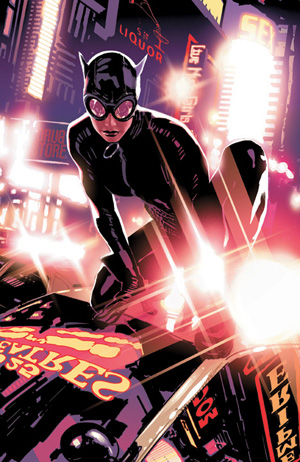
Orange Lantern: Catwoman
Much as she has tried to be a good girl, greed is the motivating factor that always seems to drive Selina Kyle back to the dark side or at least cause her to skirt it. It's the one element in her existence that she can't seem to tame or control and make her plaything. Granted in order to become a member of the Orange Lantern Corps you need to kinda die and then be absorbed into the collective consciousness created by Larfleeze, but I think Catwoman either trying to pull off the ultimate heist and case the Orange battery or overwhelm Agent Orange with her cult of personality would make for a great, funy story.

Indigo Tribe: Raven
We don't know much about the Indigo Tribe yet (their Tales of the Corps story didn't help much), but their logline is supposed to be compassion and given that Raven possesses the super power of empathy, that's kinda her gig. Plus, it gets another New Teen Titan into the mix, so why not.

Black Lantern: Barry Allen
Too soon?