Showing posts with label scott snyder. Show all posts

Monday, January 2, 2012

The Best of 2011 Comics Gift-Getting Guide pt. 1

We don’t really do traditional “Best Of” lists at the end of the year here at the Cool Kids Table, though if you read most of our posts dealing with today’s content, particularly my Comics Worth Reading series, you can get a good sense for what we dig; we are after all very positive people who genuinely love the business we work in.

I do have a tradition, however, of kicking off each new year with a hopefully helpful guide to some of the good stuff that came out in the 12 months prior either already or soon to be available in collected form that you can use to divest yourselves of those newly acquired gift cards or wads of cash.

You’re welcome.

Though I’m sure there are plenty of people whom I avoid saying the sky is falling—this is the Internet after all—this was a great year for the craft of comics, as evidenced by the list of 30 books I’ve compiled. I’m trying to keep things a bit more brief this year, both as an exercise in restraint for me and a general favor for those of you who bother to read my work (thank you).

Also, before I begin, let me point you toward good buddy of the blog of Sean T. Collins for a list that covers more of the wide world of comics a super hero snob like me is too dull to dig into and Kiel’s team at CBR for the most comprehensive guide to this year’s best.

5 RONIN
It’s the ingenuity of writer Peter Milligan (and editor Sebastian Girner) that impressed me most about this series, integrating Wolverine, The Hulk, The Punisher, Psylocke and Deadpool with their powers and characters into five interlocking tableaus set in feudal Japan without anything ever feeling hackneyed or forced. The end result is a work that should prove timeless for Marvel devotees and fans of brilliant storytelling alike with uniformly beautiful art by Tomm Coker, Talibor Dalajic, Laurence Campbell, Goran Parlov and Leo Fernandez.

ANIMAL MAN: THE HUNT
Perhaps my favorite element of DC’s New 52 has been the expansion of its universe to cover other genres outside of traditional tights, from westerns to vampire love stories, but I don’t think any niche has been as successfully executed as horror, typified by Jeff Lemire and Travel Foreman’s Animal Man relaunch. If you like, say, American Horror Story, here’s another work that blends family dynamics with creepiness but adds in impressive mythology and grotesquely memorable visuals; Lemire is honoring Grant Morrison’s classic work while forging his out identity.

BATMAN: THE BLACK MIRROR
Scott Snyder’s Batman has been a big hit for me, with the time and detail he devotes to crafting mystery and building a world paying off in some of the most enjoyably dense comics I’m currently reading. This is a nice primer to his work with the characters, including a handful of cases that typify his approach, the fleshing out of the Gordon family and (re?)introduction of a bad guy with major potential in the process, plus heavy art from Jock and Francesco Francavilla.

BATMAN: GATES OF GOTHAM
Speaking of getting into Snyder’s Batman, here he and Kyle Higgins team for an ambitious ode to Gotham City and its history, expanding a world that has been around more than five decades now with new characters and relationships ripe for future storytelling. I’m a big fan of super hero comics that exist beyond the place and time where events are happening just in the current issues, and these guys do a great job with creating just such an expanse.

BATWOMAN: HYDROLOGY
J.H. Williams III—along with co-writer W. Haden Blackman—does a great job picking up right where he and Greg Rucka left off in crafting the continuing adventures of Kathy Kane as Batwoman. In the hands of Williams and Blackman, Kathy is a uniquely motivated and intriguing character in and out of costume, and I enjoyed seeing her cast both expand and contract as the art—also by Williams—is seriously second to none whether she’s battling a bad guy underwater or just having a conversation with her niece; impressive stuff.

THE BOYS: BUTCHER, BAKER, CANDLESTICKMAKER
There may have been no comic that hit me as hard emotionally this year as this one. Billy Butcher has always been the somewhat loathsome cipher of The Boys who I could never really generate an interest in, but in this simultaneous touching story of love and heartbreaking story of loss, Garth Ennis made me care. Darick Robertson’s art has become more and more of a unique treat of late, so his work here was a pleasure. If you think The Boys is simply about violence and sex, you need to read this book.

CAPTAIN AMERICA AND BUCKY: THE LIFE STORY OF BUCKY BARNES
No doubt one of the highlights of Ed Brubaker’s lengthy run on Captain America has been his work on the character of Bucky Barnes, not only in the present, but fleshing him out beyond innocent boy sidekick in flashback. This arc co-written by Marc Andreyko is a tremendous point of view tale that gives you Bucky’s entire experience and tremendous insight into the unique factors that shaped him. The writing is great, but I doubt either scribe would begrudge the sentiment that Chris Samnee’s art may be the true star, as he makes the journey from U.S. military bases to Soviet covert ops convincingly gritty with a tragic touch of innocence and tantalizing frame of beauty.

DAREDEVIL VOL. 1
Mark Waid rolled the dice somewhat in coming onto Daredevil this year and opting to deviate from the grim approach favored by most creators since Frank Miller made history in the 80’s, instead harkening back to the grinning Man Without Fear of his original incarnation. The gamble paid off big, as Daredevil is again one of the best comics available, and Waid had a major trump card in his deck by writing Matt Murdock not as a smiling innocent with his past wiped clean, but a guy doing his best to run from a tortured history he can never fully escape. The supporting cast is great, the villains are quirky and the art by Paolo Rivera and Marcos Martin is simply extraordinary; both men have re-imagined DD’s ability to see through senses other than sight into an incredible new visual shorthand that has produced some of the most memorable graphic sequences and images comics has seen in ages. A wonderful book all around.

GENERATION HOPE: SCHISM
His cast in place and the introductions out of the way, Kieron Gillen got to really branch out and play with what he’d established in the back half of his Generation Hope run. This gave us an eerie horror story, a unique trial scenario with a particularly memorable character turn, and appropriately writ large tie-ins to the blockbuster Schism before a final farewell. Through it all, Gillen’s primary focus is on creating a different kind of teen super hero group where the cast is anything but innocent and both loyalties and rivalries have deliciously sinister undertones.

HOUSE OF MYSTERY: CONCEPTION
I’m sad to see Matt Sturges’s House of Mystery go, as it was a book outside my particular norm I really enjoyed these past few years, but it went out on top, as seen in this penultimate collection that wraps up many of the series’ long-running plots and mysteries. Beyond the main saga, we get some particularly great stories-within-stories, the book’s trademark, from Sturges along with the likes of Enrique Breccia, David Lloyd, Ulises Farinas, Gene Ha and others. This collection also has the awesome Halloween Annual #2, which starts right on the cover and features an anthology of tales from various Vertigo creators starring an assortment of the characters they work on.

INVINCIBLE IRON MAN: UNFIXABLE
One of my favorite pure super hero vs. super villain battles of this past year was Iron Man against Doctor Octopus in the story that serves as the center of this collection. It’s both a nice example of taking a classic bad guys outside of his comfort zone and also finding two foils that complement each other perfectly as both rivals and opposites. Matt Fraction did nice work crafting a historical feud between smug overachiever Tony Stark and frustrated outcast Otto Octavius that segued into a great clash between the larger than life Iron Man and Doc Ock with the added twists brought about by the villain’s life-threatening condition and the stakes he presents the hero with. I love how Fraction isn’t shy about making Ock the guy with the advantage and Salvador Larroca perfectly translates John Romita Jr.’s creepy and desperate redesign.

JOHN CARTER: A PRINCESS OF MARS
Roger Landridge and Filipe Andrade’s series was my first exposure to the John Carter mythos, and I think they did a terrific job making a nearly century old character and story accessible and fun for a modern audience. Langridge does a great job marrying high adventure and swashbuckling romance with a touch of his gift for humor while Andrade makes Barsoom and its people truly exotic with his liquid style. Classic stuff in a package that feels brand new.

JOURNEY INTO MYSTERY: FEAR ITSELF
Kid Loki is the sensational new character find of 2011. The spirit of the mischievous old Trickster God reborn in the little body of a young boy looking for redemption but ostracized by all the people he pissed off in his previous life is an idea that both screams and demands the genius of Kieron Gillen. It was a joy to watch Loki Machiavelli his way through Fear Itself, making deals and double crosses with Hela, Mephisto, Surtur and all the other places in Gillen’s chessboard as he alternately sweated how in over his head he was and smirked at getting away with it. Journey Into Mystery is one of my very favorite comics right now, and I know if you sample this introduction to it, you too will be hooked.

JUSTICE LEAGUE: GENERATION LOST VOL. 2
Ah, what could have been. I was really into Judd Winick’s take on the old Justice League International and how he found a great niche for them in the DC Universe somewhere between being headliners and comedy figures. The latter part of the year-long bi-weekly saga had big action, emotional twists and nice character relationships plotted like a television show or movie in terms of hitting all the right beats. I was really looking forward to the promised follow-up series from Winick, but alas, it was not to be; oh well, it’s still a great story well worth exploring for yourself.

MYSTERY MEN
Set on the fringes of the Marvel Universe in the pulp era unexplored previous, Mystery Men is a great collaboration between David Liss and Patrick Zircher, both brilliant creators who bring their particular skill sets to bear in crafting a noir tale populated by perfect archetypes of the form each with their own twists. This one has gruesome horror, angsty romance and plenty of punching, drawn beautifully and written with wit; a solid addition to the Marvel canon in an age where folks think everything has already been done.

To be continued…

Monday, November 28, 2011

Five Comics Worth Reading - November 2011

ANGEL & FAITH
There’s a longer post to be written about this, I’m sure, but while I recognize that pound-for-pound Buffy the Vampire Slayer is a stronger TV series than Angel was, I always had a soft spot for the latter, often over the former, probably in large part because I watched both when I was in college, so supernatural aspects aside the “brooding young man with an old soul striking out in the world” motif resonated more with me at the time than “young girl and her friends finding themselves post-high school” for whatever reason (don’t get me wrong, I loved both). Now, once again, while I dig the Buffy Season Nine comic, I think I’m enjoying Angel & Faith that much more, not just because one has a prominent male protagonist though, it’s just well-done and exploring fresh ground. Aside from his Angelus periods, Angel has always been the stoic mentor, from his earliest appearance on Buffy guiding her into the world she’s embracing to leading his team on his own show, only really losing that control when he goes full evil. Conversely, Faith has always been the protégé in need of redemption, whether from Buffy, Giles or Angel himself. Here, Christos Gage is establishing a new dynamic where a reluctantly responsible Faith must look out not only for a band of neophyte slayers, but a penitent Angel, who is not just heaping his usual self guilt on for recent actions, but getting reckless without turning bad in his desperation to make things right. The plot is tight, but it’s getting to see both leads so out of their comfort zones and the characterization gold Gage is skillfully mining that makes this book tick. Rebekah Isaacs is also doing a slick job on art, walking that line between depicting characters with real life counterparts and finding ways to still own them yourselves.

BATMAN
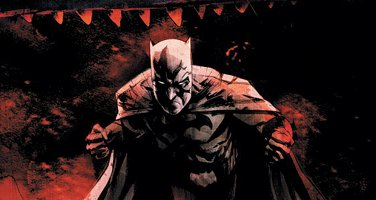
This is probably the most dense comic I pick up, and I mean that as a total compliment. Some books I breeze through, but not Scott Snyder and Greg Capullo’s Batman, which I need to really pore over to appreciate every detail and development. The fact is, Batman has been around going on seven or eight decades now, and I don’t have much interest in most stories directly tackling his mindset or stuff of that nature because they’ve all been done to some extent. What does get me going is what Snyder is doing, and that’s focusing on the mythology of Gotham City or the Wayne legacy, making Batman the explorer rather than the discovery and in the process adding layers to the character as he builds the world around him. Snyder’s enthusiasm for the minutiae of detective work, forensics, or even architecture make the stories pop as it really is an almost interactive adventure you can follow rather than just having to be a passive observer of guys in spandex kicking and punching (though there is that too). He’s doing a nice job integrating the various generations of supporting cast as well as adding his own creations, again making Gotham feel like a living and evolving organism. I was a big mark for Capullo’s X-Force as a kid, so it’s cool to see him back with quite a few years experience and refinement under his belt knocking out dark, beautiful work that also has some nice bounce to it.

THE FLASH
I may have to rethink my top five Flash artists, because honestly, few people have ever captured the pure energy of the concept in my mind like Francis Manapul has. Other guys may have conveyed speed better or drawn better figures and fight scenes, but I can’t think of anybody whose work at its essence feels like it is the burst of light, movement and pure joy I think of better than Manapul and Steve Buccalleto’s. The innovation and verve they bring to the visual aspect of The Flash undeniable, but as anybody who has read this blog for a little while knows, the real challenge is getting me to even tolerate Barry Allen; well, I’m still not the guy’s biggest supporter and can argue why he shouldn’t be wearing the red and yellow with the best of them, but I’m slowly coming around to some degree. I believe few characters have benefitted from the DC re-launch quite like Barry, as the removal of his Crisis sacrifice status as well as the Silver Age albatross of moral boredom goes a ways toward giving him a shot at being a likable protagonist. Right now, Manapul and Buccaletto’s art is so strong and their story hooks have enough pop that I’m going to try to like Barry Allen—I can give few higher compliments.

MAGNETO: NOT A HERO
There are few characters in comics more interesting and complex than Magneto. His actions make him an ostensible villain, but it’s hard to argue with his justification. At his best, he invokes conflict in readers where you’re torn between rooting against his evil plots but for his gaining vengeance for past atrocities. At his best he is also more charismatic than brutal as far as “bad guys” go; you perhaps want him to reform—and are disappointed when he ultimately can’t—but there’s also that part of you that enjoys his wicked streak. Skottie Young—best known for his exquisite art but rocking his writing muscles here—captures all of this, every last bit, in this series. He gives you Magneto the philosopher, arguing his case for why any means really are necessary, but also throws enough cold inhumanity behind those words that you question your support almost immediately. He plays with the idea of the character’s reformation, both how possible it is and even if it’s necessarily right or needed. He explores all sides of Magneto, from the ruthless and violent crusader who tears through human lives to the eyebrow-raising rogue who mocks Iron Man’s rubber suit of armor. It’s a fascinating character study from start to finish just in issue one, but there’s also great action, an intriguing mystery and skillful use of continuity and the concept of the shared universe; again, for a guy who has made most of his name drawing beautiful pictures, Skottie Young has incredible skill and finesse as a writer. He also doesn’t need to fret over the visuals for this book, as Clay Mann turns in his finest work to date; as my friend and co-worker Ryan noted, the level of detail he puts just into one of Magneto’s boots blows you away to the point where when you get the full figure it’s just something else.

SIX GUNS
Whereas once upon a time young Ben Morse could not stand for any other genres to get mixed in with his super hero comics the same way he freaked out if a mushroom found its way into his soup, I’ve matured and reversed my position on both, allowing me to enjoy my wife’s delicious fried mushrooms as well as a great books like Six Guns. This series isn’t just a Western done in modern times or within a world with guys who can fly, it’s a mash-up of a noir story, a crime procedural, a mystery and straight action with the sensibilities of cowboy lore driving it. It reminds me a little bit of 100 Bullets in some regards—high praise—but with its own distinctive flavor to be sure. Andy Diggle is a master of taking tropes like sci fi or Western and knowing not only where to take a sharp turn in a new direction but also where to not fix what ain’t broke; Six Guns delivers fun stuff you’d expect from a story about cowboys, bikers and other thugs trying to out-tough one another, but it’s also smart in where it diverges. There are only the most tangential ties to the Marvel Universe in the form of the female Tarantula being a player and somebody who would seem to be a modern Two-Gun Kid showing up at the end of issue #2, but it’s enough to give a cool edge for a fan. Davide Gianfelice is in the zone on art and this certainly seems like the stuff he was born to draw. He’s seamless when it comes to bad looking dudes, hot ladies, nice bikes and dirty action—everything a book like this needs.

Friday, December 17, 2010

Pimping My Stuff: DC Writer's Relay at CBR

I've spent the better part of this week falling behind on the blog and about a half dozen other more important things working up transcripts for something over at CBR that I thought I'd plug before getting right back to a strict regimen of typing things all day instead of showering: The DC Writer's Relay!


See, a few months back Jonah Weiland and I got an itch to try a new feature on the site that we shamelessly stole from the BBC's Chain Reaction series of interviews (though we felt less comfortable stealing the name along with the idea). The basic set-up was the idea that one creator would interview another with interviewee then becoming interviewer on down the line until the whole thing revolved back on itself. We decided to make our first test run with some up-and-coming writers at DC Comics we felt would make for some interesting and in depth discussions. Clockwise from the upper left, they were: Sweet Tooth creator and Superboy writer Jeff Lemire, American Vampire and Detective Comics writer Scott Snyder, Jimmy Olsen and T.H.U.N.D.E.R. Agents scribe Nick Spencer and Action Comics and Knight And Squire author Paul Cornell.

And boy oh boy, did those guys impress in terms of really fascinating discussion. in terms of topics, we placed no restrictions on what they could ask each other about, so all sorts of work from Lemire's award-winning Essex County books from Top Shelf to Cornell's "Doctor Who" writing to Spencer's rad Image Comics all worked their way in. And in terms of depth, I think I learned more about how working writers approach the craft and business of mainstream comics listening to them on the phone over the past two months than I have all year.

It's really amazing content that I feel really happy to have had a small hand in bringing to the web, and sadly, I'm starting to worry that either nobody's noticed them or they're just opting not to read them because "shit's too long" or because they're "waiting for some REAL news like a teaser image" or because "nobody told anybody to fuck themselves" or something silly like that. So I'm pulling out some brief highlights below and linking to each interview. Spend some time with the pieces this weekend, huh?


First up, Snyder chatted up his good friend Lemire leading to some really funny and interesting exchanges including the following:

Lemire: I think that's because of all that formative stuff where I didn't know what I was doing. No one ever saw that stuff, and I think I waited until I'd done something good enough to publish before I even sought out a publisher.

Snyder: That's one of the weird things about the contemporary mythology of becoming a comic book writer – you write something and then burst onto the scene, so you have your formative years as a writer. But one of the things that's interesting for me is that a lot of people I talk to do what you did. That's what I did in the literary world in the same way. You discover yourself as a writer before seeking publication.

Lemire: It takes a long time to find your voice, I think, as a writer or an artist. One of the things that is so different now – and I say "now," but it was really only ten years ago when I was in that stage – but with the internet and Twitter and all that stuff, everything is so accessible. Everyone is so accessible to each other, and it's easy to put your stuff out there right away. The line between professionalism and the amateur world is so blurred, now that the formative stuff is in everybody's hands.

Snyder: I feel the same way. I feel like a cranky old man saying it, but I was watching a Rock N Roll Hall of Fame induction. Bono was giving a speech about Springsteen or somebody – my wife was watching it when I walked in – and he was saying that if the music industry was the way it is now when U2 was forming, there wouldn't have been anything past "October." Because they had a gestational period! It's like any of the bands I love – since there wasn't an internet when Nirvana was forming, you have time to play in the dark by yourself and figure out who you are. But it does, now, seem like the spotlight is so aggressive. It's so intrusive that the moment you do anything that shows any promise, somebody can pluck you up. There is a certain amount of protection you have to give yourself as a writer or an artist.

Lemire: I feel like a lot of young people trying to do whatever it is they want to do don't have the patience or the work ethic to really develop. Everybody wants to be famous right away. Hence, the fame and notoriety is more important than the work itself. No one takes the time to find their voice. They just start throwing their stuff out there, hoping it catches. I'm really glad – God, this sounds terrible – but I'm glad that I didn't really have a lot of friends in comics or a lot of friends, period, in that time of my life. Like I said, I spent the good part of ten years alone and working and trying to get better. I'm glad that I have that. It feels like if you go to school for comics and be with all these other kids with so many other influences, it'd be hard to make it. Maybe that's why my stuff is so distinct. I just did it in a bubble.


Second, Lemire picked up the ball by talking to Spencer, who he'd never met, and pulling a lot of information out of the writer on his process for both creator-owned and work-for-hire gigs:

Lemire: That leads into what I was going to ask you next. What's your process like? For me, all my stuff tends to come from a visual place where I'm sketching in a book and a story grows from that. For you, you started to touch on this, but where do things start for you? A line of dialogue? A character? A high concept?

Spencer: Almost every idea that I have tends to – a lot of times I'll get a high concept first. It's a weird thing where I'll be sitting on the subway or I'll be walking through the park, and a general pitch line will float into my head. I have no idea where it comes from, but usually from there, I start thinking about, "Okay, what does this say? What's the theme of this story? What's the moral here? What's the question?" Then I start thinking about characters or who's going to be a part of that story. I usually think of myself as a "scene first" writer, but it usually comes out of some general premise that sprung up. And that process can take months.

So with "Existence" as a really easy example, I think the initial idea was "A guys wakes up in the body of the hitman that just killed him." Then you let that roll around in your head for a bit, and you think, "This is a story about a guy who had a life previously, and then he moved into a new life." Then it becomes a story about how when we make mistakes or even when we're unhappy in our lives, the solution isn't always to just go start a new life. The people in our old lives and our feelings for them reconnect us with what we've left behind. So then you start to flesh out the character. Who is this guy? He becomes this self-absorbed physicist who's been stealing from his partners and cheating on his wife, and he's made a general mess of everything. Now he's got this new life where he's a dangerous hired killer. And it's glamourous, and he's better looking. But then his daughter gets kidnapped, and he has to go figure out what happened to her. He's got to go back into his old life, and the choices he ends up making spin out of that.

So you can see how it starts from this standard line that the Hollywood guys love, but you never leave it there. I feel like a lot of writers go, "Oh, that'll be fun!" [Lemire Laughs] But you've got to put substance in that. You've got to build out layers, and that took months of having the idea roll around in my head.

Lemire: That's interesting. How regimented are you in your writing routine? Do you do the same thing during the same hours, or are you a little more open?

Spencer: No. Right now, it feels like it's just a continuous state of writing. [Laughter] It's all just bled together where there's no more times of "break." There are more times writing than there are not writing. I tend to write a lot at the start of the day and a lot at the end of the day. I'll wake up, and I'll have a few hours. Then the head gets a little tired, and you've got to take a break. Then later at night, I tend to be able to bang out a few more hours. I used to be a strictly late night person where I didn't get much of any writing done before ten or eleven P.M., and it wouldn't at all be weird for me to write until six or seven A.M. It was working fine, but I've sort of adjusted now, and I've broken it up into a couple of big blocks. Even though the time is probably about the same, I feel like it's better because I feel like I'm getting twice as much done because I'm sitting down to write twice. It just really depends. Every book is different in terms of how quickly it comes and how much time I have to spend on it and how many times I need to stop and start on it.


The Action Comics had a team-up next as Spencer interviewed Cornell while they both happened to be in the UK, leading to some highly British discussions:

Spencer: I really wanted to ask you some questions about "Captain Britain," which was one of my favorite series of the past decade. I just reread the first arc in anticipation of talking to you, and I'm in London right now, so it was a blast to read it here. The first thing I wanted to ask about was that this was an amazing story about patriotism, but it's also a story about how people don't wear their patriotism on their sleeves. You get goosebumps from these amazing calls to affection for your country, and then the very next line will be somebody making fun of that. Or there's that great splash page of, "We don't like to make a fuss about it." I was curious as to how you handled those moments and tried to strike that emotional chord.

Cornell: That's the nature of British patriotism, I feel. We have a very complicated relationship with our flag especially. And we can never say something straightforwardly patriotic without undercutting it with a joke or irony immediately afterwards in case somebody might think we were being too above ourselves or too serious. British patriotism annoys the hell out of me. It's really complicated. I think I am a British patriot in a lot of ways, but that's a very complicated thing to be. You could ask me that question ten different ways, and I'd have ten different answers. That book is an attempt to honestly address what the Brits would like these days in this field. It doesn't always succeed, honestly. A lot of people tend to view that run as what we like over here to call "jingoistic" which you would just call "patriotic."

Spencer: And at the same time, you wrote Gordon Brown there. How was the feeling of that?

Cornell: Obviously, the only way that a real British politician is going to be in "Captain Britain" is if he's portrayed as absolutely wonderful in all respects. [Laughter] There's no real figure that's going to enter the pages of one of my comics who is still alive and has the option to legal redress by "the Lord High Chamberlain" who is not going to be portrayed in a good way. We actually did have it where the leader of the opposition was supposed to be meeting Dracula on the moon at the start of "Vampire State" rather than Dr. Doom. And we were going to have it that he would initially seem to go along with Dracula and then once he got back home, rush in to call MI-13. It would've been a bit of a fake out. But then our lawyers informed us that that might not be the best idea. I'm the only person in the world, I think, who replaced David Cameron with Dr. Doom. [Laughter] Although, now I'm wondering how Dr. Doom would react to being in a coalition with the Liberal Democrats. That's a comic unto itself.

Spencer: Who would you replace Nick Clegg with?

Cornell: Nick Clegg is obviously Loki, the god of mischief.

Spencer: [Laughs] That's fantastic. But "Captain Britain" did use a lot of British iconography and Excalibur. One of my favorite lines was when she said to Dane, "You're with the N.H.S. now." I wondered how you approach that, knowing a large portion of the book's audience was going to be in the States? Did you think about that at all, or just say "I'm writing this for myself"?

Cornell: I tried really hard to make it not "that British book." I think an American audience likes a little tiny bit of Britishness...but not too much. I think we tried to strike a balance in "Captain Britain" whereas there wasn't anything that had to get explained, but contextually, you'd see the point of what we didn't explain. Maybe it was pretty obvious in context, I don't know. But I tried not to have stuff that had to be explained.

With "Knight And Squire," on the other hand, it's almost offensively British. We don't get any reviews that go, "Oh, that was all right." [Laughter] We either get great love or screaming hostility. I think it's interesting that I've managed to sell to British people both the quite serious superheroics of "Captain Britain" and the over the top Dick Van Dyke superheroics of "Knight And Squire." The Brit audience seem cool with both, which is a bit of a surprise. I thought they might dislike "Knight And Squire." In terms of the American audience, nobody much read "Captain Britain," which was always the problem, and now nobody can quite understand "Knight And Squire." Even with my translator's notes at the back!


Finally, Cornell brought it full circle by talking to Spencer about stuff like the metaphorical dimensions set to run through Detective:

Cornell: Sideline here that you may not be able to answer: Are the birds meaningful? Are they metaphorical? Are they set dressing? Are the plot?

Snyder: Well, I try to make them all of the above. [Cornell Laughs] I'll show the bones of it. They're metaphorical in the way that Gotham is transforming into a Gotham that's a manifestation of Dick's strengths and weaknesses and also sort of a nightmare funhouse mirror of his psychology as opposed to Bruce's. For me, there's an aspect to it that's about making it all feel tribal and animalistic and raw in a way that's changing itself. And the reason there are vultures in the beginning is that the first mystery deals with memorabilia. It turns really dark in the second issue, and for me it's all about the fact that Dick hasn't accepted the fact yet that he's the Batman of Gotham – even though he has Bruce's blessing. It's a light nod to this idea that Bruce's villains are on hiatus, at least for this series and run. The vultures are the whole idea of that Batman being dead and now you're Batman.

So they're metaphorical in that way, and they're plot-driven in a way that I wanted something that carries over into the backup. Thematically, we use them in issue two, and then they come back in #874, also. Hopefully it's not just window dressing for me.

Cornell: Well, it is literally. They're dressing that window. [Laughter] For me, it's a bit like Carl Jung, isn't it? You think of a beetle in a therapy session, and then that particular beetle flies in through the window. It's like Dick's attracting the pathetic fallacy in the form of birds to him.

Snyder: Exactly! I feel like the fiction that I write is pretty paranoid, too. The character is usually anxious and struggling with some diorama of the world that's projected around them with representations of those insecurities or fears so that you're facing those nightmares in a physical form. That's what I'm trying to do with "Detective," now. Hopefully it is a big story about the way that Dick is a very different character than Bruce, psychologically. I want him to be challenged by Gotham, where the mystery will have this effect to show him the ugly face of Gotham's people – its citizens. There's a possibility of them being really ugly in some ways. The second arc is about the new face of crime now that the Black Mask is gone and the Falcone's are diminished. I want this slow transformation of the city into Dick's worst nightmare that culminates in the end of the run.

Cornell: That's beautiful. I mean, how many comics these days ever have an unconscious dimension?

Snyder: I mean, reading them, I feel like your's and Grant's and all my favorite stuff! [Laughter] I do feel like the bar is so high now. I remember it feeling significantly lower when I was a kid where there were a few great comics and then a slew of comics in the middle. Now it feels so much more porous between the literary world and novels and comics and mysteries. The writing quality is so high across the board that it's inspiring to look around, but it's really intimidating too.

Trust me, there is so, so, so, SO much more in each interview than what I've got above. Please read them and share them around with your crew on the web. If this goes over well enough, I might be able to organize something like this again!