Tuesday, September 15, 2009

Melrose Memo II: Nightingale

The facts: the original Melrose Place is probably my favorite television show of all time. I could write an essay on why, but let's just leave it at "it is" for now. I have waited patiently for a decade, and now at long last my beloved Melrose has been remade for a new generation...but will it be any good? That is what I will explore here each Tuesday night (or Wednesday evening) in the Melrose Memo. I understand that those of you coming here for comics, movie or general geek news probably have little to no interest in hearing my thoughts on this program, but people--it's Melrose Place.

Now, as my friend Sean would say, read on if you wish, but do not allow me to spoil the elaborate mythology of this show for you; in other words, watch before reading!


-Much of this episode centered around Auggie, a character who didn't get much play in the pilot, as apparently they're going to structure the Sydney-centric flashbacks Lost-style with one character a week getting the bulk of the focus (this could of course be proven wrong next week and was already somewhat by the end of this episode). My opinion from last week of Auggie not being that interesting but the actor playing him (Colin Egglesfield) being able to look crazy intense has changed to the character actually having some intriguing baggage, but the actor playing him is pretty awful. Megan pointed out to me the irony of Egglesfield being probably the most experienced of the younger actors, having done several hundred episodes of All My Children, but once she noted that as his biggest prior gig, it made sense to me. I'm sure even Jim McCann, Marvel's guiding ligt, would agree with me that while there are many talented actors on daytime soaps, the skillsets required for those shows are vastly different than those used in prime time, even on a show like Melrose Place; Egglesfield, possessing a very daytime soap set of acting chops (he has a great look and plays high emotion well, but his delivery is stilted and kinda inhuman), sticks out a bit like a sore thumb here. But y'know what, that's a good thing in my estimation. The original MP was founded on the nuanced actors splitting the screen with the hams, and so must its successor endure.

-They built up a nice sense of community in this episode, from the opening interaction between David and Lauren (two characters who didn't really speak in the pilot) to that final pool part/BBQ. I dig this.

-Detective Rodriguez proudly carries on the grand Melrose tradition of shitty extras being cast as cops.

-I don't care how many times I said it last week, it bears repeating: Laura Leighton is still cute as a damn button and knows how to turn on the sex appeal! Her flirtation at that AA meeting with Auggie segued into getting it on was Sydney at her finest; she could have acted that scene with a broomstick and still made it work.

-Fuck you cold open/lack of theme song! Oh well, I do at least like the new logo and how they worked the pool in.

-On the flipside of Colin Egglesfield, Katie Cassidy is so wonderfully at home on this show and is rapidly owning it as the breakout star. She's very good at balancing intensity with humor and just the right amount of campiness to remind you this is Melrose Place after all. She's also quick with the blackmail, be it with David or some British actor, and blackmail is an essential survival tool at the Place. I do hope they don't overexpose Ella's character too too much (she was already juggling a lot of storylines and scenes this episode), but I think if anybody on the cast is up to that challenge, it's Cassidy; Amanda was at the heart of three or four plots at any given time on the original, and while I'm not quite ready to proclaim Katie Cassidy this generation's Heather Locklear, she could certainly get there.

-David is doing the opposite of growing on me. He's trying to coast on the brooding Jake routine, but he's no Jake; he just doesn't have that it factor that Grant Show had. Even the fact that he's short, usually a surefire way to win me over to your side, isn't doing it for me. He reminds me of the dude on the first season of the new 90210 who was supposed to be the cool jock but I didn't buy it because he just looked like a nerdy weasel. I expect more from you, spawn of Mancini.

-"It is a business of referrals." -Megan on Lauren's burgeoning career in prostitution.

-And speaking of Lauren, her storyline is just the right mix of absurd and "wait a minute...could this shit actually happen?" that I love it. I'm definitely seeing what other people saw in the character, even though Stephanie Jacobsen lost her accent a couple times (or as Megan put it: "It's hard after a night of sex to keep up your American accent").

-"We've been sleeping together three months and now you tell me you have a girlfriend?" Great line from Syd to Auggie.

-I do not buy for a second that Sydney would stop sleeping with Auggie (or anybody) out of the goodness of her heart. I think there was more than meets the eye going on there, as later events would seem to indicate. What was she using Auggie for?

-I love that Jonah was sitting watching the footage from the surveillance camera he set up, because in my mind that means that the whole security system idea was founded on the premise that he would watch every second of footage every day at some point. There was a throwaway line later that Ella had told him to specifically watch the tape of Riley and Auggie, but I'd prefer to go on believing that he's sitting there at 3 in the morning watching David piss in the pool or something.

-Last week I mentioned that I dug Jonah and Riley being a pre-existing couple as opposed to a developing romance ala Billy and Alison (that was a relationship that really only fit season one of the original show, and that's not an era that needs to be revisited), but the downside of this is that they can really only be written as having been together five blissful years until they need to start arguing and being jealous and shit and then they seem more like they just started dating. I don't really care, as it's just one of those necessary evils, but Megan found it annoying. Also, Riley totally has a double standard on the Ella/Auggie thing.

-In general Megan doesn't like the Jonah/Riley relationship because it reminds her of Billy/Alison and she really really did not like Alison. I see it as being integral to the show that there is that one happy couple and one storyline involving more mature, grounded issues, but just like the audience turned on Billy/Alison in favor of crazy shit with Amanda, Sydney and Kimberly, I see the same happening here, the difference being I think the creators are expecting it and are likely prepared.

-The pop culture references need some work. I can't remember the last time Josh Hartnett was topical.

-Sydney-Michael intrigue! The episode was definitely hurting from lack of Thomas Calabro, but hearing Auggie mention in his final flashback that Sydney was involved in some sort of presumably elaborate revenge scheme against Michael before she died made me smile huge.

-And then there's Violet. I was thinking the whole episode how I'm digging Violet in small doses but will be curious to see how she does and how well Ashlee Simpson holds up when more about the character gets revealed, but then holy shit they went ahead and dropped the "She's a psycho!" bombshell to end the episode and it was excellent! I knew about the fact that Violet is supposedly Sydney's daughter before the show started as it had been tossed around in interviews and stuff, but the flashback scene where she shows up and does the doe-eyed stalker routine was tremendous! "You won't get rid of me that easily...not again." Eeeeee! Love it! I'm not sure if Ashlee Simpson is really all that as an actress, but she has the perfect look and demeanor to play a crazy person and it is science that crazy people make for better Melrose. In fact, after nearly two episodes of thinking they did a good job casting Violet to look like Sydney, I was all of a sudden struck during the flashback and final pool shot how much she kinda looks like Kimberly! How amazing would it be if Violent was Kimberly's daughter out for revenge against Sydney and maybe Michael?! Ok, gotta be careful not to dream too big, but this revelation was certainly a welcome one.

-Overall, by the time we had DVRed our way halfway through the episode, I was amazed and annoyed we only had half left, and that's a great sign.

R.I.P. Patrick Swayze

Patrick Swayze
1952-2009

As Patrick James Sessoms aptly put it on my Facebook page: "He's God's cooler now."

Rest in peace, sir.

Related: Rickey is doing a Swayze sketch a day over at Rowdy Schoolyard.

Monday, September 14, 2009

Giving Back to John Ostrander

Just yesterday I wrote at length about the first volume of Sucide Squad, a comic book that has provided much entertainment and enjoyment to myself and many others over the years. As I noted, the two folks most responsible for what made that series so special were writer John Ostrander and his wife and co-plotter, Kim Yale. Sadly, Kim passed away as a result of breast cancer in 1997, and while John is still with us, he too has fallen upon bad health in recent years. John suffers from glaucoma, which has affected his vision and left him with significant medical bills.

In addition to his work on the Squad, Ostrander also penned seminal works like Grimjack and Hawkworld, collaborating with the incomporable Tim Truman on both. Ostrander and another frequent creative partner, Tom Mandrake, provided classic--and highly underrated--lengthy runs on ongoing series featuring the Spectre and the Martian Manhunter. And I'd be remiss if I didn't mention Ostrander work with Marvel's Western heroes in Blaze of Glory, truly one of the most badass tales you will ever read.

No matter what character Ostrander was given (and he had his runs with the big guns from Batman and the Justice League to the Punisher and the X-Men as well), he made the most of it, working magic where it may have previously seemed impossible. Truly, John Ostrander may be one of the comic industry's more overlooked giants of the past few decades, but undoubtedly he has the respect of his peers and any fan who has ever read his work.

John Ostrander has given so much to comic books, and now is our chance to give something back to him.

comix4site is a web site organized by Mike Gold and Adriane Nash (and I do apologize if I'm getting any details wrong here) to raise money for the continued treatment of John's glaucoma. In addition to being able to donate directly to the cause, you can bid on really cool items from original art by the likes of Tim Truman, Rob Liefeld and many more to the chance to appear in Ed Brubaker's Criminal (and get offed)! There's also helpful info on glaucoma and how to treat it that everybody should check out.

As a fan of John Ostrander, I hope you'll join me in paying the man back for all he's provided for us over the years.

UPDATE: Newsarama has the latest on the situation from Gail Simone.

Sunday, September 13, 2009

The Essentials: Suicide Squad volume one

I have a general stance on books in which villains are the protagonists, and that is that if they run too long, they tend to be no good and do more harm than good to the characters they are meant to spotlight. I think a good limited series, one-shot or original graphic novel giving the stage to a bad guy can be rad, as can something like Dark Avengers where the plot is very driven by the current state of the larger universe, but a solo ongoing series in which a popular ne'erdowell stars generally doesn't end well.

My two clarion examples of my above statement have always been the Deathstroke ongoing and Venom series of minis from my youth. Both showed that if you're going to have a badass mercenary or slobbering sociopath as your point guy, eventually they've got to soften to the point where readers can sympathize with them. In the 90's, it was this trajectory that caused both Deathstroke and Venom to lose their teeth and go from awesome villains to shades of grey wussies. It took tremendous effort to rehabilitate both guys in the past decade (Eddie Brock is still a complex work in progress).

Thusly it was with great trepidation that I took Geoff Johns up on his recommendation at San Diego Comic Con in 2004 that the original Suicide Squad series from the 80's was one I needed to check out. As Geoff had not led me wrong to that point, I went ahead and grabbed the first few issues of what he claimed was one of the definitive books in shaping his career from the back issue bins for cheap and figured if nothing else I had some decent plane reading for the trip home.

Wouldn't you know it, Geoff Johns was right again.

Spinning out of the 1986-87 Legends events, writer John Ostrander brought back the classic DC (and frankly evergreen fiction) concept of the Suicide Squad, a group of government operatives who headed into each mission with full knowledge that it could very well be their last. The twist Ostrander added was that whereas the Slver Age Task Force X (as the Squad was also known) filled its ranks with military men and women, this new group would be primarily comprised of super villains given the option to serve in exchange for having their prison sentences reduced with a few quasi-heroic types like Rick Flag and the Bronze Tiger along for the ride to keep them in line.

Through 66 issues and several Annuals plus a one-shot special or two, Ostrander was the driving creative force behind Suicide Squad, aided by a rotating group of artists and more significantly by his wife and co-plotter, Kim Yale (who passed away from breast cancer in 1997). Ostrander, Yale and company not only produced a stunning work that stands out from so much of what was being produced in late 80's ongoing super hero comics (it is far more in line with stuff like Frank Miller's Daredevil or Alan Moore's Watchmen than the Superman and Spider-Man comics of the time), they created perhaps the exception that proves the rule about books starring villains being a bad idea. They also opened up a darker, more mature corner of the DC Universe that I'd wager contributed in some ways to the birth of Vertigo and still resonates today in recent books like Checkmate and just about anything featuring Amanda Waller.

Perhaps the greatestest strength of Suicide Squad, what set it apart from other titles and allowed it to succeed regardless of the cast's moral leanings, was the ability of Ostrander and Yale to create or refine characters who felt like real people, warts and all. The DC Universe of 1987, both on its own and in contrast to Marvel, had always been a place comprised of infallible heroes who smiled and saved the day, their flaws only coming to the surface in the most intense of stories. Ostrander and Yale gave the members of the Squad as well as their support staff and supervisors personalities ranging from mundane to sadistic, but at the end of the day you definitely got the feel the guy living down the street from you could more likely be Nemesis than Green Lantern (and not just because Nemesis was a master of disguise). The world of the Squad was a dark, twisted and often terrifying place--though not without a healthy dose of black comedy--but also somewhere you could quite easily see yourself living, and that made the series all the more powerful.

As for the cast itself, Ostrander and Yale made the most of their rotating band of misfits, plugging all sorts of different characters into the Squad with varying degrees of success, but always making sure the book never hurt for variety. Aside from series pivot Amanda Waller and regulars Deadshot, Captain Boomerang and Bronze Tiger plus key players Flag, Nightshade and Nemesis (more on all of them later), you really never knew what you were going to get with Suicide Squad. You had your cannon fodder villains like Mindboggler or Slipknot, but you'd also get the occasional high profile baddie like the Penguin or Captain Cold being forced out of their colorful exploits battling Batman and the Flash into the murky waters of infiltrating Communist Russia or exposing corrupt U.S. politicians. Sometimes, particularly in the cases of Poison Ivy and Count Vertigo, these "A-listers" ended up sticking around and enjoying some of their best stories serving with the Squad.

You also had what can best be termed as "reclamation projects," where Ostrander and Yale took characters who had never quite reached their full potential elsewhere, such as Vixen or Roy Harper, and saw if they could be made to work with less of a super hero bent, an approach which sometimes panned out beautifully and other times flopped, but credit for bravery. Perhaps the best example of this approach would be Barbara Gordon, as the broken Batgirl was picked up by Suicide Squad and transformed into the wonderful Oracle character who has endured to this day. The Atom also got a much-needed pick-me-up from serving on the Squad in a story that brought Superman and Aquaman briefly into the title alongside frequent guest star Batman in a trippy tale that really stretched the scope of the DCU.

Ostrander and Yale also cast their net far and wide for recruits, going to Kirby's Fourth World to nab Lashina or to the misty lands that would soon become Vertigo to grab hold of Black Orchid and Shade, the Changing Man; heck, Grant Morrison himself even served one ill-fated mission with the Squad.

This ever-shifting and eclectic roster served to hammer home the core impetus of Suicide Squad and the "gimmick" the title brought to the table: Anything can happen, nobody is safe. Indeed, a character dies in the very first issue and the random bloodshed continues throughout the entire series. It's not just the folks wearing costumes who fall either, as supporting characters who Ostrander and Yale will make you fall in love with or want to punch in the face often get caught in the crossfire. Hell, characters you would have tabbed only issues earlier as indispensable are written out in grisly fashion and the book just reinvents itself and moves on.

Nobody is safe--and it's awesome.

However, beyond the bells and the whistles of guest stars, quirky also-rans getting a shot and creeping death, Ostrander and Yale assembled an incredibly strong core of characters who would serve as Suicide Squad's touchstone through the title's existence.

Always at the eye of the storm was Amanda Waller, perhaps John Ostrander's most enduring contribution to the DC Universe and truly a one of a kind character (which I'm sure those around her says their thanks for every day). Indeed "The Wall" is generally less a simple character and more a force of nature, a physically imposing (in her own way) shitkicker who doesn't suffer fools, who has tunnel vision when it comes to her goals, and who has no problem crossing any and every moral and ethical line if it serves the greater good. Oh, and did I mention that this strong, prominent, uncompromising character also happens to be an African-American woman?

Throughout the course of Suicide Squad you were never really quite sure whether to classifiy Amanda as a hero or a villain, and that certainly seemed to be in accordance with what Ostrander and Yale were shooting for. What drove Waller on a personal level was always a mystery that the writers would only peel back and reveal very small pieces of on the rare occasions they tantalized you with glimpses into her personal life. You'd get so caught up in the fact that this lady who was drawn as wide as she was tall could get all up in Batman's face that you didn't realize how much you were salivating to learn her motivations until they were dangled in front of you. It was always tough to get a handle on whether or not the Squad really was a force for ultimate good or just a tool Amanda was using to further her own shadowy agenda, and that ambiguity served the series well.

Aside from the Wall, the three characters who somehow survived with the Squad beginning to end were Deadshot, Captain Boomerang and Bronze Tiger, with Nightshade not far behind, Nemesis clocking in behind her, and Rick Flag getting an incomplete for reasons I'd rather not fully spoil despite the story being two decades old and since retconned because it was that good.

Before the Squad, Deadshot was a dime-a-dozen Batman bad guy, Captain Boomerange was one of the less interesting Flash Rogues, Bronze Tiger was Richard Dragon's sidekick and Nightshade was a Charlton acquisition headed for inevitable limbo. Ostrander and Yale made Deadshot an unquestionable badass with the cool of Clint Eastwood and that ever-present "does he have a deathwise or not?" question hovering over him to the point where fans were rabid for his background-expanding mini once it came out a couple years in (prior to his Squad days, that would have been like people clamoring for a Cavalier origin story). Boomerbutt became the DCU's uncrowned king of gallows humor and the scummiest of the scummy; the boomerang-tossing creep fans absolutely loved to hate. Bronze Tiger emerged as a man torn between a violent past and questionable present fighting for future happiness that seemed unattainable. Nightshade was the moral compass of a team that had no need for one and became a truly tragic figure on many levels.

Like few other writers in comic book history, Ostrander and Yale were masters of getting the best out of every character they touched, regardless of where they came from or what baggage the brought with them.

You may have noticed I've focused primarily on characters up to this point, and that's because I saw Suicide Squad as a very character-driven series--an impressive feat given the rapid entrances and exits of so many--but I don't want to give short shrift to some of the amazing plots Ostrander and Yale tangled said characters up in. Suicide Squad came at a time when it was becoming somewhat in vogue to infuse comics with real world politics and tackle the corresponding issues, but they really pushed the envelope in that regard and did it with maturity as opposed to preachiness or too on-the-nose. In addition to the aforementioned trip to Russia to free an oppressed revolutionary writer and Flag's ongoing quest to weed out dirty politics in the U.S. senate, the Squad also took on fundamentalist terrorists, rival intelligence agencies, the drug trade, and war-torn third world countries being run by dictators.

On the flipside, Waller and company journied to Apokolips and battled Granny Goodness, battled an army of zombies and took part in DC crossovers like Millenium, Invasion!, and War of the Gods. Suicide Squad often felt like a book on the fringe of the DC Universe, but it never had any trouble slipping back in when necessary.

Suicide Squad was also a book that rewarded long-time readers in a very satisfying way. Some plot threads introduced in the first 10 issues weren't paid off until a few years down the line, but when they were, it was worth it. Seemingly incidental characters were never what they seemed and almost always came back to play a bigger role. Past grudges were never forgotten. Slow-simmering revenge plots came to a boil nicely. I'm sure it may have gotten knocked for not being entirely new-reader-friendly, but Suicide Squad was a book with a plan.

Why do I feel like Suicide Squad ultimately succeeded where most "villain books" fail? Because really it wasn't a book about the heroic ideal or about bad guys twirling their mustaches, it was a series about life. Yes, in this case "life" centered around a group of super villains based out of a prison going on crazy missions they weren't expected to return from, but there was something very earnest about that. There was something you could connect with in Rick Flag's survivor's guilt, Nightshade's search for that elusive silver lining and even Captain Boomerang's self-serving schemes. This were people not trying to save or doom the world, they were just doing a job and bringing a psychology textbook worth of problems along with them. They became real to you and you mourned both their losses and their loss.

It was never pretty, but maybe that's why Suicide Squad was a book that felt like home, albeit one you hoped never to live in for long. John Ostrander, Kim Yale and company created a world that was the ultimate in escapism because it didn't feel that far off; while part of you was relieved to close each issue, a larger part was anxious to revisit the most unreliable group of friends you'd ever find.

Saturday, September 12, 2009

Paragraph Movie Reviews: Extract

If you don't have plans to see this movie, you can check the spoilers here and then come back.

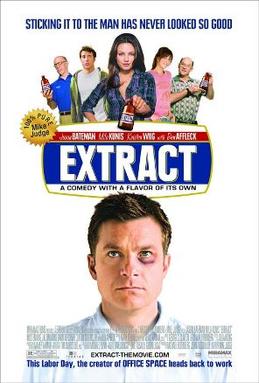
Dull and disappointing, this rote comedy sucks the life and energy out of what should be an excellent cast. Nobody suffers more than leading man Jason Bateman whose normally hilarious brand of sober comedy has nothing to play off and he instead comes off exhausted and uninterested. The story of Bateman as a small business owner not necessarily unhappy with his marriage or station in life but more just bored goes nowhere fast and then just stays there for an hour and a half. Mila Kunis and J.K. Simmons show sparks of life as a grifting con artist and Bateman's business partner respectively, but both are wasted with screen time probably totalling a combined ten minutes. The same can be said for the underrated Clifton Collins Jr. as a factory worker with a heart of gold who gets his balls blown off in an accident. Kristen Wiig shines a bit in the latter half as Bateman's similarly disinterested wife, but this doesn't overcome her near-absence in the first hour. The true shining star of the film is Ben Affleck, who really seems to be relishing his role as a crackpot hippie bartender who tries to help Bateman out; he accounts for most of the movie's best bits (and there are a few). Actually, Dustin Milligan is pretty funny as well as a moronic would-be gigolo, but when Dustin Milligan of 90210 fame is one of your comedic big guns, you should know your movie is in trouble. Gene Simmons is scary looking, but not much else. Writer/director Mike Judge tries to graft on some heart and some dark comedy in various places, but it's a forced, awkward fit; "Extract" is ultimately a flick that leaves you wondering with such great talent involved, what exactly went wrong.

Friday, September 11, 2009

Linko! XXII


* My favorite web comic, John Allison's Scary Go Round, ends today. What a bummer. As soon as I heard about the impending finale of the strip, I stopped looking at updates from the site in my Google Reader so I could spend tomorrow experiencing the whole wrap up to the adventures of Shelley, Amy and the rest of the gang while nursing a hangover and having a bit of a cry. If you're like me and don't read many of the nerd-culture and meme-celebrating gag-a-day web comics, please click through to the site and pop into almost any story arc and get reading. The strip really makes great use of the serialized story format, which I wish more web comics I have saved did. Suggestions for replacement reading welcome, although I'm excited to see what Allison's next project is too.

* Speaking of getting into new web comics, I may end up doing that through the new site Archive Binge, whose stated goal is to help you get caught up on strips that have been serializing for a while. Nifty. (Via Tom)

* Link that my older brother with two kids sent me Link: The story of two kids who fell in love with the Justice League after their uncle bought them a season of JLU DVDs. I can only hope to one day be this great to Colin and Lucy.

* Dave Paggi ReTweets the best links Link: Whoa. New Al Columbia book. I repeat: Whoa.


* OK, now I'm totally fucking confused. Anyone who's read this column with any regularity knows I've been following the story of the big ass Gundam they built in Tokyo lately. The thing was a giant robot built to scale (or close to scale) with the fighter bots of the famed anime. It had something to do with the Olympics, I guess. Then two people got married under it. Now, it's being disassembled piece-by-piece. WTF? As many blogs by Americans obsessed with Japan I've seen about this thing, I've yet to see anyone explain exactly what its purpose was.

Do any of you know why this thing was there or why it's been taken down? I mean, I'm happy about the idea that it won't be around when the final decision is made when the International Olympic Committee decides where the 2016 games will be. Jami and I drove by the building with the runner's mural on it, and they've since expanded the thing to include more athletes! Take that, Tokyo! On the down side: Michael Jordan has declined an invitation to fly to Europe and meet with the I.O.C. on Chicago's behalf. This is going to come down to the wire, me thinks.

* I spent a lot of time this week on the homepage for They Might Be Giants watching YouTube videos of animated versions of songs of their new kids album Here Comes Science. Click through a scroll down to watch some including the "almost political if it wasn't just common sense" track "Science Is Real." And if you want to know a bit more about the creation of the album, this article from Wired gives great background and has an audio link to one of the best tracks on the disc, the Danny Weinkauf-sang "I Am A Paleontologist."

* I don't link much to Superpunch from here because most of the comics-specific stuff from John Struan's totally bookmark essential catch-all nerd blog gets spread around everywhere else, but no one in my immeadiate sphere of influence seemed to jump on this quick interview with illustrator Lincoln Agnew about his super adorable work on the picture book Harry and Horsie which is about David Letterman's son going into space.

* I dug this interview my bud and Marvel.com Tuesday Q&A replacement Kevin Mahadeo did with Jeff Parker on the upcoming Agents of ATLAS/X-Men mini series.

* Hey! Lars Brown is on Twitter! And in my first week following the North World artist, my man posted a link to the weekly work schedule of a working manga artist in Japan. And I was going to link to it here to, but then I saw Caleb's write up of it, and you should really go read his version just for the headline he came up with.

* Jesse sent a bunch of us this video...you have to watch it.


The announcer is my favorite part. Here's Bill Ass' response:


* OK, I'm tired. If you live in Chicago, come out to the Mutiny tonight and see my band RF Modulator hack through a horrible unrehearsed set without our bass player at 10:00.

Thursday, September 10, 2009

Remember the X-Men arcade game?

There are those who would have you believe that Pacman or Mortal Kombat or NFL Blitz or Ms. Pacman is the greatest arcade game of all-time, but these people are crackheads, liars and fools. The one and only true claimant to that prestigious throne is the legendary X-Men arcade game of 1992.

Those who experienced the magic in their youth know what I'm talkin bout (I'd include you kids with your emulators, but seriously, this was something you needed to do live and in color). The truly fortunate knew the X-Men game as that massive construct over in the corner that spread its action across two full-size screens in such a manner that characters went dark if they ran across the middle too fast. You recall getting to one of the six joystick arrays as fast as you could and being sure to have plenty of quarters in tow, lest you lose your spot or have to leave to refill and then come back with only Dazzler available to play as (crammed up in the corner spot where it was nigh impossible to see the action no less). You remember not caring that Sentinels were the same size as you as you dispatched them by the dozen and not asking why the Juggernaut needed some sort of bazooka.

The X-Men arcade game followed Cyclops, Wolverine, Storm, Colossus, Nightcrawler and Dazzler--provided you had at least five friends--as they battled through the streets of (maybe) New York, the Savage Land, multiple high tech bases and elsewhere trying to save Professor X and Kitty Pryde, who had been kidnapped by Magneto. In addition to being able to punch, slash and kick, each character got a special mutant power that you stored and saved for the bosses (or when you were fighting too many lizard dudes and got frustrated). Of course since Wolverine just being able to pop his claws wouldn't be too visually impressive and you didn't want Colossus to be flesh-toned the bulk of the game, Wolvie got "adamantium laser claws" that shot big ass beams while Pete flexed his metal muscles to release a huge energy spark and yell like a constipated grizzly bear.

It was awesome.

Another thing that was awesome was the graphics. It was 1992 and we had just barely gotten our minds wrapped around Super Nintendo, so even for an arcade game, X-Men had and incredibly slick, vibrant look plus wicked G.I. Joe-quality animation sequences. But as killer as the graphics were, the sound was even better, as the boom of this game echoed through the arcade, which rocked since it was ridiculously quotable, whether the Blob was insisting "Nothing stops...the Blob!" or Wendigo was screeching his name time and again as you beat the white fur off him.

I've got two very vivid memories of the X-Men arcade game. The first occured one summer somewhere in the neighborhood of 1993 when I was like 11 and at Camp Frank A. Day. At the end of every July, we would take a trip to the Riverside amusement park (today Six Flags New England) for a day of rides, games and bad food. However, what I would get most excited about, being averse to heights and shitty at getting rings around milk bottles, would be holing up in the big ass arcade and stretching out the $15 they'd give us for the day at the X-Men arcade game. This particular year, I had to have been at the game for hours, alternating characters as I ran to get quarters, but teaming with the same group of seven or eight kids to get all the way to the end. It took us hours, and we barely noticed that a massive thunderstorm had formed around the park, shutting most everything down (that we were in an open air structure and failed to note the massive quantities of rain and huge lightning crashes I like to think speaks to our dedication and nothing else). I was mindful of the time and that I was going to miss the bus back to camp if we didn't clear Asteroid M pretty soon, but as we were on the precipice, the storm surged and knocked out the power of every machine in the arcade. When it rebooted, there we were, crestfallen and back at the opening screen.

I believe it was the next year that my family took a vacation to Disney World and nestled in the tiny game room of our Polynesian-themed resort hotel I located a more modest version of the X-Men arcade game with only one screen and four players. It was rare that there was anybody else around the game outside of occasionally my little sister, so for the most part, I wound up playing the game myself, which I had never really done before. On the smaller screen and able to select your player as opposed to the characters being married to a particular location, I developed a new appreciation for Cyclops, who I had previously stayed away from by virtue of him being the upper left-hand corner guy. His optic blasts were way easier to control than just about any other mutant power and the guy had a mean jumping spin kick for a lanky white dude. All on my own I never made it to far into the deep levels, but I did rack up killer high scores as Cyclops that got erased each night when the place shut down.

It wasn't until college that I made the miraculous discovery that the X-Men arcade game was actually based on an aborted 1989 animated pilot called Pryde of the X-Men. Neelless to say I hopped right on eBay and made that sucker mine; it has been a prized possession for several years now. A whole other post would be required to expound on the virtues of Australian Wolverine calling Toad a "bloody dingo" and creepy child molester Nightcrawler hitting on Kitty Pryde, but some day soon I will find the strength.

Bottom line: my wedding is coming up in about a month and a half and if you can find one of those coin-op suckers, it would not be an inappropriate gift.