Monday, March 4, 2013

Art Attack: May 2013's Coolest Covers

-Colleen Doran is an artist whose work I've enjoyed whenever it's randomly popped up into a back issue of something I read, but I don't have that much exposure to her because, y'know, I mostly read super hero comics and she hasn't done many of those (at least not that I know of or in awhile). She was also really nice the one time I met her at a con. I'd like to see her art more. Would I like A Distant Soil? I honestly don't even know what it's about, but I feel like I might.

-Alpha: Big Time #4 has been the wallpaper on my computer at work for a little while now. Great concept, and also a great background that doesn't obscure your desktop icons.

-I'm rooting for Nic Klein. Guy's stuff on Winter Soldier is really visually bold and takes chances; it sets the mood and conveys the action perfectly. His Avengers Assemble cover here stretches him a bit out of the spy genre, but it's still dark stuff, being an Age of Ultron cover. I'd love to see his take on the classic Avengers, X-Men, etc.

-Alex Maleev makes the list twice this month. When he's on--and he's always on--his covers are just gorgeous. Both on Batman and Daredevil I dig the smoothness of color; it's a contrast to some of his more recent work on stuff like Moon Knight, which was still beautiful, but with a much rougher overall texture.

-The cover to B.P.R.D.: Vampire makes me miss Daytripper and wish it were an ongoing series.

-Is Mark Brooks the most clever cover artist working at the moment? Possibly. He knows how to have fun.

-Guardians of the Galaxy #3 was my desktop background for a bit, but as much as I loved having a raccoon staring at me while I worked (I'm, not being sarcastic), the aforementioned icons got lost. Also a great homage!

-Here's something about me: I love skeletons on fire in my comics, so it was a given I was going to like Jason Pearson's Suicide Squad cover.

-The other contender to Mark Brooks' reference a couple grafs back throne: Mike Del Mundo. Where does he get these ideas? Surely Daniel Ketchum has nothing to do with it...

-Jamie McKelvie wears a crown all his own as the king of using negative space better than a lot of artists use positive space (is "positive space" a thing?).

A DISTANT SOIL #30 by Colleen Doran

ALPHA: BIG TIME #4 by Humberto Ramos

AVENGERS #11 by Dustin Weaver

AVENGERS ASSEMBLE #15AU by Nic Klein

BATMAN: THE DARK KNIGHT ANNUAL #1 by Alex Maleev

B.P.R.D.: VAMPIRE #3 by Fabio Moon & Gabriel Ba

DAREDEVIL: END OF DAYS #8 by Alex Maleev

DIAL H #12 by Brian Bolland

FEARLESS DEFENDERS #4 by Mark Brooks

GUARDIANS OF THE GALAXY #3 by Steve McNiven

MORBIUS: THE LIVING VAMPIRE #5 by David Lopez

SUICIDE SQUAD #20 by Jason Pearson

SUPERIOR SPIDER-MAN #9 by Marcos Martin

UNCANNY X-MEN #6 by Frazer Irving

X #1 by Paolo Rivera

X-MEN #2 by Amanda Conner

X-MEN LEGACY #10 by Mike Del Mundo

YOUNG AVENGERS #5 by Jamie McKelvie

Sunday, March 3, 2013

The History of the X-Men in February


A couple days late, but here goes…


UNCANNY X-MEN #493 (2008)
We’re knee deep in the Messiah CompleX crossover here, and I’m also a few months into my tenure as a freshly minted Marvel employee, so this is a book I actually worked to promote. The plans for what was going on in X-Men were already pretty pat at this point (I knew the next year or so of stories even when I was back at Wizard) and I was still getting my sea legs as far as Marvel.com, so we didn’t do a whole lot on this—instead getting g ready for what was coming after, working a few months out—but it was cool to be involved. I was particularly enjoying this storyline both as a fan and somebody on the inside because it reminded me a lot of X-Cutioner’s Song and big crossovers of that ilk, where all the teams were involved, various masterminds were working at cross purposes—some villainous, some more shades of gray—and heavy emotional stuff was broken up by big fights, like the one in this issue where the Sentinels placed at the Xavier Institute by the government go haywire. Even though I don’t think any of the writers involved in Messiah CompleX were big X-Cutioner’s Song fans—I believe at the least Ed Brubaker and Mike Carey weren’t that familiar; I could see Chris Yost and Craig Kyle digging it; and of course Peter David actually worked on both stories—editors Nick Lowe and Will Panzo were (and are) big time. I really love David Finch’s cover here and also was a big fan of the New X-Men “kids” like Gentle getting a chance to shine against the Sentinels, as that was another thing I always liked about X-Men crossovers: the characters you didn’t expect to getting their moments.


UNCANNY X-MEN #416 (2003)
Another relatively standalone issue near the beginning of Chuck Austen’s run as Uncanny X-Men writer, and while I really dug both his opening arc and the Northstar story I discussed last time, I think this was the first time he overdosed a little on the soap opera (and this is coming from the world’s biggest Melrose Place fan). One piece of drama that seemed a bit forced was Nightcrawler asking Iceman if he wanted to go to the brothel Stacy X used to work at to help retrieve her belongings and then Bobby going off on Kurt kinda out of nowhere about how the original five X-Men were the only “real” X-Men, despite the fact I’m pretty sure Nightcrawler had logged as much if not more time than him on the various teams at that point. There are also several scenes in the school infirmary focusing on new character Annie, a nurse who has fallen in love with the comatose Havok, having gossipy conversations with Stacy, Northstar and others that come off as belonging somewhere else. There’s a nice subplot with Juggernaut and Sammy the Squid Boy where they bond over how crappy their childhoods were or something, but it wasn’t particularly memorable. I appreciated what Austen was trying to do, as he kind of had a lot of the same melodrama sensibilities I do, but it sometimes felt like he was trying to fit a lot of square pegs into round holes with his subplots and abrupt changes in characters’ personalities. Probably more interesting is seeing Manga artist Kia Asamiya’s take on the team, which was really unique and cool; I dug it even more when he got to open up with more action in the months to come.


UNCANNY X-MEN #352 (1998)
I picked this issue up on eBay sometime around 2004 when I was trying to fill in the holes in my collection, particularly the mid-90’s stuff. I love that it boasts right front and center on the cover “Featuring possibly the most artists ever on one title!” It’s a crazy awesome array of artists who would become big a couple years later like John Cassaday and Tommy Lee Edwards plus folks on the cusp like Terry Dodson and J.H. Williams III rounded out by the likes of Darryl Banks and Cully Hamner. The story is a bit of a throwaway, with Cyclops and Phoenix, who recently left the X-Men, flying back to Alaska and foiling a weird A.I.M. plot; meanwhile, back in Westchester, Archangel gets yelled at for not being around much and Cannonball gets a letter from Meltdown as he’s being budged off the team back to X-Force.


UNCANNY X-MEN #297 (1993)
One of my very favorite issues from when I was a kid that I think still holds up today as this is the epilogue to X-Cutioner’s Song—one of them at least—by Scott Lobdell and a young Brandon Peterson following three stories involving pairs of X-Men in the fallout of all the chaos. First up, Beast and Archangel fix the damages done by Caliban to Harry’s Hideaway, the local bar and restaurant the X-Men are always going to, and reminisce about their formative years at Xavier’s School, including a great bit where Warren remembers how he paid Hank to write one of his papers for him and got screwed when Professor X asked them to deliver the reports telepathically, then Hank admitting he tipped off Xavier—after he cashed the check—leading a stoic Warren to spray him with wood varnish. It’s a nice sentimental bit, and especially neat to see the at-this-time ansgty as all hell Archangel get razzed by his old buddy and smile a bit (they also get caught roughhousing by a cop and use their image inducers to pose as normal construction workers). Second there’s a short but sweet and crucial interlude with Rogue and Gambit where, for the first time, their flirting of the past couple years goes to the next level as she calls him out on the fact that he always teases her knowing they can’t touch, he walks away, then returns with a blanket to keep her warm and they share a tender moment. Last but not least, Jubilee encounters Professor X, who has regained his ability to walk temporarily, and convinces him he should try rollerblading, only to pull off a pier in a playful way (not a “trying to kill him”) way. They have a conversation about how he normally intimidates her but she’s seeing he’s actually pretty normal, which he takes as a compliment. At the end, he starts walking back toward his wheelchair, the lingering effects of the Techno-Organic virus cure wearing off, and when he starts to stumble, after initial reluctance, she helps him in the silent final panels. Since Jubilee came onboard during the period Professor X was away and never really had much of a bond with him, this was a neat idea. This issue was truly Lobdell at his best.


UNCANNY X-MEN #226 (1988)
The penultimate chapter to Fall of the Mutants; I picked it up during that same eBay X-Men run, but it’s back in Boston and just looking at the cover, I honestly can’t recall much about it. I remember more about the actual finale, where Forge screws everything up as usual and the X-Men fly up to where the Adversary is by using a combination of Storm’s winds with Longshot’s hollow bones and good luck powers (Longshot would end up being the big hero at the end of Inferno as well, so I guess Chris Claremont really liked him). Honestly, the thing that stands out most to me about this was that for some reason this issue was double-sized and the last chapter was not; I also liked the subplot with the reporters going into the war zone with the X-Men because they wanted to show the world mutants were ok.


UNCANNY X-MEN #166 (1983)
Another extra-sized issue that was technically only the second to last chapter of a big story, although #167 was really more epilogue anyway. This was the finish proper to the awesome first real Brood epic by Claremont where Paul Smith has taken over on art at this point and is doing a stellar job (just look at that cover). Cyclops gets taken over by the Brood egg inside him, screwing the X-Men big time (and leading to a great Cyclops/Wolverine fight), but ultimately gains control long enough to help turn the tide along with the newly-repowered Binary and Storm riding a big ol’ space whale. Lockheed also makes his debut (I think) here, saving Kitty Pryde and helping her head back into battle. Overall it’s just a satisfying story to read, as Claremont had done a great job really making me hate the Brood because of the gross and horribly invasive way they had gone after the X-Men and because our heroes had been through so much over the past several issues, so their win feels earned and good. It’s also a story with consequences, as Kitty in particular does not feel like the same character who came in, very much scarred and battle hardened by the experience, but struggling to hang on to her innocence. Finally, there’s a great cliffhanger, as the X-Men realize that there’s one Brood egg left, and it’s incubating in Professor X back on Earth…


X-MEN #109 (1978)
The X-Men are freshly back from their first real space adventure with the Shi’ar, and while Jean Grey tells her parents about becoming Phoenix, Wolverine along with Storm, Colossus, Banshee and Moira MacTaggert get ambushed on a picnic by Weapon Alpha, aka James Hudson, Wolvie’s old boss in what would become Alpha Flight as well as the future Guardians of that same team’s fame. It’s the first real hints of Wolverine’s past beyond the scene where Xavier recruited him from Canadian intelligence back in Giant-Size X-Men #1, and also the doorway to a bunch of great characters, as Mac would return not long after with Northstar, Sasquatch, et al. in tow. To this day, Dave Cockrum’s design for Weapon Alpha/Guardians stands out as a really slick one that you don’t need to be Canadian to appreciate, I don’t think. This issue was more or less faithfully adapted by the 90’s animated series in the “Repo Man” episode (they probably had Rogue and Gambit doing all the Colossus and Banshee stuff, I don’t recall).

Saturday, March 2, 2013

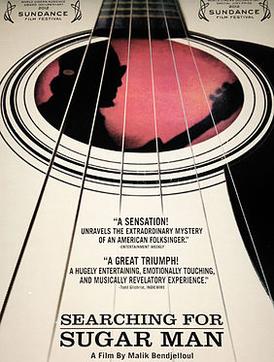
Paragraph Movie Reviews: Searching for Sugar Man

If you don't have plans to see this movie, you can check the spoilers here and then come back.

This documentary about Rodriguez, a relatively unknown would-be 70's rock star from Detroit, kicks off with a South African man talking about how this cipher is one of the best-selling and most influential musicians of all time in his homeland, but remains shrouded in mystery aside from rumors about how his career ended: with the artist lighting himself on fire and perishing during a live performance. With a hook like that, it's impossible not to immediately want to know more, and writer/director/producer Malik Bendjelloul does a great job peppering his work with cliffhangers and payoffs to keep the viewer riveted. The story of Rodriguez is a unique and incredible one, and, trying not to give too much away (though that's going to be tough) ends up being far more uplifting than the open would suggest. I will say that Watching for Sugar Man simply as a standalone piece I enjoyed it without much question, but after it won the Academy Award and was proclaimed the best documentary of the year, I did question a bit more about how good a job Bendjelloul and his collaborators really did and how much was just them getting compelling subject matter that did a lot of the work itself. The interviews Bendjelloul conducts are well-done and don't pull punches, but also seem to suggest that a lot of the leg work for the piece was done a decade earlier by South African fans and journalists, it's just being brought to light now; I certainly don't fault a filmmaker for happening upon great discoveries like that, but again, the success of the finished product opens it up to greater scrutiny. The graphics used for transitions and scene setting are a mixed bag, as some really caught my eye and stood out more than usual on a documentary, but on the flip side, others were distracting. If I find particular fault with anybody, I guess it would be cinematographer Camilla Skagerstrom, whose love for lengthy tracking shots of Detroit streets I don't share. I do think the whole thing was well-paced and, as I noted above, knows when to place the next hook, even if the focus can scatter. Also, it goes without saying that the soundtrack, taken completely from Rodriguez's catalog, is outstanding; the guy really was great. Even after applying the "did it deserve to be the best?" filter, I find I still really enjoyed Searching for Sugar Man; it's one thing to happen upon a great documentary subject, it's another to keep it compelling for even 86 minutes.

Tuesday, February 12, 2013

Save Olympic Wrestling

I started my day off today taking the morning train into New York City and learning that the International Olympic Committee had made the decision (or at least is beginning to make the decision) to cut wrestling, both freestyle and Greco-Roman, from the Summer Games effective 2020. If you follow me on social media, I tend to think of myself who does not easily fly off into rants of multiple tweets or ponderous Facebook entries, but this did the trick.

For all four years of my high school career, I was a member of my school's wrestling team. Initially my motivation to join was a combination of the fact that my cousins had all done it and I idolized them, and of course because I loved professional wrestling and even at 14 didn't completely grasp the vast differences.

Wrestling was one of the most difficult things I ever did. It was physically exhausting and mentally draining. We used to make fun of the track team because some days their whole practice was a three mile run and that was the warm-up we did before two to three hours of cardio and wrestling (at the time I was a puffed up high school jock--when I wasn't a sensitive actor or snarky writer--and didn't get that runners had to pace themselves at a specific routine or ruin their bodies for competition; I developed tremendous respect for runners, gymnasts and swimmers in particular as my overlooked brethren when it came to the most physically demanding sports). Beyond that, not knowing at the time what I know now about my propensity for anxiety attacks and the like, I'd pace like a madman and drive myself nuts before I stepped out on the mat each time.

Along the way, I snapped two ligaments in my left shoulder that had to be surgically repaired, sprained my left ankle to a degree that it still swells up when I run more than a mile today, and worked over my wrist joints to the point you can audibly hear them pop whenever I raise my hand.

I list those injuries not to draw attention to my toughness (maybe a little), but to point out how much wrestling meant to me that despite all that I never considered quitting.

Years before I was diagnosed with any sort of stress disorder, sought therapy or took medication, wrestling helped me develop the mental toughness I needed to get through high school. The guidance of my coaches, the support of my teammates and the pride I took in being able to survive and when I was lucky thrive in a form of competition more demanding than any other I knew of gave me the courage and confidence to overcome my own fears; if I could do this, I could do anything.

I started as a 110 pound freshman who lucked into a spot on the varsity squad to a team captain and league all-star (second team, but still) my senior year. I learned leadership, teamwork and determination from my years as a wrestler and have carried all those lessons through my adult life.

Admittedly I come to today's news from a somewhat uninformed place (not a shocker), but from what I can tell, the IOC's decision is rooted in the fact that there can only be 25 events at the Olympics and with the addition (I believe) of golf and rugby, two events needed to be cut. A combination of perceived poor visibility, failure to follow regulations and politics led to wrestling getting the chop (the first I don't buy, the second doesn't fly with me while boxing remains an event and the third has to do with keeping stuff like ping pong and cycling because China and western Europe like them and have more sway on the IOC, which is...yeah). I'm anticipating the gender equality argument, but women have been competing in freestyle wrestling on an Olympic level for years (all-female and mixed gender wrestling teams were on the rise when I was in high school and have only grown in popularity since).

I don't want to slag on anybody's else's passion, so I won't go down the "how they get rid of wrestling when they still have badminton and dressage" route; all I can do is argue the case for wrestling, and that's talking about what a positive role it played in my life and why I would hope the IOC would see the value in encouraging young people to get involved in an activity that strengthens them as an individual while also making them part of a team like few others can.

Like track, swimming or gymnastics, wrestling doesn't have a professional league like an NBA or PGA, so the Olympics is what drive high school and college wrestlers to keep going. To deprive the sport of that dream is to cut it off at the knees. This is putting aside the great drama wrestling has provided with stories like Kurt Angle's gold medal victory in 1996 wrestling with a broken neck.

My question would be why there needs to be a ceiling of 25 for events. Is it a matter of TV time? Every station can choose what they air, can't they (my wife made this point)? If its just service to a draconian set of rules, it's time those rules be overturned.

If you wrestled, if you know somebody who wrestled, if you're a fan or if you just value the things wrestling can teach, I urge you to make your voice heard. Look into petitions. Use the #SaveOlympicWrestling hash tag on Twitter. Learn about the issue and see how you can help. The IOC is going to review this issue this summer; I hope their minds can be changed.

Thanks for reading.

Sunday, February 10, 2013

Art Attack: April 2013's Coolest Covers

-If I were making up a list of dream characters I wanted Paolo Rivera to draw, Sleepwalker would likely not be on it, but given his surreal design and Paolo's knack for making fine art out of the unusual, it's a great fit.

-That Pat Gleason Batman is one you could plaster across consumer products, posters, wallpapers, etc. for years to come. It just encapsulates the character perfectly and looks cool as heck. There are a million ways to draw Batman, and to come up with an "on model" version seems wrong, but that's about what I'd picture.

-I've said it before, but I would really really like to see Dustin Nguyen drawing more stuff, y'know? Is he still doing interiors on the Batman Beyond digital book?

-No idea what Dark Horse Presents is about this month, but Dave Johnson really is an outside-the-box master.

-Mike Del Mundo is a revelation, man. He does clever and inventive two different ways this month: funny on Deadpool Killustrated and more cerebral on X-Men Legacy. This guy is only going to get better too. I want to see inside his brain.

-I love Mike Allred's re-imagining of the Yancy Street Gang so much.

-If you're gonna do an homage, homage the best (see: Mighty Skullkickers).

-It may be a different Nova, but it's still a kick to see Mark Bagley drawing a Human Rocket.

-What could be more Ryan Stegman than doing an homage to yourself and a cover you drew a couple months ago? Stegman, you beautiful genius.

-Who/what did Thanos just eat/kill?

-Young Avengers #4 by Jamie McKelvie is currently the wallpaper on my work computer.

ABE SAPIEN: DARK AND TERRIBLE #1 by Max Fiumara

ANGEL & FAITH #21 by Rebekah Isaacs

AVENGERS #9 by Dustin Weaver

AVENGING SPIDER-MAN #19 by Paolo Rivera

BATMAN & ROBIN #19 by Patrick Gleason

BATMAN: LI'L GOTHAM #1 by Dustin Nguyen

BATWOMAN #19 by Trevor McCarthy

CONAN THE BARBARIAN #15 by Massimo Carnevale

DARK HORSE PRESENTS #23 by Dave Johnson

DEADPOOL KILLUSTRATED #4 by Mike Del Mundo

FEARLESS DEFENDERS #3 by Mark Brooks

FF #6 by Mike Allred

JUSTICE LEAGUE DARK #19 by Mikel Janin

KATANA #3 by Juan Jose Ryp

THE MASSIVE #11 by J.P. Leon

MIGHTY SKULLKICKERS #1 by Edwin Huang

MORNING GLORIES #26 by Rodin Esquejo

NEW AVENGERS #5 by Jock

NOVA #3 by Mark Bagley

NOWHERE MEN #5 by Nate Bellegarde

THE PHANTOM STRANGER #7 by Gene Ha

THE ROCKETEER: HOLLYWOOD HORROR #3 by Walt Simonson

SCARLET SPIDER #16 by Ryan Stegman

TEENAGE MUTANT NINJA TURTLES #21 by Kevin Eastman

THANOS RISING #1 by Simone Bianchi

ULTRON #1AU by Kalman Andrasofszky

UNCANNY X-MEN #4 by Chris Bachalo

WOLVERINE AND THE X-MEN #28 by Alex Maleev

X-MEN LEGACY #9 by Mike Del Mundo

YOUNG AVENGERS #4 by Jamie McKelvie


Monday, February 4, 2013

STC GG Q&A: Sean T. Collins talks Gossip Girl


Over the course of this blog’s history, I’ve been fortunate to have my work read and shared by major comic book sites, pros in multiple industries and the occasional minor celeb, but to this day, I get more excited when I receive a plug from Sean T. Collins than anybody else.

Sean T. Collins is a former co-worker/current friend/forever guru to all of us here at the Cool Kid’s Table. When it comes to writing intelligently, insightfully and oft-hilariously on comics, TV, movies and just about anything, STC is my standard of excellence, whether at his own blog, on one of his various ventures or even here when we’re fortunate enough to have him.

Sean spends a lot of his energy breaking down, y’know, “good” show like Downton Abbey or Breaking Bad, which I love to get his take on, but it was of course a special pleasure to read him attempt to bring some class and critical breakdown to a true American classic like Gossip Girl. As a fellow who’s versed in both art house smarty-pants stuff and daytime soaps, STC offers a unique take.

Imagine my joy then when as the final season of GG churned its way out Sean informed me, Kiel, et al that he was writing a Gossip Girl comic telling the “secret origin” of Chuck Bass! It’s fantastically drawn by Dan White and you can find the whole thing right here.

I immediately got on Sean’s case for an interview, and around New Year’s, he gave me the holiday gift of his extensive thoughts on the show, the comic, Chuck and more.

Do enjoy.


In stark earnestness, what made Gossip Girl a show you found worth giving your time to? I'm not talking guilty pleasure territory here, I'm asking what genuinely quality factors do you feel it had?

STC: As one of those obnoxious people who says things like "there's no such thing as a guilty pleasure," I have to go with stark earnestness regardless. In that light, I think it's starkly, earnestly a fun, soapy, sexy show about attractive young quasi-sociopaths getting involved in crazy hijinks. That's either going to float your boat or it's not, but it certainly floats mine.

Thinking about it more specifically in terms of its place in my viewing trajectory, maybe Gossip Girl was the first television show I was able to watch with the new appreciation for glam decadence that had opened up the music world for me a few years prior, I don't know. Looking back, I think it was the first soap I ever really watched, opening the door for The Vampire Diaries and True Blood and The Young and the Restless years down the line. 

But GG always had that deliciously incoherent mixture of celebration and satire of the lifestyles it was depicting, giving it an is-it-or-isn't-it edge that most of those other shows, however much I enjoy them from time to time, can't really match. This was especially the case when the characters were all supposed to be 17 years old—what can I say, I've been a sucker for teenage sensation since I was one myself. But the decision to go full-on pervy with the love interests in the final season—Nate goes jailbait, Ivy goes Oedipal twice over, Serena and Lily have both been to seventh heaven with the same guy, etc.—showed that the show never really lost its knack for being dirty even as the kids grew up and the show lost its must-see-tv buzz. You never knew when GG was going to pull something as shiny and sleazy as a mid-'00s Goldfrapp single out of its sleeve.

Did I mention it was sexy? I mean, I sincerely appreciate that, I truly do. For squeezing Blake Lively into all those toothpaste-tube dresses, for playing lingerie dress-up with Leighton Meester time and time again, for crafting a dandy-of-the-underworld look for Ed Westwick, for every glimpse of Penn Badgley's chest hair, for every close-up on the inhumanly beautiful face of Chace Crawford, Gossip Girl did humanity a great service. 

Finally, Chuck Bass and Blair Waldorf are terrific characters, as memorable as any on TV. It took them a while to get a handle on Chuck, obviously, but once they figured out what they had with him and Ed Westwick, a simultaneous Batman-and-Joker that would make "Batdance"-era Prince jealous...hoo boy. And Blair's manic perfectionism as expressed by Leighton Meester's chirpy caffeinated porcelain doll face—hoo boy again.

Going 90 degrees or so, what is absolutely ridiculous about the show to the point where it does become a guilty pleasure?

STC: This isn't so much a "guilty pleasure" thing as a "love to hate it" thing, but repetition, repetition, repetition. All those times someone found out something Serena was withholding from them, and she sighed with that slurry pitch-shifted voice of hers, "Look, I was gonna tell you, but..."—half-apologetic, half-irritated, all-ridiculous. All of Nate and Serena's four-episode-arc significant others. Rufus, the Human Turtleneck, disapproving Lily, Miss Congeniality, being cold. Vanessa spending however many seasons she was on the show busting everyone else's chops for, essentially, being Gossip Girl characters. It was fun to make fun of this stuff. 

Ditto all the things they picked up only to drop. Eric Van Der Woodsen, the adorable younger brother who could have been an awesome main character if this dirty and decadent show about teen sex weren't too cowardly to show a dude kissing another dude for reasons other than Chuck/Blair intrigue. The fact that all of them spent two seasons worrying about nothing but college and then all of a sudden, blam, it's never mentioned again. The need to cycle through love interests and villains preventing them from keeping most of the best of both categories around for as long as they deserved to—when they broke the mold, they had at least as many misses—I was never really sold on Ivy or the jailbait girl, though hubba hubba in both cases obvs—as hits Juliet, the Prince.


Now then, why a Gossip Girl comic? Of all the subjects out there and even all the TV shows I know you love and are intrigued by, what made this the right source material?

STC: The quick answer is that Robin McConnell of Inkstuds fame wasn't proposing to do a zine about any of those other shows, so I didn't get the idea to do something on anything else. The less quick, possibly less accurate, answer is that Gossip Girl fits squarely into some stuff I've been thinking about a lot lately in terms of comics writing: sex, success, celebrity, discontent. The comics I've done about Drake and David Bowie aren't a world apart from the world of young Charlie Bass.

Was there an aspect of doing a Gossip Girl comic that was less intimidating than doing, say, a Mad Men or Sopranos comic because there probably aren't the same expectations attached? Knowing you, I'm doubting this entered your mind, but if it were me, I'm sure part of me would certainly be thinking "Best case, it's art, worst case, it's parody I can easily get away with" or something along those lines.

STC: Hmmm...I don't think so, no. I mean, if I were to do a comic about Mad Men or The Sopranos I wouldn't write it in the style of those shows, you know? I wouldn't be competing with Matthew Weiner to see who could write Tony Soprano or Don Draper the best. So the weight of expectation wouldn't be insurmountable, for me at least. 

Why the structural choice to go with the newspaper style series of comic strips rather than one story? It's one of those things I would never have thought of and didn't realize how brilliant a choice it clearly was until I saw it laid out.

STC: Well, the whole thing clicked when I realized I could reenact the first Peanuts strip with GG characters, and that set the template for what was to come. But I'm sure on some level I was thinking about Daniel Clowes's work in this format in books like Ice Haven and The Death-Ray and Mister Wonderful and Wilson, where he uses individual strips or old-fashioned Sunday-page-length vignettes to tell an overall story. Other people have done that too—Tim Hensley and Adrian Tomine come to mind, not to mention all the actual comic strips that have told ongoing stories, Peanuts included—but I bet Clowes was what gave me the sense that you could really do this.


I know you've got a soft spot for Chuck Bass, so I wasn't surprised to see the story center on him, but what about this character intrigues and attracts you?

STC: He's just the break-out combination of actor and star on that show. As I said before, it's one of those remarkable Wolverine-type situations where they didn't quite have a handle on him at first, but they very quickly saw they had a golden goose and just kept cranking egg after egg out of him. As a result there was something of a no-prize factor in trying to figure out how the leering creep of season one and the vigilante hero of the later seasons could possibly be the same person. I was struck by the throwaway mention of Chuck losing his virginity to crazy-even-by-GG-standards Georgina Sparks when he was in the sixth grade and, because sexual hang-ups were basically the story of my own adolescence, figured that must be where the origin story would be located.
  
For anybody who has never read your thoughts on Gossip Girl, explain the Chuck-Batman thing.

STC: Like Batman, his one real super power is that he's unimaginably rich. He's a scion of privilege with a personality born out of tragedy. He walks the line between hero and monster. He dresses well. He's in love with Catwoman, basically. His catchphrase is announcing who he is. And he wears a lot of purple, which is a Joker thing not a Batman thing but it's in the ballpark.

How much time did you devote to actually setting this in –or lack of a better term—Gossip Girl continuity and thinking about where you knew the characters were before the show?

STC: Quite a bit, actually. I wanted it to work as well as it could, to the point where I asked Dan White, the artist I was extremely lucky to be able to work with on it, to try to find pictures of all the actors when they were 6th-grade aged and make it look like this really was an unseen season of the show. I tried to base all the relationships on whatever information about them we had from the show at the time. I think we did a good job, though I was bummed when the final season either revealed or reminded me that Serena and Georgina didn't meet and become evil friends until high school.


What did Dan think when you approached him with this idea? 

STC: Dan didn't have a ton of experience with GG, but several of his compatriots in the Mindless Ones group blog did, and they set him on the path of righteousness. I think that for Dan the real appeal here was the experimental appeal of collaboration, since he mostly writes and draws his own excellent stuff.

What aspects of this do you feel like were distinctly Gossip Girl and which were just a story you wanted to tell?

STC: Figuring out what Chuck Bass would be like before he became "cool"—that was unique to that character and that world. I wouldn't have thought to write someone like that but for the show. The rest...I think a lot of it was probably just me projecting about the inner lives of the popular kids in middle school who I continue to resent to this day, honestly, and that could have happened any which way.

How did you come to see young Chuck—and to a lesser extent the other characters—as he was in this story? How did you arrive at the characterization you landed on?

STC: Like I said, I had the idea of Chuck Before Chuck. A kid with that Croesus level of money and influence, that anachronistic vocabulary and sense of self, but largely pre-sexual and without the self-confidence and swagger and style; what would that look and sound like?

Who was the most fun to write besides Chuck?

STC: Georgina, for sure. She had to be true to the character on the show, she had to be the kind of person who would terrify and turn on and transform the pre-Chuck Chuck I came up with, and she had to be a young person with issues of her own driving her to behave the way she behaved, rather than just a plot device existing to service the needs of the Chuck story.


I know you think the end game for the show should be a Chuck/Nate romance, or at least you have intimated as much…

STC: The show's been pretty wimpy about same-sex relationships, as I said earlier. No way would it make two of its Big Three male leads gay at all, let alone gay and involved with one another. To be clear, I'm happy with Chuck and Blair working out, even though I can't for the life of me see why their collusion in criminally negligent homicide was necessary for their happy ever after to take place. I'm much less happy, however, about Nate winding up, in the parlance of my wife, FOREVER ALONE. He couldn't get with Jenny in her final cameo? Come on, GG.
  
All said and done, what were the parts of the comic you thought hit best?

STC: I like Blair, I like Bart, I like the longer monologues, and I think I got the sex stuff the way I wanted it to be, which was always gonna be the challenge.

Did you always know that was going to be the last panel?

STC: You bet. By the way, SHAME on the show for not giving Chuck one final "I'M CHUCK BASS." SHAME!


Could there be more Gossip Girl comics in your future or is it Vampire Diaries' turn?

STC: Haha! Neither, most likely, though with any luck I'll have some more TV-related stuff coming up.