Sunday, March 25, 2012

(Long) Paragraph Movie Reviews: The Hunger Games

If you don't have plans to see this movie, you can check the spoilers here and then come back.

Having a read the books fairly recently, it was tough for me not to be watching this movie with an eye to what was changed, how they did it, and whether or not it worked, so certainly I think my experience and opinion varied from somebody who went in "blind." In some respects, I feel like the transition was strongly handled. In particular, Gary Ross and company did a nice job boiling down a nearly 400-page book into a briskly moving two and a half hour film where plot exclusions made to keep the pace going never felt to me like they hurt the end product and in most cases seemed to help it. What I had trouble with was the loss of Katniss' inner monologue and how much it changed the character and the events unfolding around her in my estimation; this is a book where the main character is alone for its majority and thus the exposition takes place chiefly in her head, so more so than most adaptations it had a mighty hill to climb. I appreciate the paths they tried in order to get around this obstacle, like bulking up the character of Seneca Crane and cutting to his TV command center during the Games so we could see what was going on rather than Katniss telling us, but I think some key stuff still got unavoidably lost. The chief casualty to me was the development of the relationship between Katniss and Peeta, in many ways the bedrock of the entire story; in the book, it's a complex emotional journey that hinges largely on knowing she is playing to the camera a lot when she seems to be falling in love with him, but I don't feel like that came across in the movie, and that hurt it. Can I think of ways problems like this could have been handled? I can't; again, I think it was a particularly hard story to adapt and, while not perfect, they did a pretty good job since I did like it ultimately, but from a critical perspective, I find there are hole hard to ignore. On the acting side, Jennifer Lawrence may have been handed an even greater challenge, being robbed of essentially more than half her "lines" without an inner narrative, having therefore to portray so much through her actions, while also already playing the difficult character of Katniss, a girl we're supposed to root for, like, and buy other people liking despite how rough around the edges she is; she stumbled now and again, but given the immensity of the task I just outlined, I think she did a pretty impressive job. I wasn't as won over by Josh Hutcherson as Peeta; he had his moments, but to me he came off too weak, which is part of the character to be sure, but I didn't also get the charisma he's supposed to display that draws Katniss in. The supporting cast of more experienced actors was particularly strong, led by Woody Allen totally in his element alternating between ornery and charming as Haymitch, Stanley Tucci sending up the host archetype with aplomb as Caesar and Elizabeth Banks transforming herself completely to become the monstrously unaware and proper Effie; high marks for all. Wes Bentley also did a nice job as Seneca when, as noted, his primary function was to explain the unspoken stuff. Donald Sutherland and Liam Hemsworth did solid work as President Snow and Gale respectively, but obviously they'll have their time to shine in the sequels. Even though their moments were few, the crop of young Tributes conveyed an appropriately unsettling ruthlessness and joy with their Lord of the Rings vibe, Isabelle Fuhrman and Amandla Stenberg on opposite poles as ruthless and sweet in particular. This was a film where I really took notice of the make-up and costumes, from how unrecognizable Banks was as Effie to the way the population of the Capitol exhibited wealth and excess in such an unconventional way. The other technical aspects stood out as well, from the tendency to use off center close-ups of the person listening rather than speaking to the sound going out when Katniss gets overwhelmed on stage talking to Caesar. Did the larger commentary the nature of entertainment and audience complicity come across? Maybe. Again, it's a tough movie to wrap your head around, because there are so many beautiful elements on both the acting and production sides, but the enormity of the task in terms of adaptation casts a large shadow and the confusing or overlooked stuff adds up. I enjoyed it as a viewer but had issues with it when evaluating it as a piece of art; I'm curious to hear more from people who did not read the books.

Thursday, March 22, 2012

Comics Nepotism: Quicksilver & Hector Hall

Nepotism is an ingrained part of just about every facet of society, but it’s not always a bad thing. It’s the bedrock of great family businesses and parents being able to pass something down to their children beyond male pattern baldness or color blindness. Sure you’ll get some slackers getting promoted ahead of you despite your hard work just because of their last name, but nepotism also creates a healthy class of folks especially dedicated to their craft out of appreciation for what they’ve been given who end up being the best they can be.

Looking at pro wrestling (and it’s a blog post by me, so we’re going to), there are all the horror stories about promoters’ kids getting pushed too hard and too fast, but stretching back to the Von Erichs, Curt Hennig, etc. and through today to Randy Orton, Cody Rhodes and the eight billion other legacy competitors throughout WWE and beyond, you find some of the most talented and hardworking guys and girls in the business.

In short, the word “nepotism” seems to always have negative connotations, but it shouldn’t; we get some of our best and brightest because one generation instills in the next their tutelage as well as their sense of respect for what they’ve been born into. Comics has gotten some of our greatest talents because they followed in footsteps, from John Romita Jr., to the Kuberts, to Stephanie Buscema and so on.

It is also highly possible I’ve misused the word “nepotism” thus far, so long story short I think kids getting a shot because of their parents can be a good thing, and now with three at least semi-serious paragraphs out of the way explaining my feelings, I’m ready to talk about fictional characters.

I got on this train of thought yesterday because I was editing some stories about The Scarlet Witch and Avengers Vs. X-Men for Marvel.com, tagging related characters, placing Quicksilver in there because he’s her brother and getting a real “one of these things is not like the other” vibe.

Don’t get me wrong, I love Quicksilver. He’s both a jerk and a super speedster, so to say he’s in my wheelhouse would be an understatement. Loved him as an Avenger, loved him in X-Factor, love him in Avengers Academy. Peter David’s use of him to exposit why people with super speed are often obnoxious in the classic X-Factor issue drawn by Joe Quesada where they have the session with Doc Samson (oh you know the one) is one of the great character pieces of all-time; his squabbles with Magneto, his overprotective stance toward Wanda and his ability to spice up any team dynamic make him an invaluable denizen of the Marvel Universe. Also, I feel for the dude since he got mixed up with that harpy, Crystal.

However, at the end of the day, Pietro Maximoff is a guy whose dad controls one of the primal forces of natures and whose sister manipulates reality itself while he runs really fast. He is by far the underachiever of his family; he makes up for it in bluster, but it’s always interesting to me how Quicksilver ends up at the center of stuff that seems a bit above his pay grade powers-wise because of who he’s related to. If there is an example of nepotism on the fictional side of comic books, I think Quicksilver would be it.

House of M would of course be the major example, as Quicksilver gets The Scarlet Witch to restructure the entire world and becomes the force behind Magneto’s power in order to protect his family as best he can. It’s an interesting bit, actually, because the nature of comics generally dictate that the most powerful characters are at the center of stories like that simply because they’re the only ones who can hang in the big world-shaking rumbles (Superman is the only one physically capable of punching the Anti-Monitor to death, only Thor can survive an up close battle with an out-of-control Sentry, etc.), but Pietro bucks that hierarchy and pushes his way to where he needs to be motivated purely by character stuff; the fact that he can crack the sound barrier barely plays a role in House of M.

In this case, it’s another argument for nepotism (after a fashion, and I may still be using the word wrong, so this post is basically a flimsy house of cards), as it allows a character who wouldn’t be a prime time player from a power perspective crack the tired A-list and forces creators to drive their stories on why and how deeply some players care as opposed to how hard they hit.

My counterpoint—who may prove to actually be more supplementary or complimentary or something—over at DC would be Hector Hall, aka The Silver Scarab, aka The Sandman, aka Doctor Fate, aka probably the new Americommando or something someday. Hector gets into the hero business because his parents were Hawkman and Hawkgirl; initially, they don’t let him in the Justice Society, so it’s kind of anti-nepotism (ok, I’m definitely using this word wrong, but I don’t feel like using a dictionary and/or thesaurus right now), but he gathers up all the other JSA sons and daughter and forms Infinity, Inc., the ultimate “we’re super heroes because our folks are” group, so there you go.

Hector is actually pretty awful at being a super hero, but every time he fails horribly, keeps coming back, basically because he’s got nothing else; despite being some sort of scientific genius, wanting to follow in his mom and dad’s footsteps totally consumes him. He turned evil as Silver Scarab and his teammates had to kill him. He got played by the Dreaming as The Sandman and eventually got booted from the realm back to death by Morpheus. He came back again and had a pretty respectable run as Doctor Fate, but ultimately got beaten near to death and ditched his physical body to live back in the Dreaming with his wife and son.

Once again, the fact that a major facet of Hector Hall was his desire to prove himself to his family and that he continued getting shots to do so beyond the point of your average also-ran added layers to him and made him more interesting. Once again, the advantages he got by being linked to existing heroes were a benefit and not an annoyance, at least to me as a fan.

The silly point I guess I can wrap by making is that in real life we sometimes get aggravated at seeing nepotism in action even if it the beneficiary is best-qualified for their job because we’re human and we feel jealousy. In fiction, nepotism is actually a plus because it can build a character instantly and help them stand out by making their personal ties more important than their power set.

Did I seriously just spend all that time to make the assertion that we view fake people differently than real people? And how many times did I botch the use of the word nepotism?

Both Quicksilver and Hector Hall have white hair; hopefully that revelation makes up for any of your time you feel I may have wasted.

Sunday, March 18, 2012

Pimping My Stuff: Dear Teen Me

I always hate doing the "sorry for the lack of posts lately post, but...sorry for the lack of posts lately. I've been hit by the killer combo of two totally positive but very time-consuming things in some exciting new projects at Marvel plus the ramp-up to WonderCon as well as a move from Saddle Brook, New Jersey a half hour south to Edison in order to accommodate my lovely bride's new job as a nurse at St. Peter's Hospital in New Brunswick.

While things will keep going hard and heavy at Marvel (and I wouldn't have it any other way), now that I'm getting gradually settled in my swank new two-floor townhouse (it's pretty huge, but I'm a nurse's trophy husband now, so I deserve it), I'm hoping to get back to blogging a bit more regularly.

Or you'll get another sorry for the lack of posts post in a couple weeks.

In the mean time, I had the great pleasure of doing a guest spot over at Dear Teen Me, a blog run in part by my old co-editor-in-chief at my college paper (and not my same-named sister) Emily Morse. I wrote a letter to my teenage self that covered everything from my career to my relationship hits and misses to my health issues to my astonishment that Smallville lasted 10 years and more. It's a deeply personal piece and I'm quite proud of how it turned out, so if you follow this blog at all for me and not just the Adam-X pics, I think it's worth a look.

Gotta go unpack, but once I'm through these boxes, more posting! I hope! Maybe!

(That's my kneeling in the nWo Wolfpac shirt in the pic off top, by the way)

Tuesday, March 13, 2012

The Definitives: Hawkeye

Tom Brevoort once told me that Hawkeye was “the Wolverine of his day” (he was actually talking more about The Thing and using Hawkeye as a supplementary, but as said supplementary example better serves this post, that’s what I’ll be going with). Basically what he meant is that when the Avengers weren’t far from their founding and Marvel hadn’t gone too long into the Silver Age, Hawkeye was the rebellious voice questioning Captain America’s more conservative values in the same way Wolverine would later chafe against Cyclops and so on as this is a dynamic you’ll find in just about every super hero team past the Justice League from the 60’s.

Like Wolverine, Hawkeye was the loose cannon who did what he wanted despite the rules and did so with a brash tone, loud mouth and often disregard for the safety of himself and the property around him (he’s always been pretty good about shielding teammates and civilians though). Also like Wolverine, Hawkeye became pretty popular as a result of this; not three or four ongoing solo series at once popular (he’s had his books here and there, but I’d say general consensus is the character works better with others to play off of in a team setting), but he did ok.

Unlike Wolverine and his more modern ilk, Hawkeye was the bad boy of a more traditional time, so he talked a big game, but he still adhered to a relatively traditional moral code that excluded killing and extreme violence; in the recent past, some writers have had him walk the line of violating that, and an argument could be made that his experiences have led him that way, but I believe deep down Clint Barton still finds murder to be anathema, regardless of the reason why.

I think the combination of Hawkeye’s similarities to the loose cannon characters he’s something of the godfather to with the contrast against those that came later is why I like him so much. I’ve always been partial to the wisecracking smartass super hero, but I also like the swashbuckling romantic vibe of years gone by; Clint Barton combines the best of both worlds on that score. He will always speak his mind, he falls in love too easily and he’s far from fully matured emotionally, but he’ll also do the right thing when the chips are down, and even though he’ll drive Captain America nuts, he’ll also be the first to come to his defense when anybody else does it.

Gotta love the guy.

I should offer the disclaimer that I was not an avid Solo Avengers or West Coast Avengers reader growing up and have never really caught up on either, so I’ve got a pretty sizable Hawkeye blind spot (though I have read Hawkeye: Blind Spot), but here are my favorite stories featuring the Avenging Archer that I’d recommend to anybody looking to learn more about that dude with the bow and arrow who Jeremy Renner is playing.

HONORABLE MENTION: AVENGERS #223
A classic to be sure, as Hawkeye heads back to his old carnival stomping grounds and clashes with Taskmaster, who’s holding the show hostage, leading to the seminal shrunken Ant-Man on an arrow routine. It’s a fun story, and I’m a fan, but I think it’s actually a better Ant-Man and even Taskmaster yarn, not quite capturing the essential Hawkeye.

AVENGERS: EARTH’S MIGHTIEST HEROES
I love this series on the whole, and every character gets their time in the sun, but really Hawkeye’s story is my favorite part. Joe Casey really nails how the bulk of the early Avengers were good guys (and one girl), but thrown together by circumstance as a team and in many cases only acting as heroes because an accident led them to their situation (Iron Man and his shrapnel, Thor and his exile, Hulk and his…being The Hulk); even Captain America became an Avenger mostly because they found him and he needed guidance in a strange world. Hawkeye’s the one guy who actively seeks to become an Avenger, because even though he started as a villain, it’s never what he wanted. Casey’s story captures the driven desire of Clint Barton to do the right thing even when conventional wisdom stacks the odds against him, plus there’s an excellent relationship between him and Jarvis, and Scott Kolins draws one of my favorite Hawkeyes.

AVENGERS #189
Hawkeye gets tossed off the Avengers by Henry Peter Gyrich in order to fill a government quota (also, Gyrich doesn’t really like Hawkeye since the first time they met Clint tied him up, thinking he was an intruder in Avengers Mansion), but rather than mope for too long, he decides to show them it’s their loss. He swoops into Cross Technological Enterprises and auditions for their Head of Security gig by foiling their current system. Clint kicks back and looks forward to a relatively easy new occupation, only for Shi’ar super villain Deathbird to show up looking for trouble. Hawkeye is totally outclassed against a cosmic-level threat like Deathbird, but that’s when he’s at his best, using his wits to get through the situation, smiling as he does it and then stealing a kiss from the alien cutie when he’s done. This issue is basically a capsule bio for everything cool about Hawkeye (plus great John Byrne art).

HAWKEYE (1983)
The first true solo Hawkeye adventure, both written and drawn by the late, great Mark Gruenwald, who it turns out was a heck of an artist! Uncovering corruption at CTE, Clint investigates alongside former S.H.I.E.L.D. agent Mockingbird and runs afoul of the dude who would become his archenemy, Crossfire. It’s a fun caper that packs tons of action into only four issues and allows Gruenwald to widen Hawkeye’s range a bit, playing him as devil-may-care adventurer and hothead, but also delving into his deeper emotions and giving him a deep romantic subplot. Speaking of which, the chemistry between Hawkeye and Mockingbird is dynamite right from the start; you’re rooting for them from the get-go, and the end result doesn’t disappoint.

AVENGERS & JLA/AVENGERS BY KURT BUSIEK & GEORGE PEREZ
When Kurt Busiek and George Perez brought Avengers back from Heroes Reborn, establishing Hawkeye as a key member of the team was clearly a top priority. When everybody gets mind wiped and sent to Morgan le Fay’s crazy Camelot world, Clint is the first guy Captain America “wakes up” because he recognizes that Hawkeye is the heart of the Avengers. During the roster-building issue, you get the great thread of Hawkeye taking Firestar and Justice under his wing, and then doing the double take when Cap messes with him by offering them his spot on the team. And from there, the Avenging Archer departs in pretty rapid fashion, shuttled over to Thunderbolts by Busiek, where he did more great stuff with him and stayed true to another core element of the character: he goes where he is needed, not necessarily where he wants to be. Busiek and Perez reunited years later on JLA/Avengers and made this fan smile by having Hawkeye and Flash (not Wally West, but still) be the guys to pull the classic against all odds save when all seems lost.

HAWKEYE & MOCKINGBIRD
I don’t feel it’s favoritism at all to put my buddy Jim McCann’s series on here, because his passion for the character of Hawkeye (and of Mockingbird) in my mind created a fun arc that will hold up nicely in an evergreen sense, and the best thing is it was born out of love. You won’t meet a bigger Hawkeye fan than Jim, and his desire to do right by the character, not only telling the kinds of stories he loved but that can spread the appeal to a new generation, went a long way in my book. It’s a nice bookend to Mark Gruenwald’s series, with lots of callbacks, plus several love letters to the Marvel Universe along the way. It also doesn’t hurt that artist David Lopez is a gem and that Mockingbird’s brother’s name is Ben Morse; a great easy-to-acquire gateway to Hawkeye.

CAPTAIN AMERICA & THE AVENGERS
Hawkeye’s video game debut! Super fun, tons of characters, rad graphics, and the suspension of disbelief that Hawkeye’s bow when held horizontal is an equally powerful protector to Captain America’s shield, Iron Man’s armor and the Vision’s intangibility. Also: sky sleds!

Saturday, March 10, 2012

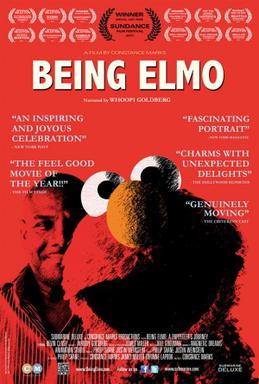
Paragraph Movie Reviews: Being Elmo

If you don't have plans to see this movie, you can check the spoilers here and then come back.

What makes a great documentary? I found this story of Kevin Clash's rise from his childhood dream of becoming a puppeteer to becoming the man who brings Elmo to life and all the steps in between to be captivating, heartwarming and inspirational. Clash is an intensely likable and interesting subject who speaks passionately and with great recall about his life and the adventures he's had throughout. The amount of archival footage that director Constance Marks was able to acquire dating back to Clash's high school days and detailing every step along the way from local Baltimore cable to Captain Kangaroo to Sesame Street is impressive and just cool (Clash either didn't believe what was happening and wanted to document everything, knew a documentary would someday be made of his life, or maybe a little of both with the amount of stuff he taped). The supplemental interviews from Clash's parents as well as figures like Frank Oz and other legendary members of Jim Henson's team were great; nothing felt tossed out. And of course the highlight (at least for me) was getting a behind the scenes look at how the Henson operation runs, be it through old test footage from a commercial Clash did with Henson and Oz to Clash helping train the staff of France's Sesame Street; it's fascinating to see what goes into these productions. I also loved watching the growth of Clash's relationships with grandfatherly Sesame Street designer Kermit Love as well as with Jim Henson himself, the stories of which I thought were supplemented in a neat way by the use of old photos and motion animation to fill in the gaps of what wasn't videotaped. Going back to the question I posed at the start of this review, though, does a documentary need some sort of tragic angle or obstacles the protagonists overcomes in order to be great? The bulk of Being Elmo tells me it does not, as most of the piece focuses solely on the positive aspects of Clash's life and career, and that worked just fine for me. There are a few spots, though, where Clash's strained relationships with his ex-wife and daughter come into play, and they just don't match up with the rest of the through line for me. There seems like there's a whole other documentary to be made about things like Clash's ex-wife telling him not to treat their daughter like a puppet or his regret over spending time making other children happy while not seeing his own; it's sad stuff and a provoking commentary on how people who never fully grow out of their childhood have difficulties with adult relationships and being parents. However, this portion of the documentary is dropped in somewhat haphazardly--his marriage is not mentioned until Clash talks about his daughter, and he already there refers to his spouse as his ex-wife--both souring your mood in the midst of this feel good tale and also raising questions that don't get fully explored. It feels like the filmmakers felt like they couldn't fully ignore this aspect of Clash, but also didn't want to give it more than minimal space; it's a 15-minute section you get the sense they felt obligated to put together rather than wanting to. However, warts and all, Being Elmo I would argue is indeed a great documentary and I'd highly recommend it.

Monday, March 5, 2012

Should Have Beens: Guy Gardner

This is an interesting (and debatable) one as this “should have been” is really a has been and even an is (and that’s how you do an opening sentence).

Guy Gardner is headlining (or co-headlining) his own well-selling series, Green Lantern Corps, and for the past few years before that was doing the same either in its predecessor or Emerald Warriors. He was perhaps the most popular member of the late 80’s/early 90’s Keith Giffen/J.M. DeMatteis Justice League and is always at least a cult favorite when that group shuffles its line-up (he’s technically on Justice League International right now, I guess, but he hasn’t been on the main team since just after Doomsday though a vocal segment always wants to see him there; his last dalliance in being recruited by the big guns was as a bit of a running joke during Grant Morrison’s run over a decade ago).

He had a respectably long-running—and underrated—solo series in the 90’s, he crossed over to animation with Batman: Brave and the Bold, and is generally a character held in high regard. Save for a period right after his introduction—he was in a coma—and the first few years of this century—he was in a weird limbo after sort of dying during Our Worlds at War before coming back via Joe Kelly’s Action Comics and getting rebooted as a Green Lantern by Geoff Johns—Guy Gardner has always more or less been a high B-lister verging on the A-list of DC Comics heroes.

And yet it feels like he had the potential to be more.

Guy Gardner is the most interesting of the human Green Lanterns. Kyle Rayner is more relatable, but Guy has more to him. He’s got more range than golden boy Hal Jordan and more depth than the shifting tabula rasa that is John Stewart. Don’t get me wrong, all of those characters are great (except for Hal Jordan), but while Kyle is likable, John has potential and Hal is a douche bag, Guy’s got layers.

He’s a genuinely heroic man trapped in the façade of a jerk by circumstance. Guy overcame a difficult childhood to become a social worker and later a teacher, working to better the community and world around him even as he kept his own aggression in check. He was judged equally worthy to be Earth’s Green Lantern by Abin Sur, with Hal Jordan only getting the nod because he was geographically closer. Guy eventually became Jordan’s back-up and friend, but suffered one tragic setback after another, getting hit by a bus saving one of his students, getting trapped in the Phantom Zone, and eventually lapsing into a coma (also, Hal Jordan romanced his girlfriend when he was out of commission one time; yes they both thought Guy was dead, but come on!).

All this piled up to create the Guy Gardner the DC Universe—and readers—are most familiar with: an arrogant, brash, hot-tempered loose cannon who also happens to be a noble and dedicated champion for justice (even if it’s not always evident). Part of this persona is written off in-universe as the result of his brain damage and whatnot, but the more interesting story to me is that of a man who had the potential to be a hero or a jerk, did his best to be the former, got knocked on his ass at every junction, naturally fell toward his darker nature, and now struggles to balance the two; that’s a character whose life and adventures I want to follow.

Unfortunately, as has long been the problem with a lot of characters who came to prominence in the Giffen/DeMatteis JLI, more often than not the deeper complexities of Guy Gardner have been ignored in favor of just writing a loudmouth who is obnoxious because he’s an obnoxious loudmouth. Giffen and DeMatteis were (and are) geniuses when it comes to working in subtleties, so that their parody is strong but when they’re being serious and giving their characters deep moments, it has extra added value; a lot writers who followed them only got the surface level stuff.

One writer who understood how to make Guy Gardner more than a cliché was Beau Smith, who penned Guy Gardner: Warrior during the mid-90’s. Smith explored the character’s past, the roots of his insecurities and why he had such a desperate need to fly in the face of authority. But Warrior wasn’t just funny book psychology; it could be as funny as JLI and Guy remained the bare-knuckled bad ass Smith loves to write, but with stakes that made you care about him. Your mileage may vary on Guy’s altered look and powers during his Warrior days, but that series was a revealing glimpse at the character beneath the gimmicks and how much potential he truly had.

As with so many of these Should Have Beens, unfortunate timing has been Guy Gardner’s enemy. His popularity and visibility peaked while he was on a team, so while Giffen and DeMatteis did wonders with him, they still had a half dozen other characters to juggle. His solo series was launched at the height of 90’s excess and didn’t quite find its way under Smith until the market was a more volatile place that couldn’t sustain unproven commodities. By the time Guy became viable again, much of his development had been forgotten and his chief function was gag cameos. Even now, since being reborn under Geoff Johns and shepherded along by the talented Peter Tomasi—who obviously cares about what makes the character tick beyond the obvious—Guy has to tie for third fiddle at best in the Green Lantern franchise behind the resurgent Hal Jordan and tenacious Kyle Rayner.

Guy Gardner has never had a chance to truly shine. He’s been a replacement, a team player, a joke and a co-headliner, but never gotten that top spot. Again, Tomasi does a great job with him in GLC, and I have every confidence he’ll continue to do so, but honestly, wouldn’t you love to see a movie about a wise ass who’s quick to throw the first punch because he’s fighting back against the bum circumstances life has dealt a good man who happens to have the most powerful weapon in the universe on his ring finger?

I sure as hell would.

Sunday, March 4, 2012

Paragraph Movie Reviews: Wanderlust

If you don't have plans to see this movie, you can check the spoilers here and then come back.

As a longtime fan, I'm impressed and pleased to see David Wain and others from the State/Wet Hot American Summer/Stella comedy cabal deliver a movie like Wanderlust that is their most mainstream and casual viewer-friendly effort yet without losing any of the feel (or indeed the in-jokes) of their previous work (Role Models probably exceeds it in terms of broad audience appeal, but it also loses a lot of the more quirky aspects in the process). The premise has Paul Rudd and Jennifer Aniston as George and Linda, a married New York City couple who lose their jobs and home and end up settling into a sort of hippie commune called Elysium as they try to get back on their feet and find their way; the set up provides a great gallery of weirdo characters as well as fundamental questions about discovering your path in life and prioritizing work, love and happiness (no lie, man, it's all there). As always, Rudd is game to be the heart of the story, kicking ass across the board, be it with physical comedy, improv bits in front of a mirror (seriously, these are downright uncomfortably funny), anchoring the dramatic end of the movie, etc.; he gets to go versatile as well, vacillating between the carefree and uptight half of the couple. Aniston puts in the effort and doesn't deliver a bad performance, but in all honesty, there's an exhaustion in her face and demeanor that undermines Linda supposedly being the dreamer of the two; she's not awful, but I don't buy her in the role. The greatest strength of Wanderlust, not unlike Wet Hot, comes from a deep bench ensemble, where the first half hour is essentially one great introduction after another, and the remainder is a well-balanced team effort. Justin Theroux is the standout as Seth, the charismatic alpha male of Elysium, getting under your skin with his passive aggressive attempts to undermine George and Linda's relationship even as he cracks you up rattling off outdated technology as the evils of the world or dance fighting a car; he's the kind of dimwitted douchebag Theroux himself has said he loves to play. The other principal scene stealers are Kathryn Hahn (who knows how to explode in bursts without pushing her co-stars out of the action, something Kerri Kennery could learn, I'm sorry to say), Ken Marino (completely over-the-top as George's cro-magnon successful older brother), Michaela Watkins (Marino's drugged out and long-suffering wife) and Jordan Peele (casual beyond belief Rodney). That's just scratching the surface, as Lauren Ambrose and Joe Lo Truglio are great as well, Alan Alda gets what he can out of limited material, and Malin Akerman is mostly there to be pretty, but has a funny line or two. Unfortunately, the weakness of Wanderlust is that Wain and Marino (the co-writers) are fantastic at crafting comedic bits and creating an environment for their actors to play in, but I think they still have trouble generating adversity and conflict for a more traditional movie like this. In Wet Hot, the "threat" that needs to be overcome is a falling meteor; when it comes to something more grounded like saving a marriage and having two adults come to terms with needing to give and take on their values, these guys haven't quite mastered it, so that middle portion of the movie slows down considerably. From an acting standpoint, Wanderlust is absolutely fantastic; from a writing and structural perspective, it's a great step, but still a work in progress. I laughed out loud for about 85 of the 100 minutes I was there, though, so in my mind, call it a win.