With technical brilliance and tour de force acting, The King's Speech in my estimation lived up to the hype even being an Academy Award for Best Picture brings with it. From the first measured shots of microphones through every pan and close-up, I was fully taken in by how Tom Hooper chose to frame his work and the visual calculation with which it was pulled off. Every set, costume and sound effect worked in the harmony you hope for from every movie. But even with all those aspects handled so expertly, it was in the performances that a story ostensibly of a man learning to control a stutter--surrounded though it was by political intrigue and the most explosive conflict of our times--became an engaging, tense, funny and riveting ride. The "action" scenes were montages of speech exercises or slow frames of a man taking to a microphone, but I felt as though I was watching Rocky for how invested I was. Colin Firth's King George is one of the finest performances I have seen in some time, capturing a complex figure who is at once a tortured outcast, an explosive child, a pitiable victim, a witty gent, a warm family man, and ultimately a good king. Firth plays every aspect expertly, with vigor, and shifts between them without a hitch; I felt awful for him, I felt anxious with him, I laughed at him and I rooted for him. Geoffrey Rush holds up his end of the central dynamic with equally adept skill, balancing the quirkiness of Lionel Logue with a brashness and confidence that never makes him seem the bad guy, but does give him sufficient edge; the chemistry between Firth and Rush is undeniable. It was a joy to see Helene Bonham Carter play against type (at least so far as the roles I've seen her in), coming off charming and whimsical as Elizabeth. Michael Gambon and Guy Pearce were nice casting coups as stoic George V and carousing Edward VIII while Timothy Spall demonstrated his usual chameleon skill in mimicking Winston Churchill. If I were to bring some criticism against the film it would be that the ebb and flow of Bertie and Lionel's relationship does get a bit extreme at times, their friendship swelling and dissipating alternately to a degree I didn't think was justified by what was taking place onscreen and could only be ascribed to holes in the narrative, but Firth and Rush were so spot on in conveying the evolution in their performances it's easily forgiven. The last ten minutes of a guy simply delivering a speech were as compelling and intense as any climax I've seen in recent years; this one earned its accolades.
Sunday, September 18, 2011
Paragraph Movie Reviews: The King's Speech
With technical brilliance and tour de force acting, The King's Speech in my estimation lived up to the hype even being an Academy Award for Best Picture brings with it. From the first measured shots of microphones through every pan and close-up, I was fully taken in by how Tom Hooper chose to frame his work and the visual calculation with which it was pulled off. Every set, costume and sound effect worked in the harmony you hope for from every movie. But even with all those aspects handled so expertly, it was in the performances that a story ostensibly of a man learning to control a stutter--surrounded though it was by political intrigue and the most explosive conflict of our times--became an engaging, tense, funny and riveting ride. The "action" scenes were montages of speech exercises or slow frames of a man taking to a microphone, but I felt as though I was watching Rocky for how invested I was. Colin Firth's King George is one of the finest performances I have seen in some time, capturing a complex figure who is at once a tortured outcast, an explosive child, a pitiable victim, a witty gent, a warm family man, and ultimately a good king. Firth plays every aspect expertly, with vigor, and shifts between them without a hitch; I felt awful for him, I felt anxious with him, I laughed at him and I rooted for him. Geoffrey Rush holds up his end of the central dynamic with equally adept skill, balancing the quirkiness of Lionel Logue with a brashness and confidence that never makes him seem the bad guy, but does give him sufficient edge; the chemistry between Firth and Rush is undeniable. It was a joy to see Helene Bonham Carter play against type (at least so far as the roles I've seen her in), coming off charming and whimsical as Elizabeth. Michael Gambon and Guy Pearce were nice casting coups as stoic George V and carousing Edward VIII while Timothy Spall demonstrated his usual chameleon skill in mimicking Winston Churchill. If I were to bring some criticism against the film it would be that the ebb and flow of Bertie and Lionel's relationship does get a bit extreme at times, their friendship swelling and dissipating alternately to a degree I didn't think was justified by what was taking place onscreen and could only be ascribed to holes in the narrative, but Firth and Rush were so spot on in conveying the evolution in their performances it's easily forgiven. The last ten minutes of a guy simply delivering a speech were as compelling and intense as any climax I've seen in recent years; this one earned its accolades.
Friday, September 16, 2011
The bizarre, unsatisfying finale of Entourage
Entourage concluded—at least as a television show—last weekend and unfortunately didn’t little to dispel for me my view of it as a franchise that peaked early and hung on too long, an opinion I get the sense even most folks who stuck with it the entire way seem to share. I don’t think the show ever completely lost its way in the sense that you could still count on at least a few chuckles an episode right through the end and most of the cast plus several supporting players remained strong in their work, but it also had a nasty tendency to shoot for the moon and then always let you down.It probably shouldn’t be surprising that Entourage aired its best material early on, as the refrain in these past few seasons increasingly became that they were great at set up, not so hot at following through.
When Entourage kicked off in 2004, it was a story of Hollywood excess and escapism that entertained without making you think too much, yet approached it’s material from a fresh perspective: We’ve seen countless shows and films about the young actor working for that big break and getting it in the end, but here’s a story that starts out after those credits roll, where the kid has just made it and we get to tag along and watch him enjoy the spoils.
Those first two seasons and even the first part of three were really the golden age of Entourage. You’ve got a likable, quirky group of guys who you get to enjoy watching navigate the waters of business, friendship and the social scene in Hollywood. The conflicts and relationships are raw and you want to see what will happen with them, be it E’s contentious dynamics with Ari and later Billy or how Vince is able to work around a failed tryst with Mandy Moore while filming Aquaman (that was a fun sentence to write).
The problems came as the show swelled in proportion and the priority shifted to bigger guest stars, bigger houses, bigger parties etc.; the characters didn’t so much grow as they became too big to fail.If you like your protagonists—and hopefully you at least have some level of affection for them—you’re not generally rooting against them, but for the purpose of good fiction, some level of tension and doubt is necessary. At some point Entourage turned a corner where not only was there never any danger of the characters failing to achieve their goals, there wasn’t even a question that the status quo would bounce back like a rubber band no matter what strain was put on it. You see it as early as season three when it only takes a few episodes for Vince to hire Ari back as his manager after a lengthy build to their “break-up” and it continued to permeate from there.
The breaking point for me was season five, where after Vince’s “dream movie” Medellin bombs, he gets fired from Smoke Jumpers, he alienates E and retreats back to Queen to fade away, and he gets a call from Martin Scorcese out of nowhere to play the lead in a Great Gatsby re-imagining. It doesn’t matter how compelling the first two acts of your story are or how much crap you put the hero through if his solutions come so simply in the end. There wasn’t even a cliffhanger to end that season, everything was just fine with everybody, and for no real reason other than that things always work out for them.
From there on out, it was just impossible for me to really get invested in Entourage storylines. I thought there was real potential in Vince’s self-destructive arc last season, but I never for a minute believed he’d actually be brought down for more than an episode (he wasn’t). I wanted to get invested in Ari’s divorce or E’s umpteenth split from Sloan, but I knew the relationships would be resolved, and worse, I knew they would be patched up with very little explanation.Even Turtle and Drama, who started the series as the lovable lazy loser and over-the-hill B-star brother ended up as a mogul savant and comeback kid respectively. Ed Brubaker noted on Twitter that there’s no group of friends where every single person achieves the level of success the guys on Entourage did, and (now I’m more extrapolating) while the initial disparity helped make these dudes really feel like your buddies, their enormous shared fortune by the end really squashed that.
The finale was such a commentary on and microcosm of everything that went wrong with the series as it continued I’d be a little surprised if the creators weren’t playing it at least a bit tongue in cheek (they used that “everything always works out for us” sound bite from earlier in the season too often in recaps and promos for me to believe they weren’t at least somewhat self-aware and referential).
At the center of the episode was Vince’s surprise engagement to Sophia. The storyline between these two introduced only a few episodes back was one that in simpler times I would have been intrigued by, as the idea of a strong woman was not interested in Vince and who he had to actually work to impress was a departure and contrast from his usual role as the pursued and Alice Eve played the part well. The lengths which he had to go to in order to even secure dinner with her set up what could have been an interesting courtship, particularly given how leery she was of him at first. It would have been interesting to see what he would have to do to ultimately win her over and if he even could.When the finale opened, Vince had already gotten her to fallen in love with him over the course of a magical date that took place in between episodes, so we have no idea how he pulled it off nor do we ever get an inkling. It went so well that they’re now engaged after knowing each other a few weeks, most of which was spent with her being cold to his affection.
I kept noticing the entire episode was Vince telling everybody about the impending marriage but Sophia never making an appearance, so I was holding out hope there would be an interesting last minute twist like she had actually said no and he was just trying to use this event to solve his friends’ problems somehow or was having a breakdown, but nope, in the final two minutes she shows up matter of fact and ready to go get hitched in Paris, her previous objections to this guy glossed over as if she was a Stepford Wife, her dramatic change in stance never explained.
And that pretty much gives you the problems with Entourage the later seasons in a nutshell: Some fairly bold problems set up, but then when it comes time to solve them, they might as well all be settled “between episodes,” given how flimsy the explanations always seemed to be.
The other big storylines of the season that hadn’t already been dealt with before the finale were wrapped with similarly insulting ease. Ari’s divorce, the seeds of which had really been laid the entire series, was swept under the rug as he made the same appeal he’s been making to his wife all season, but for whatever reason this time she zigged slightly instead of zagging, so he quits his job and gets his family back; I’m not against the end result—Ari’s a great character, I didn’t mind him ending up happy even if perhaps the alternative might have been more interesting dramatically—but the getting there seemed so arbitrary. Similarly, E burned Sloan once again, this time by knocking her up and then sleeping with her ex-step mom, but while none of his various appeals all season have done any good, one talk from Vince and she’s ready to give reconciliation a shot. These things don’t feel like they happen because the resolutions were earned, rather it feels like they’re resolved because the show is ending and the producers realized they only have so many minutes left to tape.A lot of stuff was seemingly left open-ended for the movie that’s supposedly to come including most of what I covered above, but while I know I’ll go see that, I don’t have much faith it won’t be two more hours of the same circular progression to get back to the same happy ending point.
There were a lot of things to like about Entourage. Jeremy Piven owned that role as Ari Gold to the last second and made every time he was on screen magic no matter what state the rest of the show was in; Kevin Dillon as Johnny Drama wasn’t far behind in that department. On the whole, the celebrity cameos were a treat and never really ran out of steam. The dialogue always rolled, from the writers to the cast.
But at the same time, whether you’re talking about the show as a whole or just about every plotline past season two, the story of Entourage is having a great beginning, struggling with the middle, and being forced to end rather than finding their way there.
Wednesday, September 14, 2011
The Most Adorable Review of JUSTICE LEAGUE #1 Ever
Recently, DC Comics relaunched their entire line of titles with 52 all-new #1's, basically giving readers--whether new, old or returning--a definitive starting point with which to officially jump into the DC Universe. I especially am really pumped about the whole thing. I'm really excited for these new takes on the characters and supremely thrilled at the vast and infinite storytelling possibilities inherit in this younger, more modern DCU. The whole shebang kicked off with JUSTICE LEAGUE #1, written by one of my favorite writers--and totally one of the nicest people I've ever met--Geoff Johns and penciled by one of the most talented and influential artists in the industry--and an all-around awesome dude--Jim Lee.
Now, there have been a lot of various reviews floating around. But this one is by far my favorite. Not only because I agree with the reviewer's assessment, but also because the thought of a young kid being so enthusiastic about comic books reminds me why I love the medium and am absolutely thrilled to be working in it. So, for your viewing pleasure, below, an adorable 7-year-old gives her review of JUSTICE LEAGUE #1. You might need to watch it twice, because the first time I tried, I just kept going "Awwww" at her accent and surprisingly detailed knowledge of the DC Universe.
Sunday, September 11, 2011
Five Comics Worth Reading - September 2011
THE BOYS: BUTCHER, BAKER, CANDLESTICKMAKERThere were points in issue #1 and the first part of issue #2 where I thought this might be the first installment of The Boys/its various spinoffs I might not really get into, not because it wasn’t any good, but because it seemed like it was set up largely to be a war story, and while Garth Ennis writes those well and Darick Robertson can draw anything, war stories just generally aren’t my jam. However, the war portions, while critical, are not the whole thing, and as noted, they’re done quite well so they contribute nicely to the bigger picture. This is really the origin story of Billy Butcher, an intriguing character in the classic Ennis mold who seems to walk the line between being an oddly endearing antihero and a straight up jerk in pretty much every one of his appearances. This story focuses on the roots of why Billy is the way he is, particularly on his relationship with his father and discovery of being able to lose himself in violence, but it doesn’t do so in a “this excuses his actions” way; it’s very shades of grey in presenting the potential motivators for Billy’s personality, but leaving it up to you to decide whether he was shaped against his will by external circumstances or just uses those as a cop out. It’s Ennis doing a great combination of action with psycho-analysis—which makes for the best Boys story—and Robertson returning to full art duties, where I have missed him sorely as he’s one of my all-time favorites. Very much looking forward to the third issue, where Billy’s slated to be “saved” by the love of a wife we know from The Boys he eventually loses.
CAPTAIN AMERICA & BUCKYIt’s kinda crazy to think that a decade ago Bucky was more or less a cipher, a long-forgotten Golden Age sidekick stereotype more useful to stories in death than in life, given the depth Ed Brubaker has managed to give him since he rolled the dice and brought him back in 2004 (Roger Stern, among others, got some great stories in as well). During his comeback tour, Bucky Barnes went from grinning boy mascot to a character possessed of a pronounced dark side born from growing up literally in the midst of war but also a stubborn heroic spirit that propelled him forward through his trials and made him inspirational as well as easy to root for. Now Brubaker and co-writer Marc Andreyko are taking the time to fill in the gaps of Bucky’s formative years, showing where both the tortured soul and grim resolve to carry on came from in this series. The first two issues have been dynamite, presenting a charismatic and boisterous young kid who makes you chuckle only pages before he’s forced to plunge a knife through a man’s throat for the greater good. Though ostensibly headlining the title as well, Captain America fits better as the co-star here, reversing the traditional dynamic, acting as a concerned father figure who warns his charge about the tough times to come as well as the player coach reminding why these things must be done. Chris Samnee’s art is just terrific, his versatility impressive as ever and used to full effect by his collaborators. The juxtaposition of Samnee’s go-lucky depiction of Steve and Bucky goofing off while watching actors portray them in propaganda films against his wrenching actions scenes give both greater weight. Everybody working on this title seems to recognize they’re sitting on a wealth of potential and their determination to make it count shines through.
THE PUNISHERFrank Castle can be a tough nut to crack when it comes to casting him in an ongoing series. He’s got a great premise, but as has been noted time and again, a vigilante who kills everybody he comes up against can be hard to sustain over lengthy period and not fall into the trap of telling the same story over and over. The best writers can find ways to rise to the challenge and utilize the Punisher’s strengths as a character while writing around the barriers to longevity. Garth Ennis veered far away from the idea of a super hero universe and got nearly a decade out of writing the stories he wanted to tell with Frank as the anchor. Most recently, Rick Remender went 180, dumping Frank in the midst of the Marvel Universe and playing the contrast, then going in a totally unexpectedly delightful direction by turning him into a Frankenstein monster. From the first three issues of his new series, I’m intrigued by Greg Rucka’s approach of using The Punisher as almost a supporting character in his own story, focusing on the world around him and how it’s affected by this gun-toting boogeyman and introducing a strong supporting cast to speak for him (Frank didn’t speak at all through #3). It’s the idea of Batman-as-urban legend taken a step further and utilizes Rucka’s potent skills writing straight crime drama while holding his familiarity with super hero comics in reserve for when it’s needed. Marco Checchetto brings a welcome fresh approach to the book that sets it apart from past Punisher stories, his European style creating an eerie sort of urban ghost story that fits the elusive, larger-than-life nature of the protagonist; he also brings a beauty to the violence that haunts you.
STORMWATCHOn Captain Britain and MI: 13, Paul Cornell demonstrated tremendous skill when it came to taking the fringe elements of a shared universe and using them to world build a fascinating place just off to the side of the main action where characters not always given the chance to shine got spotlight and characterization while also being able to provide a compelling side commentary to a larger narrative. In this regard, Stormwatch is the perfect comic for Cornell, as he gets to integrate cherry-picked elements of Wildstorm’s remains into the new DC status quo, pull in players like Martian Manhunter to act as a bridge, and then move the camera around as he creates a framework exploration of the emerging landscape. In the first issue, we get introduced to the latest incarnation of Stormwatch, mostly helmed by Authority alums such as Jack Hawksmoor and The Engineer, but also joined by the aforementioned J’onn J’onzz as well as new Cornell creations (I believe) like Projectionist and Harry Tanner. All of these characters plus would-be recruit Apollo and late-coming Midnighter gets a nice moment to show off their powers, something that perhaps seems trivial but is crucial in first issues, especially one like this where a good deal of the audience may be unfamiliar with these folks. The positioning of Stormwatch as an alternative to the Justice League and the threads laid down here in regards to there being a bigger picture guys like Superman might not be privy to made me glad I picked this up and eager to see more. Cornell made the most out of the real estate he had to work with, really packing this debut; he seems to have found a nice sweet spot creatively.
ULTIMATE COMICS ULTIMATESThere are probably few assignments in comics more simultaneously daunting right now than The Ultimates. It’s not like being asked to write an icon like Superman or Spider-Man where there have been decades of history and plenty of subpar runs and it’s not like creating your own stuff from scratch where you create the expectations; despite being around nearly a decade now, Ultimates is still mostly remembered for a handful of comics that set the tone for the last 10 years of comics and a lot of the stuff you’re seeing in the blockbuster movies hitting the screen each summer. What I like about Jonathan Hickman and Esad Ribic’s first issue of their Ultimates book is that it pays homage to the original stuff but strikes a different tone to let you know that the story has progressed and everything that’s taken place since the end of Ultimates 2 counted and weighs on this cast. The best example I can think of is how Nick Fury still possesses the scowl and swagger Mark Millar initially instilled in him, seeming up to literally any challenge, but as the problems mount, he blinks ever so slightly, until by the issue’s close he’s almost paralyzed by indecision; this is still the guy who took down an alien invasion, but he also saw a teenage hero die on his watch, and he has been affected. Likewise, Iron Man is still the puffed up spin on his traditional template, but he too shows human moments of weakness, like when he insists his new butler answer to Jarvis even though it’s not his name. The Ultimates has always been a popcorn flick with balls-to-the-wall action and huge heroes who have a quip in response to any sign of danger; Hickman’s Ultimates are those same people with the weight of the world and tremendous personal loss on their shoulders and I’m really taken in by getting this three-dimensional examination of where they’re at now. And Esad Ribic’s art is just gorgeous; it always is, but the care he takes here with not just the tech or the fighting but just Thor’s glaring face is remarkably beautiful. Simply put: Nobody today does it like Ribic and Dean White. Heck, I love the way Clayton Cowles letters the word balloons and how the story title is laid out. This is a very good comic. Will it pave the way for the next decade? I’m looking forward to finding out.
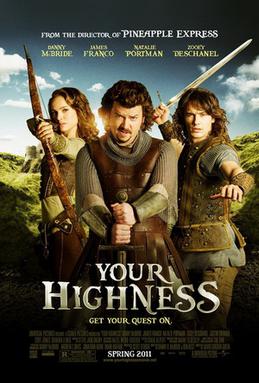
Paragraph Movie Reviews: Your Highness
I was highly anticipating this movie from the trailers and talent involved when it came out in theaters, but then never managed to see it and it didn't make much of a splash so I forgot about it. I'm glad I decided to check it out at home, because this was a very solid, very funny effort that distinguishes itself from the ever burgeoning genre of (let's call them) vulgar stoner comedies quite nicely. The primary strength of the film is the contrast between Danny McBride's enthused ridiculousness in the face of the setting to James Franco's earnest embrace of his straight man role as it's a microcosm of everything that works. This isn't a full-on send-up of the swords and sorcery genre in the way, say, Robin Hood: Men in Tights or things along those lines were, but in many ways a medieval adventure story that's 60% serious and well-crafted as such so that it's more funny the way the comedic aspects stick out. Because the technical aspects of the film are so well done from the sets to the effects to the battle sequences, the casual crudity of the lines coming out of McBride's mouth in his ridiculous accent make you laugh more, and when Franco occasionally breaks from his decrees of nobility or lovelorn poetry to swear, it's even better. Having Natalie Portman take her role absolutely serious in the midst of the absurdity is perfect, as is having Charles Dance essentially playing Tywin Lannister with not a hint of irony. Justin Theroux hems and haws a bit in his role as a creepy and sexually repressed sorcerer, but he hits more than he misses; if anybody is underutilized, it's Zooey Deschanel, if only because they set up a nice recurring gag with her early on and then drop it after a few scenes. I would say that even at under two hours this isn't a long movie, but too long for this particular premise by just a little bit. It's not just a funny movie, though, it's a movie that's comedy is clever and calculated, despite being mostly sex jokes and curse words, and achievement in and of itself.
Saturday, September 10, 2011
Pimping My Stuff: Marvel.com Trifecta
I wear many hats in my role as Associate Editor of Marvel.com (not actually true, I don't generally wear hats unless on vacation to protect my scalp from the ravages of the sun). These days, much of my time is spent programming content, organizing my freelancers, supervising interns, editing stories and helping to produce, direct and occasionally host our video and animation efforts. I dig all this stuff and getting to constantly incorporate new responsibilities and roles into my job is an awesome perk to an already great gig.However, at the end of the day, I'm still a writer at heart, as the lengthy treatises on pro wrestling, Subway and Adam-X that have hopefully wasted many of your evenings go to show.
It's not every week I get the opportunity to sit down and just write at my day job, but this was one of those weeks. I worked on three pretty cool pieces over the past few days, and if you'll indulge me (if you've made it this far you kinda already are), I'd like to share them with you.
Up first, I spoke with designer and letterer Jared Fletcher about coming up with the new logos for the post-Regenesis X-Men titles. I've never covered this kind of topic with anybody of Jared's skill, so it was neat to get into his process and also see all the sketches and tests that got him to his final product. Check out more at his web site. Sorry they nixed the lower case "e," Jared!
Next, I had the pleasure of chatting with my old buddy and one of the most uniquely talented artists working in comics, Juan Doe. I can't divulge my history with Juan, lest I shatter shrouded-in-mystique persona, but it was awesome to catch up with him and hear about all the recent triumphs in his personal life and then dig into his work on Legion of Monsters, the first limited series he's ever tackled (he's previously stuck to covers and one shots). Juan is ever the wordsmith, explaining the lure of the series and how he's recently altered his style, but the sketches are the real gem. Creepy Morbius! Hit his deviantArt gallery.
Finally, I'm not sure who he is, but somebody sure is keeping painstaking track of the developments in Spider-Island, adding them to a super cool and ever-evolving map on Marvel.com. Nice work, guy!
Wednesday, September 7, 2011
First Impressions: Fantastic Four
My first memory of the Fantastic Four is The Human Torch; not Johnny Storm, mind you, but The Human Torch; and to be fair, not really of the Fantastic Four.The same way I knew The Flash and Iron Man without actually knowing who they were as a kid, I knew The Human Torch. I had no concept of who was under those flames and certainly no idea that he was part of something called the Fantastic Four, but I recognized—and dug—that a guy colored red with little black lines running up and down him and underwear you could still see underneath meant he was on fire and a super hero (even though just about every artist since the late 90’s has gone over to depicting a slightly more “realistic” version of the Torch’s flamed on form, in my mind the black lines and yellow eyes ala Kirby will always be what I default to).
Truth be told, I’m even less sure than usual how I came to know The Human Torch. Usually my gut goes with thinking I must have watched a cartoon and picked it up, but the Torch was infamously left out of the late 70’s animated series because the powers that be thought young viewers might light themselves on fire and was replaced by H.E.R.B.I.E. I know I watched the 90’s FF portion of the Marvel Action Hour, but I definitely was drawing the Torch before I was 12. Maybe I saw a toy or a t-shirt? Not sure, but regardless, I knew who The Human Torch was before I knew who or what the Fantastic Four were.
Sometime later, still before I read my first FF comic but also definitely aware I became aware of The Human Torch, The Thing came on my radar. Again, I’m not quite sure how it happened, but certainly Marvel characters were licensed all over the place dating back to when I was a kid, so it’s not unlikely I saw a lunchbox or whatever and the two most visually striking characters jumped out at me while the others receded into the background; honestly, I wouldn’t be surprised to find that my established childhood fascination with the colors red and yellow—it wasn’t a coincidence Flash and Iron Man were my earlier examples—drew my eye first to the Torch, but surely the big dude with the dinosaur head made of rocks proved an irresistible lure to my young eyes.I got my first Fantastic Four comic in a grab bag from the grocery store in 1988. I was six years old and it was issue #314, written by Steve Englehart, drawn by Keith Pollard, sporting a cover from Ron Frenz and edited by my recently-retired former co-worker Ralph Macchio. Belasco was the bad guy and the blurb next to him on front reading “From the pages of the X-Men” no doubt increased my excitement to read the book. I don’t remember much about the story other than that the FF were fighting demons, the sky was on fire at some point and a blind lady who was married to The Human Torch was really worried about him.
Oh, and the roster of the Fantastic Four was The Thing, The Human Torch, Ms. Marvel in her “She-Thing” incarnation and, of course…Crystal.Again, recall that The Thing and The Human Torch were the only FF characters I knew; I had some vague idea that there was supposed to be a stretchy guy and a girl on the team, but I assumed Crystal was the girl and maybe I made the stretchy guy up or he was actually on the Justice League. It seemed odd to me that there was a female Thing, but I didn’t know any better so I assumed she had always been there; likewise, The Thing being extra mutated didn’t faze me because I was at least familiar with the concept of new costumes.
As far as I knew, The Thing, The Human Torch, Ms. Marvel and Crystal had been the Fantastic Four for over 300 issues.
Like some sort of crazy therapy hypnosis session, I do believe writing this blog entry has helped me recall exactly when my hatred for Crystal began. Like I said, there’s a scene in this issue where Alicia Masters—Johnny’s blind wife whose name I did not know at the time—is freaking out with the rest of the world’s population because the sky is on fire and she’s worried about her husband. On the flipside, the Torch keeps saying how worried he is about his wife since they’re underground fighting demons and he doesn’t know what’s happened to her. In the midst of this, Crystal keeps hitting on Johnny and wanting to talk about why he won’t get with her despite him repeatedly telling her to knock it off.At six years old, with no knowledge of continuity or that Crystal had a husband of her own she was mistreating or a kid she had ditched to chase after her old boyfriend, I understood enough about the basic dynamics of marriage to know that this bimbo was bad news. I was a really smart kid.
Looking back, while I would gradually track down further issues of comics my dad would randomly bring me home in grab bags like X-Men and Spider-Man, it would be years before I ever got into reading Fantastic Four, and I think I now know why. While I’m sure there were merits to this particular version of the book, to a kid, all I saw was a super hero team with nothing to set it apart other than a reduced roster. Why would I want to read about only four characters when I could instead pick up Avengers or Justice League and see many more? Besides, two strong ugly characters seemed redundant and I didn’t understand Crystal’s powers.
It really goes to show how intrinsic to the value of the Fantastic Four that family dynamic is. I’ve since gone back and read the really good FF stuff—Lee/Kirby, Byrne, Waid/Wieringo, etc.—and gained a whole new appreciation for it as an adult because it’s so different. The banter, heightened emotions and genuine affection the core characters trade or feel for one another puts the FF on a level apart from all those other teams. Even now, while the Torch may be gone and the Four have become the Future Foundation with Spider-Man and a half dozen kids in tow, that feeling of family and casual closeness as opposed to the professionalism of the Justice League or office politics of the Avengers gives FF its own identity I couldn’t see from my first Fantastic Four experience.As a bit of a postscript, I finally gave Fantastic four another shot around 1994 when the new cartoon was rapping its way into my heart thanks to Brian Austin Green. The Thing was sporting a mask, The Invisible Woman wore a bathing suit, and Mr. Fantastic was dead, replaced alternately by Namor and the Scot Lang version of Ant-Man. So while I considered myself a pretty hardcore Marvel fan by the mid 90’s, I still had no idea who Reed Richards was.
Labels:
crystal,
fantastic four,
first impressions,
human torch
Subscribe to:
Posts (Atom)